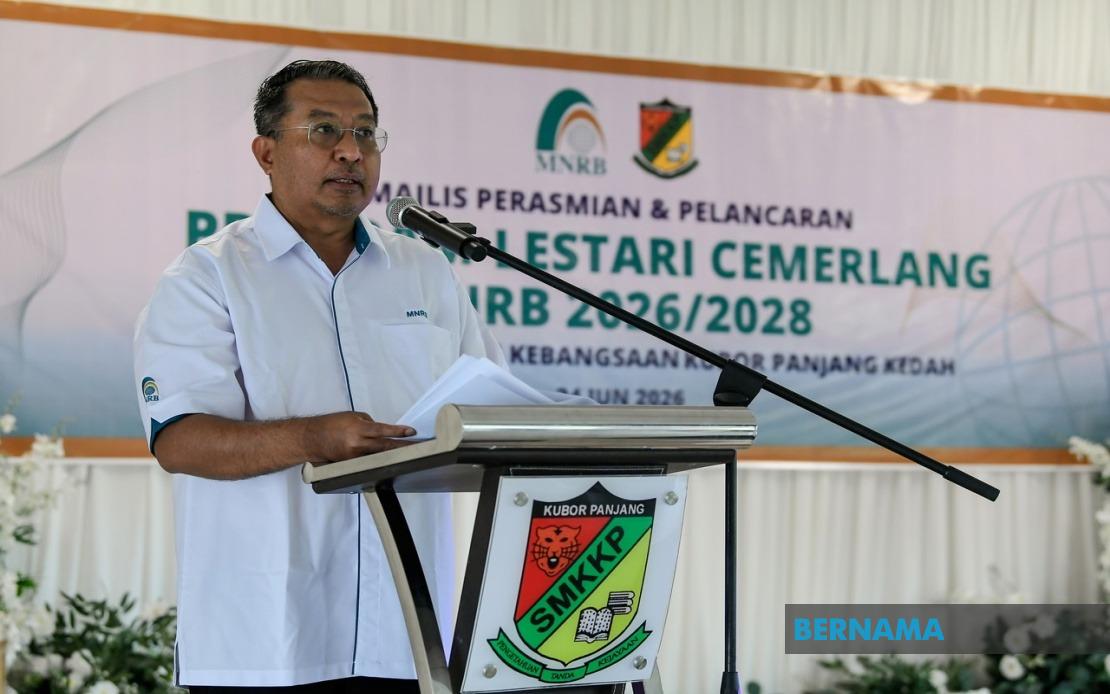
MNRB Holdings Berhad, an investment holding company, has committed nearly RM600,000 to strengthen education outcomes across six schools nationwide through its flagship Lestari Cemerlang Programme. The initiative represents a sustained corporate investment in school excellence, with the most recent beneficiary, Sekolah Menengah Kebangsaan Kubor Panjang in Kedah, receiving support at an official launch ceremony attended by state education officials and MNRB senior management.
The company's approach to corporate social responsibility reflects a deliberate strategy to address educational disparities, particularly in underserved communities. Datuk Rudy Rodzila Che Lamin, MNRB interim president and group chief executive officer, emphasised that the programme's foundation dates to 2011, demonstrating the company's long-term commitment to education. Rather than short-term donor visibility, MNRB has structured the initiative as a comprehensive engagement model targeting both immediate student needs and systemic school improvements.
The Lestari Cemerlang framework operates on a multifaceted premise that school excellence requires simultaneous attention to academic rigour, character formation, and infrastructure modernisation. SMK Kubor Panjang joins five predecessor schools located in Perak, Pahang, Negeri Sembilan, Melaka and Selangor, creating a geographically distributed footprint that reflects MNRB's national business orientation. This expansion pattern suggests the company views education investment as integral to workforce development and community goodwill across regions where it operates.
Within each adopted school, MNRB deploys targeted interventions aligned to critical transition points in Malaysian secondary education. Form Five students receive supplementary coaching to navigate major examinations, while motivational camps and student development programmes address the psychological and social dimensions of learning. These activities recognise that academic achievement depends on factors beyond curriculum delivery, including student confidence, peer support networks, and exposure to career pathways.
Physical infrastructure upgrades form another pillar of the initiative. MNRB has invested in digital learning facilities, notably through sponsoring the MNRB Smart e-Learning Room equipped with interactive televisions and internet connectivity. This intervention directly addresses Malaysia's ongoing digital divide, where rural schools frequently lack modern educational technology despite national policies promoting e-learning. By equipping schools with contemporary tools, MNRB facilitates pedagogical innovation and ensures students develop digital literacy essential for tertiary education and employment.
Beyond individual schools, the programme extends financial support through scholarships that recognise academic merit and broaden access to higher education. The Tabung Biasiswa MNRB initiative specifically targets outstanding students from adopted schools pursuing tertiary qualifications in fields aligned with MNRB's business interests—insurance, takaful, and finance. To date, fourteen students from predecessor schools have benefited, with eight subsequently joining MNRB as employees, demonstrating the employment pathways the scholarship creates.
The dual-track approach combining immediate school support with longer-term scholarship programmes reflects sophisticated workforce planning. Rather than treating education sponsorship as philanthropy divorced from business needs, MNRB aligns its investment with sector demands. By nurturing students through secondary and tertiary education in relevant disciplines, the company builds a talent pipeline while creating aspirational narratives for younger students—demonstrating that academic excellence and professional advancement remain accessible from rural Malaysia.
School greening initiatives complement academic and digital investments, addressing environmental education and campus amenities. These add-ons, while seemingly peripheral, improve student wellbeing and promote sustainability awareness aligned with contemporary educational standards. Sports jersey sponsorships similarly serve multiple purposes: they support co-curricular participation, strengthen school identity, and ensure students from economically constrained backgrounds can engage fully in athletic programmes.
For Malaysian stakeholders, MNRB's approach offers a model of corporate education engagement that extends beyond tokenistic donations. The scale of investment—RM600,000 across six schools, sustained over more than a decade—signals serious institutional commitment. The geographic spread across six states and the deliberate inclusion of rural areas address Malaysia's persistent educational inequality, where school performance correlates strongly with urban-rural residence and socioeconomic status.
The initiative also reflects evolving corporate expectations in Malaysia. Increasingly, multinational and large domestic firms face stakeholder pressure to demonstrate meaningful social contribution. MNRB's Lestari Cemerlang Programme responds to these expectations by creating measurable impact: improved examination results, enhanced infrastructure, direct scholarship recipients, and demonstrated employment outcomes. This accountability contrasts with less structured corporate giving that produces limited tangible benefit.
Regionally, MNRB's education investment strategy illuminates broader Southeast Asian trends in corporate-led social development. As national governments navigate resource constraints and competing priorities, private sector education engagement fills important gaps, particularly in underserved areas. However, this dynamic raises questions about equitable distribution of corporate largesse and whether business-led education initiatives can adequately substitute for government investment in public schooling.
For students and educators at beneficiary schools, the programme creates immediate practical advantages—better learning infrastructure, mentorship opportunities, and scholarship pathways that might otherwise remain inaccessible. The emphasis on rural schools ensures that geographic location alone does not determine educational opportunity, a particularly salient concern in Malaysia where rural-urban disparities persist across educational indicators.
Moving forward, MNRB's continued expansion of the Lestari Cemerlang Programme will likely attract attention from other corporations evaluating education investment strategies. The combination of systemic school improvement, individual scholarship support, and employment pathways provides a replicable model that balances social contribution with business-relevant outcomes.