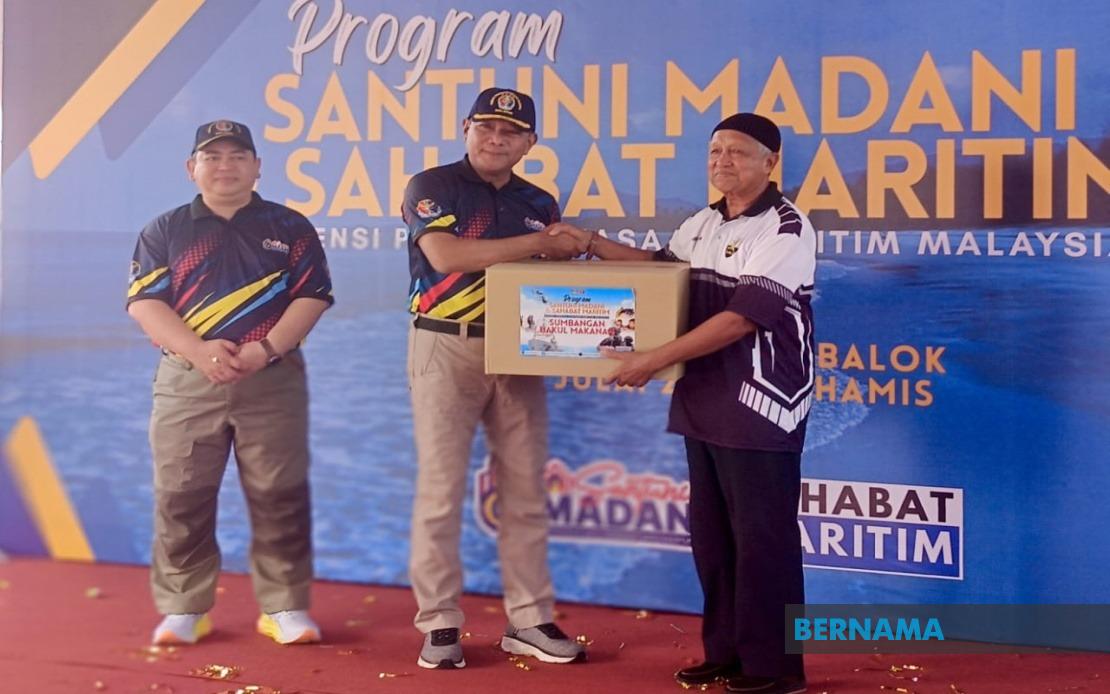
Malaysia's maritime enforcement efforts have yielded substantial results in the opening half of 2024, with the Malaysian Maritime Enforcement Agency (MMEA) recording RM2.29 billion in total seizures and apprehending 516 individuals suspected of various maritime offences between January and June. The agency announced these figures during community engagement programmes held in Kuantan, signalling both the scale of contraband activities threatening Malaysia's territorial waters and the growing operational tempo of enforcement responses.
Director-General Maritime Admiral Datuk Mohd Rosli Abdullah attributed the enforcement achievements to MMEA's unwavering dedication to protecting national sovereignty over Malaysian waters. The agency has positioned itself as the frontline guardian against cross-border criminal activities that undermine state control over maritime resources and revenues. This commitment reflects broader regional concerns about maritime security amid rising threats from transnational smuggling networks and illegal fishing operations that have proliferated across Southeast Asian waters.
The composition of seized items reveals the diverse nature of maritime contraband flowing through Malaysian jurisdictions. Local vessels accounted for the overwhelming majority of the confiscated assets, totalling RM2.11 billion in value, suggesting that domestic shipping infrastructure has been compromised for illicit purposes. This breakdown raises questions about vessel registration practices and the vulnerability of Malaysian-flagged boats to trafficking networks. Following at considerable distance were drug seizures valued at RM86.06 million, indicating sustained efforts to interdict narcotics moving through maritime routes—a critical concern given Malaysia's geographic position along major transnational drug trafficking corridors.
Foreign fishing vessels seized during the period were valued at RM66 million, underscoring ongoing tensions over illegal, unreported, and unregulated fishing in Malaysian waters. The region has witnessed persistent incursions by foreign fishing fleets, particularly from neighbouring countries, competing for dwindling fish stocks and threatening Malaysia's marine biodiversity. Separately, authorities confiscated smuggled cigarettes worth RM25.16 million, revealing an entrenched black market for tobacco products that represents lost excise revenue for the government. Smaller seizures included prawns valued at RM5.2 million and diesel fuel worth RM3.33 million, indicating attempts to export controlled or subsidised goods without proper authorisation.
Mohd Rosli emphasised MMEA's determination to prevent the illicit outflow of controlled and subsidised goods from Malaysia, a persistent enforcement challenge that drains national resources and undermines subsidy programmes designed to benefit ordinary Malaysians. He further highlighted the agency's focus on combating tax evasion through maritime smuggling, an activity that diverts revenue needed for public services and infrastructure development. These priorities reflect the government's broader fiscal concerns in an environment of rising expenditure pressures and the need to maximise revenue collection from all sources.
The agency's operational mandate extends beyond seizures to encompass comprehensive maritime security, search and rescue operations, and prevention of maritime crime—functions that collectively support Malaysia's claims to effective stewardship of its maritime domain. MMEA's participation in Operation Tiris, a coordinated enforcement effort involving multiple government agencies, demonstrates an integrated approach to maritime governance that moves beyond the agency's institutional boundaries. This inter-agency cooperation model has become increasingly important as maritime threats have grown more complex and geographically dispersed.
A particularly noteworthy recent operation occurred in Tawau, Sabah, on 23 June, when MMEA disrupted a cigarette smuggling attempt involving contraband and a vessel with an estimated combined value of RM64 million. The scale of this single interdiction illustrates both the economic stakes involved in maritime smuggling and the operational capabilities that MMEA has developed. Such operations typically require intelligence gathering, surveillance coordination, and rapid response capabilities—elements that suggest MMEA's growing professional maturity as a maritime law enforcement organisation.
For Malaysian policymakers and regional security analysts, these enforcement figures carry multiple implications. The volume of contraband recovered indicates that maritime smuggling remains a lucrative and persistent criminal enterprise despite enforcement efforts. The diversity of seized items—from vessels to drugs to agricultural products—suggests that criminal networks operate with considerable flexibility, adapting to enforcement pressure by shifting commodity focus. For Malaysia's economy, the RM2.29 billion in seized assets represents both the success of enforcement and a measure of the economic leakage occurring through illegal maritime channels.
Regionally, Malaysia's enforcement performance has consequences for neighbouring countries sharing interconnected maritime spaces. Successful MMEA operations disrupt smuggling corridors that may have extended through multiple jurisdictions, potentially benefiting enforcement efforts across Southeast Asia. Conversely, the persistence of smuggling indicates that enforcement gaps likely exist in the broader region, requiring enhanced cooperation between maritime agencies across ASEAN nations. The cigarette smuggling case in Sabah particularly underscores the cross-border dimensions of maritime crime in Malaysian Borneo, where porous maritime boundaries and limited enforcement resources in adjacent jurisdictions create operational challenges.
Looking forward, MMEA has indicated its intention to expand and intensify maritime operations, suggesting increased resource allocation and operational planning for the remainder of 2024. The agency's emphasis on community engagement through programmes like Santuni MADANI and Sahabat Maritim reflects recognition that sustained maritime security requires not only enforcement capacity but also public cooperation and awareness. Coastal communities, which often possess knowledge of suspicious activities and maritime patterns, represent a potential force multiplier for formal enforcement agencies operating with limited personnel and assets across vast maritime expanses.
The enforcement results also highlight the ongoing challenge of balancing multiple maritime governance objectives. While MMEA pursues smuggling and drug interdiction, it simultaneously manages search and rescue responsibilities and maritime safety operations. This functional breadth, while reflecting comprehensive maritime governance ideals, also stretches agency resources and requires sophisticated operational planning to ensure none of these critical functions receives inadequate attention. The sustainability of enforcement effort over extended periods, particularly as criminal networks adapt tactics, will likely determine whether current seizure levels can be maintained or exceeded in future reporting periods.

