The Malaysian contingent at the Glasgow 2026 Commonwealth Games faced a sobering reality on day two, as performances across five different disciplines illustrated the uneven competitive landscape facing the nation's athletes. While some competitors delivered promising displays, others fell short of expectations in their opening appearances, setting the tone for what is likely to be a challenging campaign ahead for the delegation competing at Tollcross International Swimming Centre and various other venues across the Scottish city.
The swimming events proved particularly frustrating for Malaysia's representatives. Para swimmer Ethan Khoo Yin Jun managed to secure fourth place in the men's 200 metre freestyle, recording a time of 2 minutes 5.25 seconds, demonstrating competitive capability at international level. However, this solitary bright spot in the pool was overshadowed by the struggle of four able-bodied Malaysian swimmers who failed to progress beyond their heats. Khiew Hoe Yean's effort in the men's 400 metre freestyle saw him finish tenth overall among 27 participants with a time of 3 minutes 54.23 seconds, while teammate Tan Khai Xin placed 14th with a clock reading of 3 minutes 57.54 seconds. The men's 50 metre freestyle proved even more challenging, with both Lim Yin Chuen and Arvin Shaun Singh Chahal finishing joint 28th out of a field of 68 competitors, effectively eliminating them from further individual progression in that event.
For Malaysian swimming enthusiasts, the early exits in the freestyle events raise questions about preparation depth and the competitive standards required to medal at Commonwealth level. The performances suggest that while Malaysia has identified some promising swimmers, the pathway to sustained international competitiveness remains underdeveloped compared to traditional powerhouses in the Games.
The men's 3x3 wheelchair basketball team suffered a particularly painful defeat that underscored the margins separating success from failure in elite sport. Playing in their opening Group B match against Wales at Scottish Event Campus, the Malaysian squad came agonisingly close to victory but ultimately fell 13-14 in the closing moments of the match. This narrow loss carries significant implications for the team's progression prospects, as Commonwealth Games formats typically demand strong group stage performances to advance to medal rounds. The wheelchair basketball contingent will need to demonstrate resilience and tactical adjustments in subsequent matches to salvage their campaign.
Conversely, Malaysia's lawn bowling competitors provided encouraging momentum on day two. Both Izzat Shameer Dzulkeple in the men's singles competition and the women's pairing of Aleena Ahmad Nawawi and Syafiqa Haidar Afif Abdul Rahman recorded their third consecutive victories in the group stage. This consistent performance level suggests these athletes have brought proper form to Glasgow and possess the experience necessary to compete effectively across a multi-day competition format. Lawn bowling's deliberate pace and strategic nature demand the kind of composure and technique that these Malaysian representatives appear to have mastered.
Rachel Yeoh's progression in women's artistic gymnastics similarly offered encouraging news for the Malaysian delegation. Placing third among 49 gymnasts in the qualifying round, Yeoh has advanced to the uneven bars final at Glasgow International Arena, positioning herself to compete for medals in a discipline where Malaysia has historically struggled to achieve consistent representation. Her qualification validates the investment Malaysia has made in developing its gymnastics program and suggests that future international performances may yield stronger returns.
Looking forward to July 26, attention turns sharply to weightlifting, where Malaysia has positioned two defending champions to mount another assault on Commonwealth gold medals. Mohamad Aniq Kasdan will defend his title in the men's 60 kilogramme category, while Muhamad Aznil Bidin seeks his third consecutive Commonwealth Games gold medal in the men's 65 kilogramme category. These competitions represent crucial opportunities for Malaysia to bolster its medal tally, particularly given the strength that weightlifting has historically provided to the nation's Games performance. The success of these two athletes could substantially reshape the narrative surrounding Malaysia's overall campaign performance.
Meanwhile, the swimming team comprising Khiew Hoe Yean, Arvin Shaun Singh Chahal, Lim Yin Chuen and Tan Khai Xin will receive another opportunity to demonstrate their capabilities when they contest the men's 4x200 metre freestyle relay race. Relay competitions often provide alternative pathways to success for swimmers who may have struggled individually, as the collective effort and strategic positioning can sometimes yield unexpected competitive advantages. This event may prove instrumental in salvaging something positive from the swimming program.
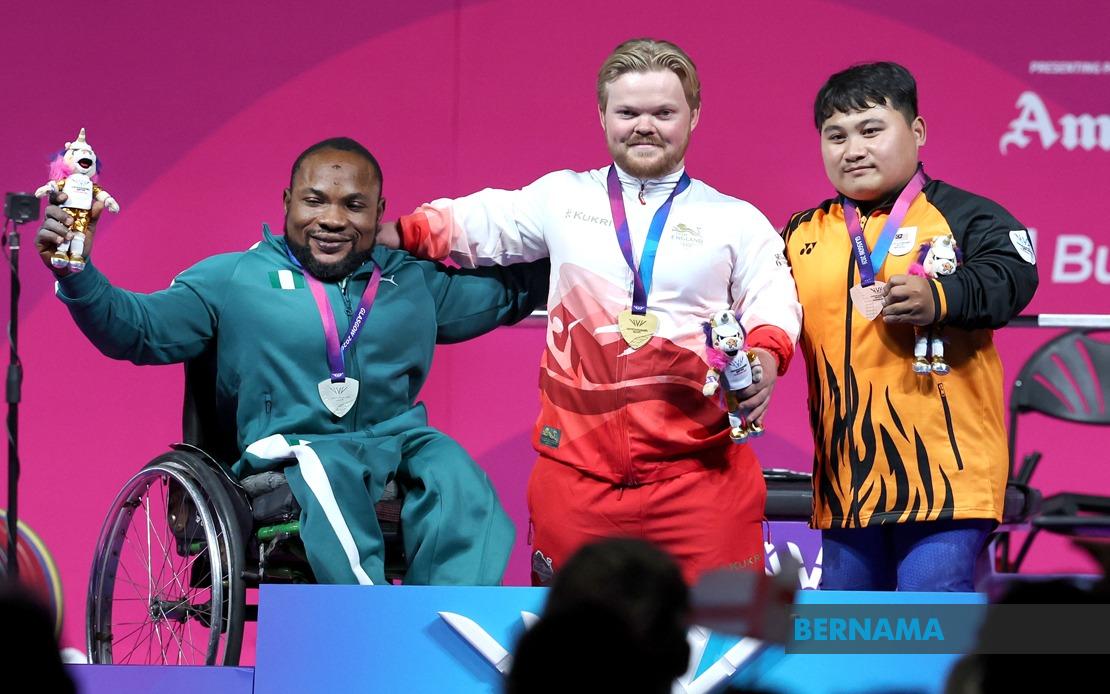
At this stage of the competition, Malaysia has secured just one medal—a bronze courtesy of powerlifter Bonnie Bunyau Gustin in the men's lightweight weightlifting category. This relatively modest medal haul places considerable pressure on upcoming events, particularly weightlifting where the nation's traditional strength should generate additional returns. The early performances indicate that Malaysia's campaign will likely depend heavily on specific sports and particular athletes rather than broad-based competitive depth, a pattern that has characterised Malaysian Commonwealth Games performances in recent cycles.

