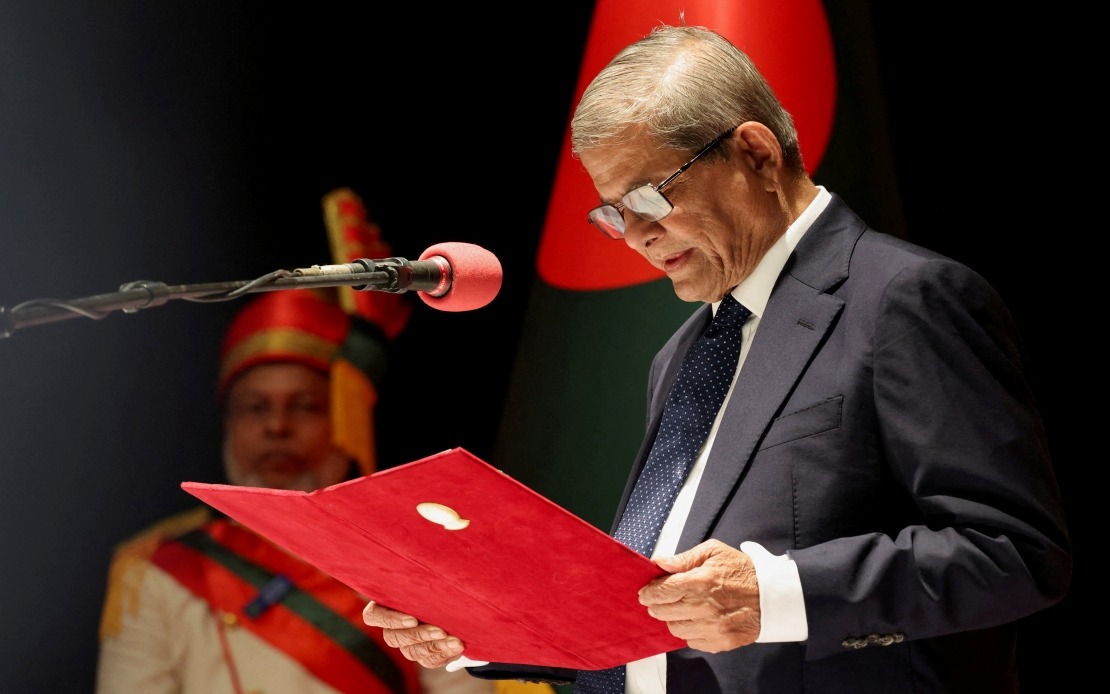
Mirza Fakhrul Islam Alamgir formally became Bangladesh's 23rd President on Friday evening when he took the constitutional oath at Bangabhaban, the official residence and workplace of the nation's head of state. The ceremony, conducted at 7:30 pm local time in the Darbar Hall, marked a significant moment in Bangladesh's ongoing political transition. Acting Speaker Barrister Kayser Kamal administered the oath to Fakhrul, who brings decades of experience in Bangladesh's political arena to the largely ceremonial but symbolically important role.
The 23-year-old nation's parliament elected Fakhrul to the presidency in accordance with Bangladesh's constitutional framework, recognising his standing as one of the country's most prominent political figures. His background includes a lengthy tenure as secretary-general of the Bangladesh Nationalist Party (BNP), one of the country's two dominant political organisations. The elevation reflects the party's continued influence within Bangladesh's political structures despite the nation's recent upheavals and institutional changes.
Fakhrul's arrival at Bangabhaban was marked by the ceremonial welcome extended by senior state officials, underscoring the formal nature of the transition. Acting President Hafiz Uddin Ahmad Bir Bikram received the incoming president, setting the stage for the handover of constitutional authority. The presence of Prime Minister Tarique Rahman alongside the Chief Justice, Cabinet ministers, members of parliament, and senior military and civil officials demonstrated the breadth of institutional participation in the event. Diplomatic representatives from Bangladesh's international partners also attended, reflecting the global dimensions of bilateral relationships that transcend domestic political transitions.
The symbolic choreography of the ceremony itself carried significance beyond the mere recitation of oaths. Following Fakhrul's declaration, he and the acting president exchanged positions within the Darbar Hall—a physical representation of the transfer of executive authority. This theatrical element, common in constitutional democracies, reinforced the principle that power moves between individuals rather than residing permanently with institutions or persons. Subsequent to the seat exchange, Fakhrul signed the oath of office and the oath of secrecy, binding himself legally and morally to the duties and confidences inherent in the presidency.
The ceremony concluded with the performance of Bangladesh's national anthem, a patriotic bookend that emphasised continuity of the nation-state even as its leadership shifted. This formal closure provided a clear demarcation point between Hafiz Uddin Ahmad Bir Bikram's tenure as acting president and Fakhrul's new role. For Malaysian observers and others tracking South Asian political developments, the structured and orderly nature of the transition offers perspective on how institutional frameworks can facilitate leadership changes even during periods of broader constitutional and political recalibration.
Fakhrul's ascension to the presidency comes at a particular moment in Bangladesh's recent history, following the tumultuous events of 2024 that reshaped the nation's political landscape. His appointment signals the BNP's retention of influence within state institutions even as Bangladesh navigates complex questions about governance, accountability, and democratic renewal. The party's capacity to place one of its senior figures in a position of national prominence suggests its organisational resilience and continued relevance in post-transition Bangladesh.
The presidency in Bangladesh, while less executive in character than the office held by Prime Minister Tarique Rahman, carries significant ceremonial responsibilities and symbolic weight. As head of state, Fakhrul will serve as guardian of constitutional values, perform diplomatic functions on behalf of the nation, and represent Bangladesh in international forums. His extensive background in party politics and governance provides him with the experience necessary to navigate these multifaceted dimensions of the role, even as the presidency itself remains constitutionally subordinate to the prime minister in executive matters.
For regional watchers in Southeast Asia and beyond, the orderly transfer of presidential authority in Bangladesh demonstrates the functioning of constitutional mechanisms despite broader questions about democratic practice and institutional reform that have animated recent years of Bangladesh politics. The presence of military and civil officials, alongside political figures, reflected the complex equilibrium of power that currently characterises the nation's governance structures. International observers will likely view the ceremony as evidence of institutional stability, though substantive questions about Bangladesh's democratic trajectory and accountability frameworks remain subjects of ongoing debate.
Fakhrul's presidency represents continuity with Bangladesh's political establishment even as the nation charts new directions following recent transformations. His elevation reflects the persistence of established political parties and networks in shaping state leadership, notwithstanding wider expectations for reform and institutional renewal. As Bangladesh moves forward under new political arrangements, the role of seasoned politicians like Fakhrul—positioned above the immediate fray of parliamentary politics—will likely involve balancing institutional traditions with evolving expectations for accountability and democratic deepening.

