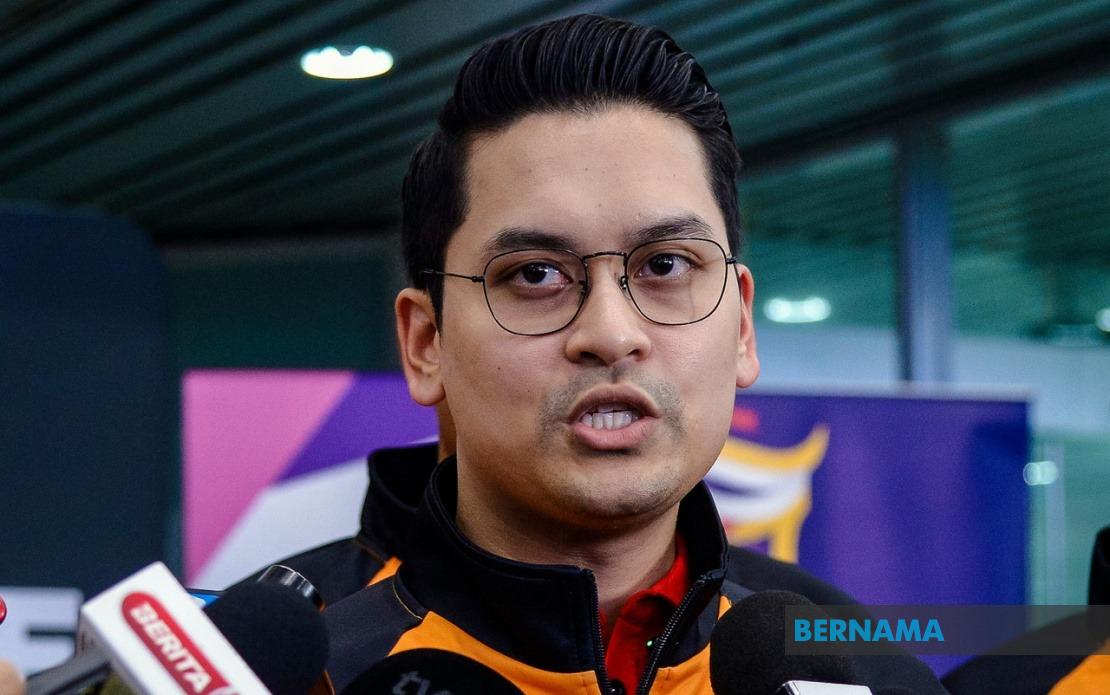
Malaysia's weightlifting programme is receiving a significant boost from the Youth and Sports Ministry, which has earmarked RM4.1 million for development initiatives in 2026. The commitment reflects growing confidence in the sport's capacity to generate major international success for the country. Youth and Sports Minister Dr Mohammed Taufiq Johari announced the allocation while welcoming home the nation's Commonwealth Games contingent at Kuala Lumpur International Airport, signalling the government's determination to capitalise on recent momentum in the discipline.
The ministry's funding envelope encompasses several targeted development streams designed to build capacity across multiple performance levels. Resources will support athlete training and coaching infrastructure, while three specialised talent pipeline programmes—Road to Gold, Podium, and Pelapis—receive dedicated financial support. Additionally, grassroots initiatives aim to broaden the talent base and identify future champions early in their development journey. This structured approach reflects contemporary best practices in Olympic sport preparation, where sustained funding across multiple tiers of competition creates a coherent pathway from emerging talent to elite performers.
Dr Taufiq Johari has signalled openness to the Malaysia Weightlifting Federation's appeal for an additional RM1 million in recurring annual funding, though the ministry intends to conduct thorough deliberations before committing to the expansion. The federation's request reportedly includes provisions for enhanced coaching remuneration and related staffing costs, areas the minister acknowledges require careful examination. Rather than providing an immediate response, the ministry has committed to detailed discussions with PABM president Datuk Ayub Rahmat and various weightlifting associations to understand the full scope of requirements and ensure investment efficiency.
The ministry's strategic emphasis on weightlifting stems from an assessment that the sport represents Malaysia's most viable pathway to an Olympic gold medal in the near term. This prioritisation reflects realistic appraisal of Malaysia's athletic strengths and international competitive landscape. By concentrating developmental resources on disciplines with genuine medal-winning potential, the ministry aims to maximise return on investment and establish Malaysia as a credible heavyweight competitor within the Asian and global weightlifting community. This targeted approach differs sharply from dispersing limited resources across numerous sports with lower probability of major success.
Currently, weightlifting's talent pipeline contains twelve athletes distributed across the three development tiers. Two competitors are enrolled in the elite Road to Gold programme, indicating their positioning as potential Olympic medallists within the next Olympic cycle. Eight athletes populate the Podium tier, representing mid-career performers with demonstrated potential to achieve podium finishes at major international competitions. A further two athletes are classified within the Pelapis programme, which typically encompasses emerging talents transitioning from grassroots and junior development into senior competition pathways. This distribution suggests a reasonably healthy production pipeline, though success ultimately depends on sustained investment and effective coaching.
The Commonwealth Games provided concrete validation of weightlifting's current trajectory and potential. The sport proved to be Malaysia's standout performer at the Games, delivering five gold medals alongside one silver and one bronze. This seven-medal haul substantially exceeded the sport's historical contribution rates and demonstrated that recent investment and strategic planning are translating into competitive results. The success enabled Malaysia's overall Games contingent to surpass its initial medal targets, with the national team ultimately accumulating eight gold, three silver, and five bronze medals across all sports. Weightlifting's prominence in this achievement underscores why government support is intensifying.
Beyond athlete development, the ministry has identified coach welfare as a critical lever requiring immediate attention. Dr Taufiq Johari has committed to reviewing the conditions of state-level coaches supervised by the National Sports Council, acknowledging that coaching quality and retention directly influence athlete performance trajectories. The sport's recent success has partly derived from dedicated coaching expertise, yet insufficient remuneration and career security threaten to undermine long-term capacity. By addressing coach welfare comprehensively, the ministry seeks to stabilise the coaching workforce and prevent experienced personnel from departing for alternative employment, thereby protecting institutional knowledge and expertise accumulated through previous development cycles.
This welfare initiative represents recognition that athlete development cannot succeed in isolation from coaching infrastructure investment. International experience demonstrates that elite coaching talent gravitates toward jurisdictions and organisations that provide competitive compensation and professional development opportunities. Malaysia's weightlifting associations must therefore compete with regional and international alternatives when recruiting and retaining coaching expertise. Enhanced remuneration and improved working conditions recommended by the ministry would position Malaysian weightlifting more competitively within the regional coaching market.
The timing of this funding commitment carries significance within Malaysia's broader sports strategy. The next Olympic cycle will culminate in the 2028 Los Angeles Olympics, providing weightlifters a defined timeline to pursue gold-medal objectives. Current development programme participants have approximately two years to consolidate their competitive preparations, making this period critical for training intensity and competition experience. Sustained and predictable funding allocation enables coaching staff to develop coherent multi-year training plans without funding uncertainty disrupting preparation schedules or forcing premature career terminations.
Weightlifting's profile within Malaysian sports has fundamentally shifted following Commonwealth Games success. Previously a peripheral discipline competing for modest resources, the sport now commands ministerial attention and features prominently in national sporting ambitions. This elevated status creates opportunities for meaningful progress but also raises expectations among coaches, athletes, and sports administrators. Delivering on the promise implicit in current investment requires execution excellence across all programme components, from athlete selection through competition management.
Looking forward, the ministry's deliberations regarding the additional RM1 million funding request will likely depend on whether detailed budget submissions from PABM justify the expenditure and demonstrate clear pathways to competitive return. Coaching costs and salary enhancements must be framed within explicit performance targets and development objectives. The ministry's willingness to engage in thorough discussion rather than immediate rejection suggests that weightlifting, provided it sustains competitive momentum, can expect favourable consideration of its financial requests. For Malaysian weightlifting, the combination of demonstrated competitive success and government willingness to invest creates a genuine opportunity to establish the sport as a permanent feature of Malaysia's Olympic medal-winning capacity.

