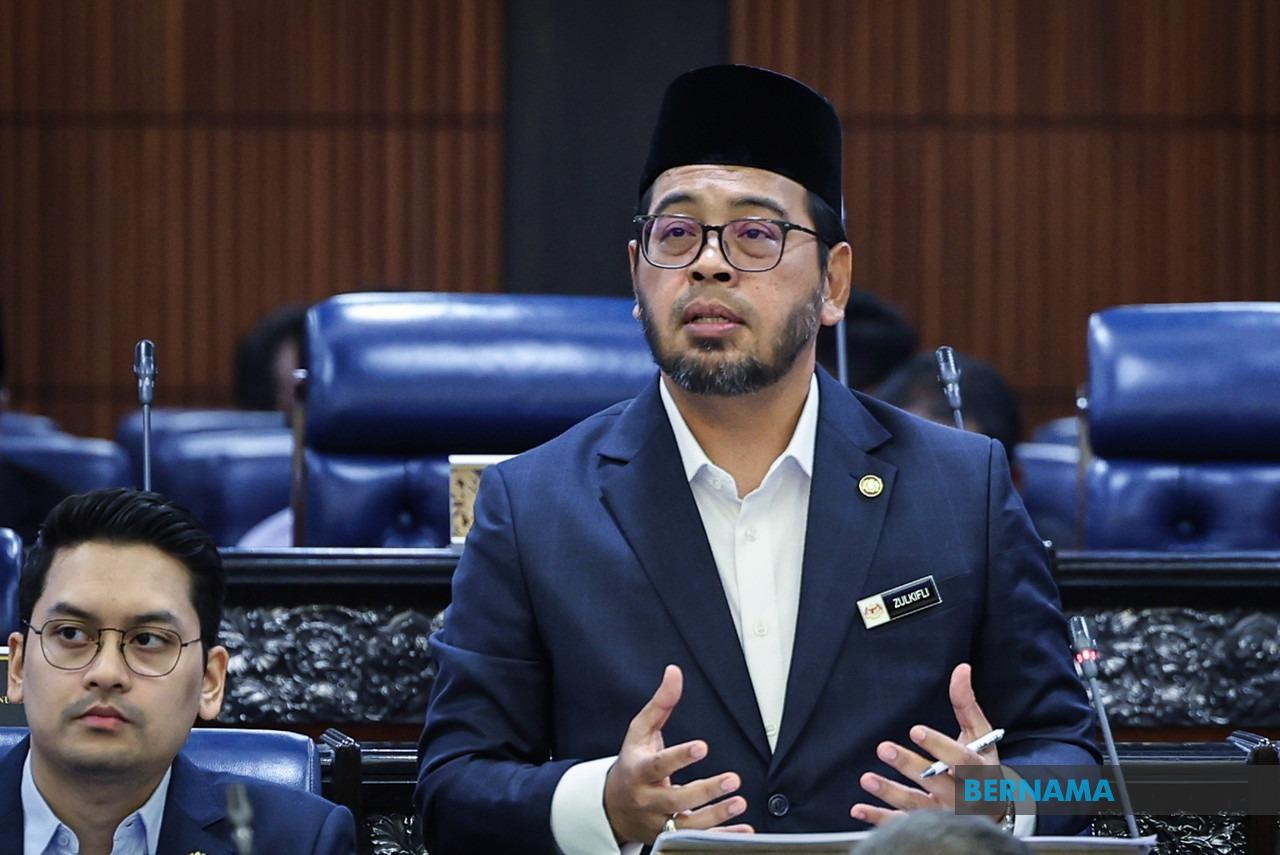
Religious Affairs Minister Dr Zulkifli Hasan has cast serious light on the financial misconduct at Tabung Haji, employing a relatable analogy about a single mother named Mak Cik Senah to illustrate how the Islamic pilgrimage fund deceived depositors and regulators alike. Speaking during parliamentary debate on findings from the Royal Commission of Inquiry into TH's operations, Zulkifli explained that while the fund appeared profitable on paper and paid generous returns, its underlying financial position was catastrophically weak. The minister's intervention represents a rare moment of transparent accountability regarding one of Malaysia's most significant Islamic financial institutions.
At the heart of Zulkifli's critique lies a fundamental breach of the Tabung Haji Act. The fund distributed dividends to depositors despite having insufficient assets to legally justify such payments. Under Malaysian law, dividend distributions are only permissible when total assets exceed liabilities and other obligations. Tabung Haji violated this cardinal principle, distributing funds while technically insolvent. This violation was not accidental but systematic, orchestrated through sophisticated accounting techniques designed to mask the institution's deteriorating financial health from public scrutiny.
The method employed was deceptively simple yet effective: asset values were artificially inflated on paper through a process known as Realisable Asset Value (RAV) assessment, conducted outside the audited financial statements. This creative accounting approach made liabilities appear manageable relative to assets, creating the illusion of profitability where none existed. Zulkifli emphasised that the inflated valuations were essential to the deception—without them, TH could not have declared the dividends that attracted depositors and sustained its reputation. The scheme functioned precisely like a pyramid structure, relying on new deposits and creative accounting rather than genuine returns.
The extent of the valuation manipulation is particularly striking. Of RM4.6 billion in reported assets, only RM556 million were assessed by professional valuers, meaning approximately 88 percent of the fund's claimed wealth lacked proper independent valuation. This discrepancy indicates that the vast majority of reported assets existed primarily as accounting entries rather than substantive holdings. The decision to include unvalidated assets in financial reporting directly violated Malaysian Financial Reporting Standards and represented a systematic deception of depositors who relied on audited statements to assess their investment security.
PricewaterhouseCoopers's 2018 investigation confirmed these manipulations, identifying violations in both asset valuation methodology and impairment policy changes that obscured the fund's true financial position. Zulkifli clarified that Ernst & Young, another major audit firm, was not TH's primary auditor and played only a limited role reviewing pro forma statements. The heavy reliance on PwC's findings underscores how independent auditors, when they finally examined TH's books comprehensively, immediately identified the falsification. This raises troubling questions about how such obvious irregularities escaped earlier detection by regular auditors and regulatory oversight bodies.
The analogy of Mak Cik Senah serves as Zulkifli's most powerful rhetorical device, making abstract accounting concepts accessible to ordinary Malaysians. A mother receiving more money than she deposited initially appears fortunate, yet if those distributions come from inflated asset values rather than genuine investment returns, she is being defrauded. Eventually, when the illusion collapses, she loses everything. In TH's case, this collapse required government intervention on an unprecedented scale. The federal government injected over RM10 billion to prevent the institution from complete failure, effectively transferring the losses from corrupt management onto taxpayers.
The scale of public money required for TH's rescue carries profound implications for Malaysian priorities. As Zulkifli pointedly noted, RM10 billion could have constructed dozens of hospitals, schools, mosques, and community facilities across the nation. Instead, these resources were consumed by the consequences of fraud and mismanagement within an institution that holds deep religious and cultural significance for Malaysian Muslims. The opportunity cost extends beyond mere infrastructure—it represents resources diverted from productive investment to remedying institutional corruption.
TH's situation reflects broader governance challenges affecting Malaysia's public institutions. The fund operated for years with inadequate oversight despite managing billions in Muslim depositors' savings. The fact that sophisticated financial manipulation went undetected until a royal commission was established suggests systemic weaknesses in regular audit processes and regulatory supervision. Depositors, whose savings were at risk, had no realistic ability to verify the fund's true financial condition based on published statements. This asymmetry of information is endemic to schemes relying on deception.
The classification of TH's practices as fraud comparable to Ponzi schemes and the notorious Skim Pak Man Telo is not mere political rhetoric. Both schemes share fundamental characteristics: they pay returns using new deposits and accounting manipulations rather than genuine income, they eventually become unsustainable, and they collapse spectacularly when discovered. The comparison also highlights how sophisticated presentation and institutional credibility can enable large-scale fraud. TH's status as a government-backed religious institution may have actually facilitated the deception by creating unwarranted public confidence.
Moving forward, the RCI's exposure of these practices should catalyse fundamental reforms in how Malaysian Islamic financial institutions operate and report their status. Depositors require robust independent oversight, transparent valuation standards, and meaningful penalties for accounting violations. The religious significance of Tabung Haji demands that it be managed to the highest standards of probity and transparency. For Malaysian Muslims, knowing their savings are secure and properly managed represents both a financial and spiritual concern.
Zulkifli's parliamentary intervention signals potential political consensus on accountability, at least at the ministerial level. However, criminal prosecution of those responsible for the manipulation remains crucial to deterring similar misconduct elsewhere. The broader lesson for Malaysia's financial system is that institutional prestige and religious purpose are insufficient safeguards against fraud. Robust governance structures, independent auditing, and serious consequences for violations are essential. Without these fundamentals, even major institutions can become vehicles for systematic deception that harms millions of ordinary citizens.

