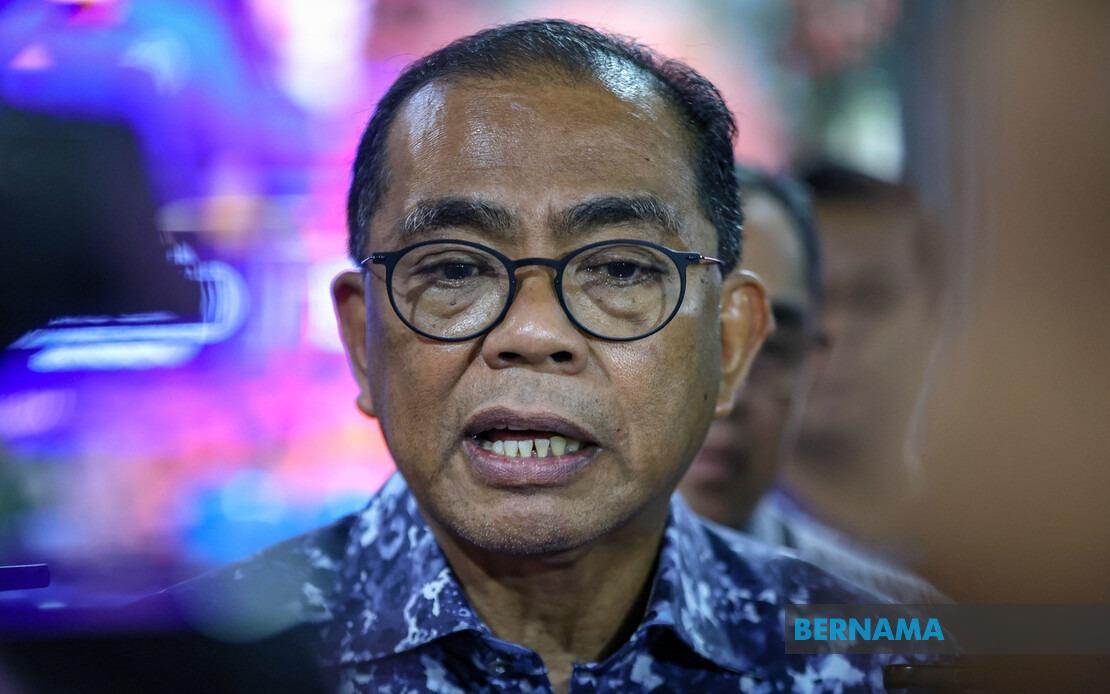
The Malaysian Ministry of Defence is pursuing a comprehensive overhaul of how the armed forces manage talent and structure their ranks, recognising that existing frameworks have become misaligned with the pace of technological advancement and modern operational requirements. Defence Minister Datuk Seri Mohamed Khaled Nordin outlined the initiative during a Pasir Gudang Barisan Nasional event, emphasising that the Malaysian Armed Forces faces bottlenecks in career development that prevent qualified personnel from progressing despite meeting performance benchmarks.
At the heart of MINDEF's three-pronged reform agenda lies a fundamental problem: many officers possess the competency and track record necessary for advancement but remain stalled at their current levels because insufficient vacancies exist at higher ranks. This structural constraint threatens to frustrate talented personnel and potentially drive them away from military service when civilian opportunities beckon. The ministry contends that the traditional hierarchical framework, designed decades ago, no longer reflects the complexity and strategic importance of roles that modern armed forces personnel undertake, particularly those engaged in cyber defence, intelligence operations, and sophisticated weapons system management.
The proposed restructuring attempts to create better alignment between an officer's rank designation, salary grade, level of operational responsibility, and the strategic weight of their role within the defence establishment. Such mismatches have long been a source of dissatisfaction within uniformed services across Southeast Asia, where rigid classification systems inherited from colonial-era administrative structures persist even as militaries modernise their capabilities. MINDEF's recognition of this problem signals a shift toward more performance-driven advancement rather than purely time-in-service progression.
To advance these initiatives, MINDEF has submitted detailed proposals to the government and the Public Service Department, outlining modifications to staffing architecture alongside recommendations for enhanced allowances tailored to military service. The allowance component addresses the financial burden unique to armed forces personnel, particularly those required to undertake extended professional training courses spanning nine months to two years. These prolonged absences from home, coupled with the operational demands of military life, have historically not been reflected adequately in remuneration structures modelled on civilian public service classifications.
The ministry's broader talent management strategy traces its origins to the Defence White Paper unveiled in 2022, which established the intellectual framework for aligning military human resource practices with defence modernisation priorities. Following that foundational document, MINDEF submitted proposals in March of the previous year targeting reforms to the Public Service Remuneration System, a move demonstrating sustained institutional commitment to addressing these systemic issues rather than pursuing ad hoc adjustments.
Crucially, Mohamed Khaled emphasised that any acceleration of promotion timelines would remain anchored to meritocratic principles rather than devolving into automatic advancement schemes. The minister articulated clear criteria: performance evaluations, demonstrated competency, personal integrity, and alignment with organisational needs would continue to govern promotion decisions through rigorously applied assessment mechanisms. This stance reflects awareness that perception of fairness in advancement processes is critical for military morale and cohesion, and that bypassing established evaluation protocols could undermine confidence in the system among both officers and personnel.
The timing of MINDEF's push gains added momentum from Prime Minister Datuk Seri Anwar Ibrahim's recent announcement regarding an in-principle government agreement to streamline and expedite promotion pathways for both military and police personnel. The Prime Minister's commitment to harmonise security sector advancement procedures with other public service mechanisms represents a higher-level political endorsement of the reform agenda. Details regarding the new promotional framework are scheduled for official unveiling during the Ambang Merdeka celebrations at Stadium Merdeka, Kuala Lumpur on August 30, providing a national platform to emphasise the government's commitment to security force modernisation.
Beyond organisational restructuring, MINDEF's advocacy forms part of a broader welfare and capability agenda. The government has pledged increased budgetary allocation for defence spending under Budget 2027, framing this financial commitment as essential to both strengthening the operational capabilities of the Malaysian Armed Forces and safeguarding the welfare provisions for security sector personnel. This dual emphasis signals recognition that force effectiveness depends not merely on equipment and technology but equally on maintaining morale and institutional confidence among those who operate such systems.
For Malaysian defence analysts, the reform initiative addresses longstanding concerns about personnel retention and motivation within the armed forces. As the region faces evolving security challenges ranging from maritime disputes to emerging cyber threats, the ability to retain experienced, capable officers becomes strategically significant. Countries across Southeast Asia grapple with similar military modernisation imperatives, making Malaysia's structured approach to career framework reform a potential model worthy of regional attention. The reforms implicitly acknowledge that professional military forces require incentive structures comparable to those available in high-skill civilian sectors if they are to compete effectively for talent in an increasingly competitive regional environment.
The challenge ahead for MINDEF involves translating policy intentions into practical implementation while maintaining fiscal discipline and bureaucratic consensus. The involvement of the Public Service Department in evaluating these proposals introduces another institutional stakeholder whose priorities may not align entirely with defence-specific concerns. Successfully navigating such inter-agency coordination while sustaining momentum through multiple government cycles will prove essential to determining whether these articulated ambitions translate into tangible improvements for military personnel and demonstrable strengthening of force readiness.

