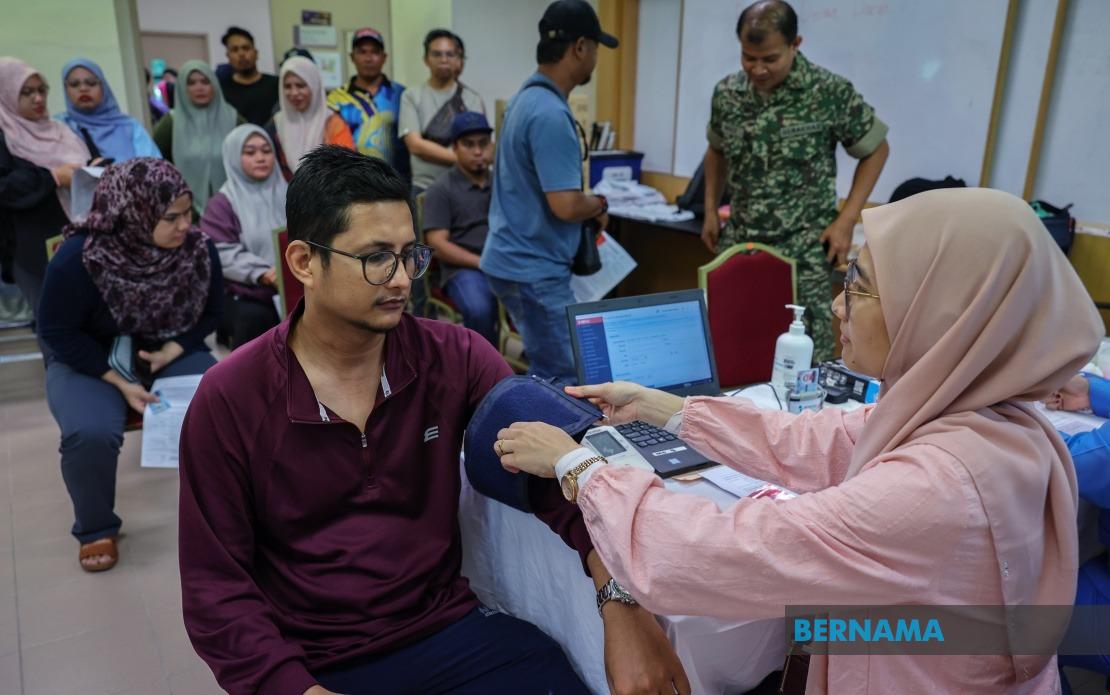
The Malaysian Armed Forces have demonstrated their commitment to civilian healthcare access by launching a comprehensive medical outreach programme in Baling, Kedah, combining free dental treatments, health screenings, and blood donation drives in what represents a significant expansion of civil-military cooperation efforts. The initiative, branded as "Military with the People", ran from Tuesday through July 11 at Sultan Abdul Halim Mu'adzam Shah International Islamic University (UniSHAMS) in Kuala Ketil and complemented the conclusion of the Basic Commando Course (Series AK/1/26), demonstrating how military institutional functions can be leveraged to serve broader community welfare objectives.
Under the Civil-Military Cooperation (CIMIC) framework, the armed forces established two distinct service pillars: the Medical Community Assistance Programme (MEDCAP) and the Dental Community Assistance Programme (DENCAP). These initiatives enabled residents from diverse socioeconomic backgrounds to access healthcare services that might otherwise require costly private visits or lengthy waits at government clinics. The dual-track approach reflected strategic thinking about holistic health delivery, recognising that oral and general health cannot be separated in comprehensive wellness programmes targeting rural and semi-rural populations.
The response from local residents underscored how significant a gap exists in accessible preventive healthcare for working-class Malaysians. Siti Salmiah Said, a 28-year-old factory worker, highlighted the practical value of on-site dental services, explaining that she had scheduled her day off specifically to attend and that her entire family—herself, her husband, and her six-year-old child—received immediate treatment. Her husband underwent scaling while her child received a dental filling, exemplifying how military medical capacity can absorb routine procedures that typically require multiple clinic appointments and administrative coordination. The convenience factor cannot be overstated in a context where many working Malaysians struggle to balance employment schedules with healthcare access.
Legal assistant Adam Ruzlan, 26, similarly praised the efficiency of receiving not just examination but actual treatment on-site, combined with personalised oral health education. The military dental officer provided him with specific guidance about decay and tartar buildup while reinforcing the importance of regular check-ups—a form of preventive health literacy that often gets neglected in rushed clinical environments. This educational component distinguishes genuine community health outreach from mere service provision, embedding sustainable health behaviours alongside immediate treatment.
The programme's appeal to individuals across different life stages became evident through additional testimonies. G. Devindran, a 37-year-old factory worker whose father had served as a commando, marvelled at the improved quality and speed of service compared to a similar initiative 28 years prior. He underwent both dental filling procedures and comprehensive health screenings measuring blood pressure, blood sugar, and Body Mass Index (BMI)—a battery of metrics increasingly important for early detection of non-communicable diseases that burden Malaysian healthcare systems and individual finances.
A particularly telling incident involved a 12-year-old child who experienced dizziness and nausea during the event. The mother, housewife Norhasliza Nayan, 44, praised the rapid medical response and professional assessment provided by Civil Defence Force (APM) personnel and Royal Medical Corps (KKD) staff, who measured the child's temperature, blood pressure, and oxygen levels before administering appropriate medication. Her suggestion that health initiatives of this calibre should be incorporated into other large-scale community events reflects emerging public recognition of military institutions' untapped potential for civilian healthcare delivery.
Captain Dr Muhammad Afiq Ishak, a dental officer from the 2nd Medical Battalion, explained that DENCAP focused on foundational treatments including fillings, scaling, and extractions while simultaneously building oral health awareness among participants. The programme's intelligence extended beyond treatment provision: medical staff conducted additional screening for elderly visitors showing signs of hypertension or diabetes risk, with appropriate referrals to nearby civilian dental clinics for cases requiring specialist follow-up. This integrated approach prevented the programme from becoming a standalone intervention disconnected from the broader healthcare ecosystem.
Lieutenant Colonel Dr Atiff Abdul Aziz, the Medical Officer at the Special Warfare Training Centre overseeing both MEDCAP and DENCAP operations, positioned the initiative within a larger strategic framework of inter-ministerial cooperation. The Ministry of Health, specifically the Baling District Health Office, collaborated with military medical units to deliver not just clinical services but also awareness campaigns addressing mental health stigma—a critical but often neglected dimension of public health in Malaysian contexts where mental wellbeing remains culturally sensitive. This partnership model illustrates how military institutional resources can be mobilised without displacing or undermining civilian health service authority.
The blood donation component of the initiative, managed in coordination with Sultan Abdul Halim Hospital (HSAH) in Sungai Petani, represented another layer of community contribution. By targeting collection of approximately 100 blood bags daily throughout the programme period, the armed forces simultaneously addressed acute transfusion service needs while building a culture of voluntary blood donation among residents. In Malaysia, where blood supply reliability remains inconsistent relative to healthcare demand, military-coordinated drives can stabilise inventories while strengthening community participation in health security.
For Malaysian policymakers, the Baling programme offers practical evidence that the armed forces' medical and dental capacity—developed primarily for troop readiness—represents a substantial national asset when repurposed toward civilian health access. Rural and semi-rural areas particularly benefit from such initiatives, given geographic barriers to traditional clinic attendance and limited private healthcare infrastructure. The enthusiasm demonstrated by factory workers, legal professionals, housewives, and mixed-age family groups suggests that demand for integrated, convenient healthcare delivery far exceeds current supply through conventional public health channels.
The CIMIC approach, rooted in civil-military cooperation principles, moves beyond traditional charity models toward a conceptualisation of the military as a strategic health asset capable of filling structural gaps in accessibility and equity. While such initiatives cannot substitute for sustained investment in civilian health infrastructure—particularly in underserved communities—they demonstrate the viability of institutional collaboration and the appetite among ordinary Malaysians for healthcare delivery models that respect their time constraints and financial limitations. Future scaling of this programme could include permanent community clinics staffed by military medical personnel in rotational assignments, creating sustainable touchpoints between armed forces personnel and civilian populations while addressing genuine health needs.
The Baling initiative ultimately reflects a broader shift in understanding civil-military relations in Malaysia, moving beyond security provision toward direct civilian welfare enhancement. As Malaysian communities face mounting burdens from preventable and chronic diseases, the institutionalisation of military medical outreach—carefully coordinated with Ministry of Health authorities to maintain clear lines of public health leadership—represents a pragmatic approach to expanding healthcare access without imposing unrealistic demands on an already-stretched public health budget. The programme's documented success suggests that similar initiatives warrant replication across Malaysia's rural districts and smaller towns where healthcare infrastructure remains constrained.

