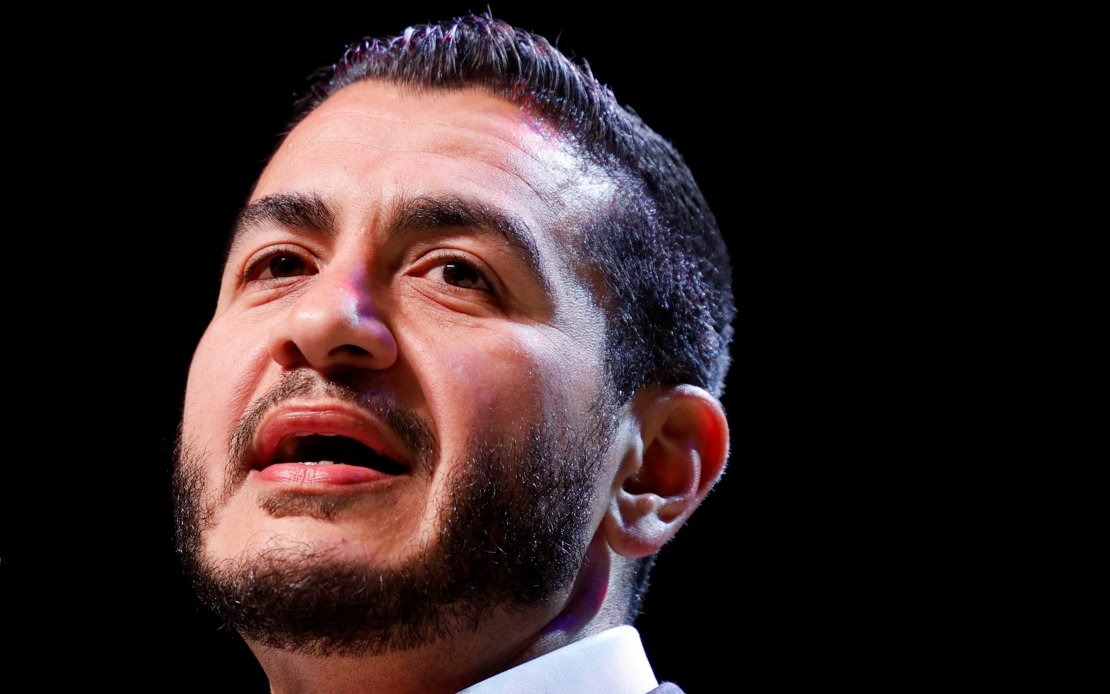
Abdul El-Sayed maintained a narrow advantage in Michigan's Democratic Senate primary Wednesday as voters across five American states chose party nominees for significant races ahead of November's midterm elections. With over 90 percent of ballots counted, El-Sayed held the lead against US Representative Haley Stevens, though the Associated Press had not yet officially called the contest at that stage. The winner of this primary will advance to face Republican Mike Rogers, who secured his party's nomination unopposed, in the general election to fill the seat left vacant by retiring Democratic Senator Gary Peters.
The Michigan Democratic Senate race crystallised fundamental tensions within the party between its establishment wing and progressive activists. Stevens attracted backing from prominent Democratic figures including the retiring Peters himself, signalling establishment confidence in her candidacy. By contrast, El-Sayed's campaign drew support from prominent progressives including Senator Bernie Sanders and Representatives Alexandria Ocasio-Cortez and Rashida Tlaib, reflecting the candidate's appeal to the party's more left-leaning base. This ideological split mirrors broader struggles within the Democratic Party over questions of direction and principles that have intensified in recent electoral cycles.
The Gaza conflict emerged as a defining issue throughout Michigan's primary campaign. American support for Israel and characterisations of operations in Gaza dominated voter conversations, revealing how international affairs now shape domestic political contests. Michigan, home to a substantial Arab-American and Muslim-American population, particularly in the Detroit metropolitan area, has become a flashpoint for debates over Middle Eastern policy within Democratic circles. The contrast between the candidates' positions on these issues likely influenced voting patterns, especially among younger voters and communities directly affected by the humanitarian situation in Gaza.
Michigan's congressional races also produced notable outcomes. Republican Jack Bergman won the 1st Congressional District primary with commanding support, capturing 74.3 percent of the vote against two challengers with most ballots tallied. In the 4th District, incumbent Republican Bill Huizenga secured renomination with an overwhelming 85 percent to 15 percent victory over Philip Tanis. Huizenga will advance to face Democrat Sean McCann, who prevailed in his party's contested primary with 67.2 percent against Diop Harris II, setting up what promises to be a competitive general election battle.
Kansas Republicans consolidated around incumbent Senator Roger Marshall, who dispatched challenger Pond Naramore with nearly 80 percent support across nearly all reporting precincts. Marshall will contest the November election against Adam Hamilton, who won a multi-candidate Democratic primary field. The Kansas gubernatorial race featured Democrat Cindy Holscher defeating two rivals for her party's nomination, positioning her to challenge Republican Ty Masterson. Masterson's primary victory benefited from backing by President Donald Trump, illustrating the former president's continued influence over Republican nomination contests. The winner will succeed Democratic Governor Laura Kelly, whose term-limited status opens the seat.
Missouri's congressional primaries took place under a new Republican-drawn map that reflected a Trump-backed redistricting strategy designed to strengthen the party's grip on House seats. In the 1st Congressional District, Democratic Representative Wesley Bell defeated four challengers to secure renomination, notably defeating former Representative Cori Bush in what amounted to an intra-party power struggle. Bell will face Republican Paul Berry III, who won his party's nomination. These results suggest continued Democratic strength in traditionally Democratic urban districts even as Republicans hope newly configured districts elsewhere will offset such losses.
Virginia's nomination contests produced a mixed outcome for the two parties heading into the general election. Republican Bert Mizusawa captured the Republican Senate nomination to challenge Democratic Senator Mark Warner, who faced no opposition for renomination. In the 1st Congressional District, Democrat Shannon Taylor edged ahead of rivals with just above 53 percent support to win her party's nomination, setting up a matchup against Republican Rob Wittman, who ran unopposed and seeks a tenth consecutive full term. These races underscore the competitive nature of Virginia politics, where both parties can win in different districts depending on local dynamics.
Virginia's 2nd District attracted former Democratic Representative Elaine Luria, who captured her party's nomination with substantial support, securing over 80 percent of the vote. She will advance against Republican Representative Jen Kiggans, who also ran without opposition. In the 7th District, Republican Doug Ollivant secured his party's nomination with 56.6 percent of the vote, setting up a contest against first-term Democratic Representative Eugene Vindman. These Virginia races reflect shifting electoral landscapes in individual districts that may determine party control of Congress.
Washington's all-party primary system, which allows candidates from all parties to compete on a single ballot with the top two finalists advancing to November regardless of party affiliation, produced distinct results. Democratic Representative Suzan DelBene and Republican Mary Silva both qualified for the general election in the 1st Congressional District. In another significant matchup, Democratic Representative Marie Gluesenkamp Perez will face Republican John Braun, who benefited from Trump endorsement. These results demonstrate how Washington's unique electoral structure can create unpredictable general election scenarios.
The Emily Randall seat in Washington's 6th District will see the incumbent Democrat advance to November to face Republican Teresa Fox. These varied outcomes across five states illustrate the complex nature of midterm politics, where local factors, candidate quality, party dynamics, and national issues all intersect to shape electoral outcomes. For Malaysian observers watching American politics, these primaries demonstrate how deeply local and regional concerns drive candidate selection and party strategy, even as international questions like the Middle East conflict increasingly influence voting behaviour in American domestic elections.

