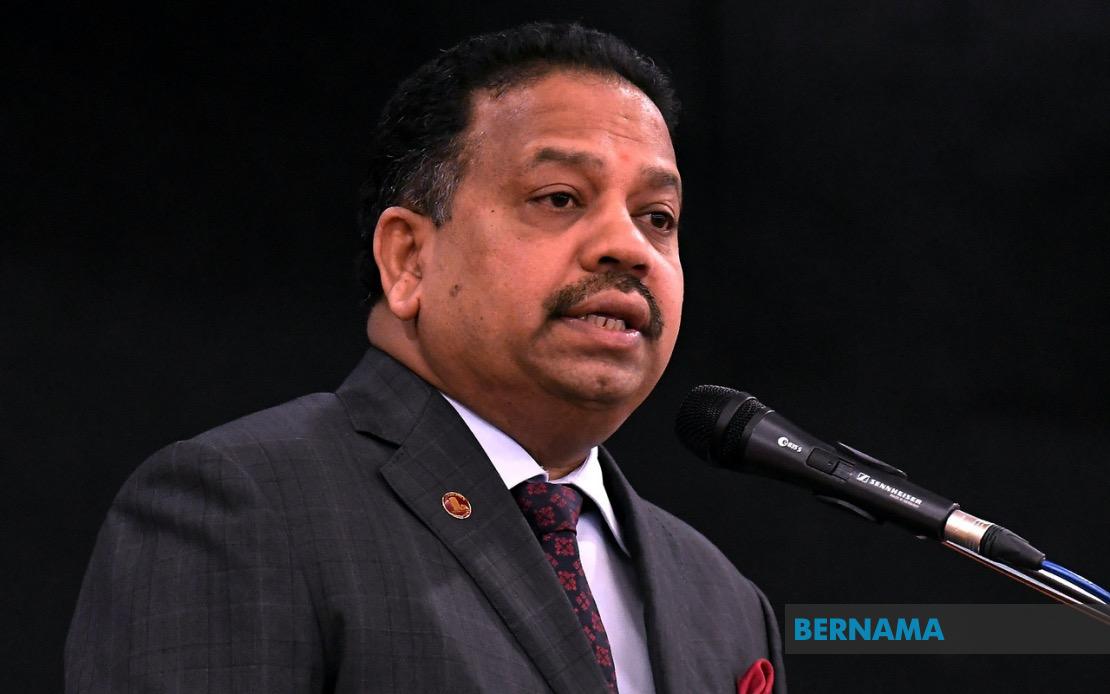
The Malaysian Indian Congress (MIC) has thrown its weight behind the Barisan Nasional's efforts to secure Indian voter backing in the 16th Johor state election, with party president Tan Sri S.A. Vigneswaran projecting optimism about the community's continued support for the coalition. Speaking at a press conference in Kulai, Vigneswaran attributed this confidence to the strong working relationship MIC has cultivated with both the federal and state administrations, suggesting that collaborative governance has produced tangible benefits for the Indian community across various policy areas.
The party's strategic positioning emphasizes a focus on practical problem-solving rather than adversarial campaigning. Throughout the election campaign, Vigneswaran explained, MIC has deliberately eschewed personal attacks on political opponents, instead channelling its energy toward articulating solutions for everyday concerns affecting voters. This approach reflects a broader calculation that Indian voters in Johor are most likely to be persuaded by candidates and parties capable of delivering concrete results through effective collaboration with sitting governments, rather than by rhetoric alone.
Four MIC-endorsed candidates are competing in the election across strategically significant constituencies. K. Raven Kumar is running in the Kemelah state assembly seat, V. Rugendran contests Kahang, P. Pannir Selvam is the MIC standard-bearer for Perling, and R. Kumaran is challenging in Bukit Batu. These four seats represent MIC's footprint in what remains one of Malaysia's most demographically diverse states, where the Indian community's electoral preferences continue to influence outcomes in multiple constituencies.
A significant portion of Vigneswaran's remarks addressed what he characterized as a misleading and inaccurate report published by a Tamil-language portal, which had claimed that MIC received government funds totalling RM221 million. The party president moved swiftly to clarify the factual basis of these allocations, a necessary step given the potential for misinformation to damage MIC's credibility during the election campaign. The distinction between direct political funding and institutional grants represents an important clarification in Malaysian politics, where questions about party financing have long attracted public scrutiny.
According to Vigneswaran's explanation, the funds in question constitute annual grants specifically allocated to AIMST University, a non-profit institution operated under a foundation structure rather than direct MIC ownership. The university receives these grants for legitimate operational purposes including facility maintenance and cost reduction, enabling the institution to maintain lower student fees and reduce financial burdens on learners. This characterization attempts to reframe the funding as institutional support with broader educational benefits rather than partisan political patronage.
The funding pattern reflects policy continuity under the current federal administration. Since Datuk Seri Anwar Ibrahim assumed office as Prime Minister in 2023, the government has allocated RM25 million annually to AIMST University, including in the current fiscal year. These allocations undergo standard auditing procedures and are deployed toward specific operational improvements such as dormitory upgrades, renewable energy installation through solar systems, and cost management initiatives designed to reduce the university's overall expenditure. The emphasis on auditing and documented expenditure forms a key element of Vigneswaran's defence against the portal's allegations.
The reputational stakes of this controversy should not be underestimated. For MIC, questions about government funding flows carry particular sensitivity given the party's role as a coalition partner in federal and state governments. Indian voters evaluating their electoral choices may harbour concerns about whether their political representatives are primarily focused on advancing community interests or securing government allocations for connected institutions. Vigneswaran's detailed public response suggests the party takes these perceptions seriously enough to warrant immediate clarification and legal action.
MIC's legal team has been instructed to pursue a formal letter of demand against the Tamil portal, seeking both correction of the report and retraction of what party leadership characterizes as defamatory allegations. This litigious response is consistent with how Malaysian political parties typically respond to reporting they deem inaccurate or reputation-damaging. The move signals MIC's determination to contest the narrative aggressively rather than allowing the claim to circulate unchallenged during the critical final days of the campaign.
The broader context of this dispute touches on longstanding questions about transparency in government funding flows to institutions with political party connections. While Vigneswaran's explanation provides a detailed rationale for the grants, the episode illustrates how quickly funding questions can become weaponized in Malaysian electoral campaigns. For Indian voters in Johor, the dispute may serve as a reminder to scrutinize the claims and counterclaims made by different parties, particularly regarding financial relationships between political organizations and government institutions.
MIC's performance in the Johor election carries implications beyond the state itself. As a critical BN coalition partner with significant influence among Indian voters nationwide, the party's electoral showing will signal whether the Indian community continues viewing Barisan Nasional as the most effective vehicle for advancing their interests. The party's emphasis on collaborative governance and institutional support reflects its positioning as a pragmatic political force focused on incremental advancement through working relationships rather than confrontational opposition politics.
The election outcome will provide concrete evidence of whether Vigneswaran's confidence in Indian voter support translates into electoral success for the four MIC candidates and Barisan Nasional more broadly in Johor. The Indian community's voting patterns in this election may also serve as a barometer for broader coalition dynamics heading into future electoral contests, particularly if governance effectiveness becomes the primary criterion by which voters judge the parties competing for their support.

