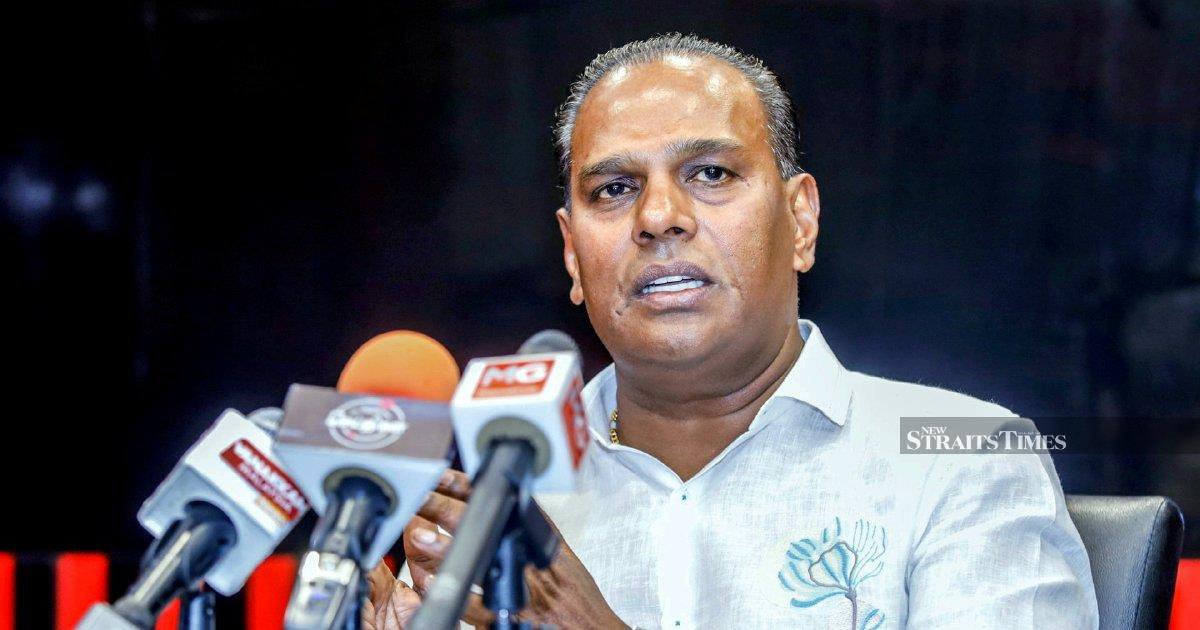
The deputy president of the Malaysian Indian Congress, Datuk Seri M. Saravanan, has publicly confirmed that he will face charges at the KL Sessions Court, signalling an important inflection point in a case that has drawn considerable attention within political circles and beyond. His confirmation ends months of speculation about the precise timing and location of legal proceedings against him, bringing clarity to a matter that has occupied significant space in the country's public discourse.
Saravanan's decision to openly acknowledge his appearance before the court represents a departure from the often-guarded approach taken by political figures facing legal action. By confirming rather than allowing details to emerge through official channels or media investigation, he has taken control of the narrative regarding his court date. This strategic transparency may be intended to demonstrate confidence in his position and prevent the spread of misinformation or speculation that typically accompanies such announcements.
The Malaysian Indian Congress, the oldest Indian-based political party in Malaysia, has long played a significant role within the Barisan Nasional coalition, though its influence has waned considerably over successive electoral cycles. Saravanan's position within the party hierarchy underscores the seriousness with which the MIC has regarded developments on this matter. As deputy president, he represents a substantial concentration of authority within the party structure, and his legal challenges inevitably carry implications for the broader organisation and its stakeholders.
The decision to proceed with charges represents a culmination of investigative processes that have unfolded over an extended period. Malaysian legal procedures typically involve comprehensive examination of evidence and consultation between enforcement agencies and prosecutorial authorities before formal charges are filed. Saravanan's confirmation suggests that these preliminary phases have concluded and that authorities have determined sufficient grounds exist to proceed to the formal charging stage.
From a procedural standpoint, the KL Sessions Court remains the appropriate venue for cases of this complexity and seriousness. The court's jurisdiction covers a broad spectrum of criminal matters that exceed the capacity of lower courts to adjudicate, ensuring that cases proceeding there receive the level of judicial scrutiny commensurate with their significance. The specific date of appearance will mark the formal commencement of adversarial proceedings, where both the prosecution and defence will present their respective positions before a presiding judge.
For Malaysian political observers and analysts, developments of this nature carry particular resonance given the country's history of high-profile legal cases involving prominent political figures. The proceedings against Saravanan occur within a broader context of enhanced scrutiny directed towards political accountability and governance standards. These cases frequently attract sustained media attention and public commentary, contributing to evolving perceptions of institutional integrity and the impartiality of the judicial system.
The implications extend beyond Saravanan himself to encompass the MIC as an institution and its position within Malaysia's political landscape. The party has maintained its coalition partnership despite declining electoral performance in recent decades. Leadership challenges and internal controversies have periodically tested the party's cohesion, and legal proceedings involving senior figures inevitably generate questions about succession, direction, and institutional resilience. Party members and supporters will be monitoring developments carefully as indications of how the organisation manages this period of challenge.
For the broader Indian community in Malaysia, which constitutes approximately nine percent of the national population, the case carries particular interest. The MIC has historically served as the primary political voice and representative body for Indian Malaysians within government structures, though this monopoly on representation has eroded as other political parties have competed for Indian voter support. Legal challenges facing the party's leadership may influence community political dynamics and voting patterns in upcoming electoral contests.
The public confirmation by Saravanan demonstrates a recognition that suppressing or delaying information regarding court appearances serves little practical purpose in contemporary Malaysia, where communication technologies and media plurality ensure rapid information dissemination. Rather than attempt to manage revelations about court dates, political figures increasingly acknowledge proceedings directly. This approach, while not eliminating controversy, allows the facts themselves to remain central rather than becoming obscured by secondary disputes about the authenticity or timing of disclosures.
As Saravanan prepares for his court appearance, attention will focus on the specific charges to be filed, the evidence supporting them, and the timeline for the complete judicial process. These elements will shape public understanding of the case and influence perceptions among both political supporters and critics. The proceedings will unfold within a system that, despite periodic criticisms regarding efficiency and consistency, maintains the institutional framework necessary for adjudication according to Malaysian law.
The coming months will likely see intensive legal activity as both prosecution and defence prepare comprehensive submissions and evidence presentations. Malaysian court proceedings, particularly those involving prominent political figures, tend to generate sequential appearances and hearings extending over extended periods. During this time, Saravanan's legal team will likely develop defence strategies while prosecution authorities consolidate their case. The public attention accompanying such proceedings ensures that legal principles and judicial reasoning become subjects of broader civic discussion and analysis.

