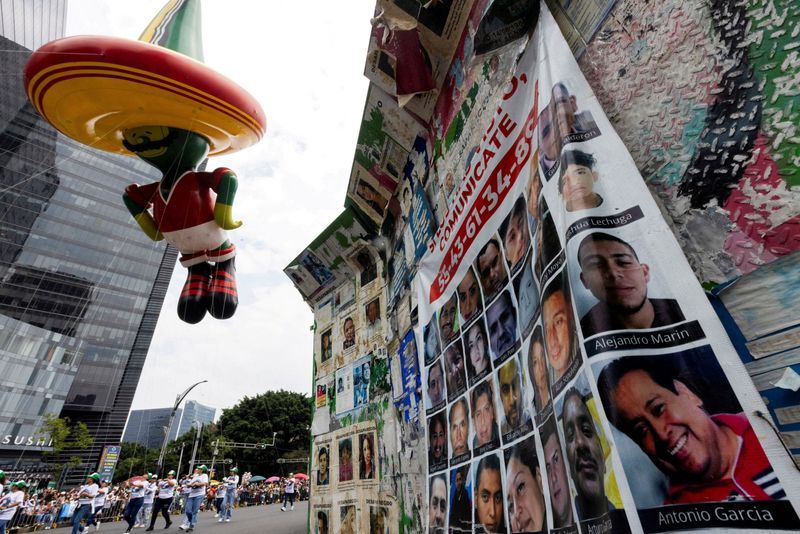
The anticipation surrounding Mexico's World Cup campaign has transformed Mexico City's Paseo de Reforma into a patriotic thoroughfare adorned with towering screens and nationalist imagery. Yet alongside the celebratory apparatus sits an uncomfortable reality: posters documenting the country's 135,000 missing persons, a haunting statistic that has ballooned since President Felipe Calderon declared war on drug cartels in 2006. This juxtaposition encapsulates the tension defining Mexico's experience at a tournament meant to unify the nation through sport, revealing instead the fractures beneath the surface of national pride.
The Mexican team's remarkable performance—advancing through the group stage without conceding a goal and securing a first knockout-stage victory in four decades by defeating Ecuador—has delivered the kind of psychological relief that major sporting events can offer populations facing structural challenges. Yet this emotional respite comes at a time when ordinary Mexicans confront mounting economic pressures and government accountability questions. Podcaster and journalist Carlos Mendoza observed that while World Cup victories provide a form of national escapism, they do not address underlying problems such as accusations of corruption within the ruling Morena party. When the tournament concludes, he noted, the difficulties will remain unresolved.
Economic hardship has emerged as a significant counterweight to sporting celebration. Although inflation moderated in early June, Mexico's core inflation rate continues to exceed the central bank's three percent target, straining household budgets across income levels. The financial burden extends to the tournament itself: ticket prices for World Cup matches have climbed into thousands of dollars, effectively barring ordinary fans from attending. This commercialization of patriotism particularly rankles those already struggling with rising costs of basic goods and services. The situation represents a departure from earlier World Cup traditions, when ticket accessibility rather than affordability determined stadium attendance.
Violence marred moments of celebration, underscoring how even sporting joy can turn tragic in Mexico's current context. Four people died during celebrations following Mexico's victory over Ecuador around Reforma, a sobering reminder that security challenges persist regardless of national festivities. These deaths, combined with visible anti-World Cup graffiti still covering city walls and the Azteca Stadium, testify to organized opposition to the tournament's expense and implications for governance priorities.
Protest activity has remained visible throughout the tournament period, with members of the CNTE teachers' union establishing tent camps that blocked entire roads in central Mexico City. Their demands highlight longstanding labor grievances: repeal of a 2007 pension and social security law affecting public-sector workers, plus salary increases. This labor unrest demonstrates that significant constituencies view the World Cup as a distraction from economic demands the government has failed to adequately address. The union's willingness to maintain high-visibility protests during Mexico's tournament participation signals the depth of frustration within public-sector employment communities.
President Claudia Sheinbaum's approval rating stands at 69 percent according to an El Financiero poll, showing recovery from a slight decline that began in March. The government has committed to locating missing persons as a national priority, yet this pledge has not prevented citizens from questioning whether World Cup expenditures represent appropriate allocation of national resources during an economic slowdown. The administration appears to recognize the legitimacy of balancing sporting pride with substantive governance, though citizens remain skeptical about whether the government will translate post-World Cup momentum into concrete policy action.
Local politician Rodrigo Cordera articulated the cognitive complexity many Mexicans experience, observing that citizens can simultaneously celebrate ninety minutes of football while harboring anger at FIFA's organization, municipal governance failures, and national policy decisions. This capacity to hold contradictory emotions represents a more nuanced patriotism than simple flag-waving nationalism. Rather than requiring citizens to choose between pride in their national team and concern for their country's direction, this perspective acknowledges that national identity encompasses both sporting achievement and critical evaluation of governance.
The tension between escapism and engagement extends to how the tournament affects political accountability. Resident Alejandra Gonzalez suggested that while the World Cup does not eliminate Mexico's troubles, it relegates them to lower priority within public consciousness. More concerning, she argued, is that governments leverage World Cup euphoria to delay urgent decisions on substantive policy matters. Her cautious hope that celebrations might inspire positive national momentum is tempered by recognition that critical thinking must accompany patriotic enthusiasm. Citizens must simultaneously embrace their team's achievements while maintaining vigilance regarding governmental performance and societal inequalities.
For Malaysia and other Southeast Asian nations watching Mexico's tournament experience, the situation offers instructive lessons about the relationship between sporting spectacle and political legitimacy. Governments worldwide have sought to leverage international tournament hosting as opportunities for nation-building and distraction from governance challenges. Mexico's experience suggests that populations, particularly in countries facing substantial development challenges, grow increasingly sophisticated about this dynamic. Sporting patriotism cannot substitute for economic opportunity, security, or effective governance, and citizens demonstrate capacity to celebrate national achievements while withholding judgment about government performance.
The remainder of Mexico's World Cup journey will unfold against this backdrop of conflicting emotions and competing priorities. Should the team advance further, the euphoria will intensify, potentially deepening the contrast between national celebration and persistent domestic challenges. Conversely, elimination might precipitate a rapid return to focus on governance failures and economic hardship. Either outcome will test whether the national unity forged through sporting participation translates into sustained political will to address issues like migration, security, corruption, and economic inequality that ultimately determine quality of life for ordinary Mexicans far more decisively than tournament results.

