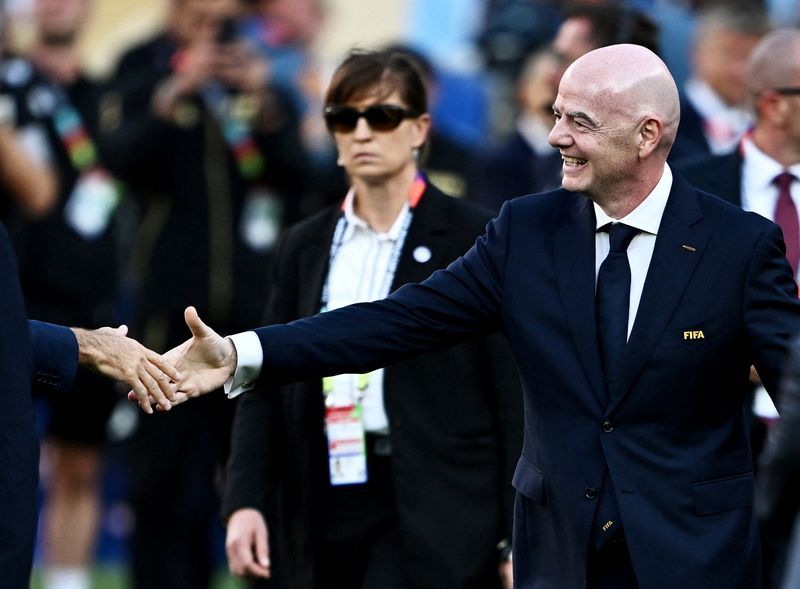
FIFA President Gianni Infantino faces a sharply divided global football community as Mexico and Argentina moved this week to publicly endorse his leadership, even as multiple continental confederations and individual nations withdraw support over a controversial now-abandoned scheme to monetise portions of the World Cup's commercial future. The conflicting positions from football's major stakeholders underscore the depth of institutional tensions roiling world soccer ahead of Infantino's widely anticipated reelection campaign in Morocco this March.
The Mexican Football Federation (FMF), which co-hosted the recently concluded World Cup alongside the United States and Canada, has broken solidarity with its own regional governing body, CONCACAF, by issuing a formal statement of support for Infantino. This split is particularly significant because CONCACAF had previously called for what it termed a "comprehensive reckoning" with the Swiss administrator's presidency, signalling that the confederation questioned his fitness to continue leading the world's largest football governing body. The FMF's move suggests that individual national associations are willing to defy their continental confederation's position if they believe the institutional framework of FIFA decision-making demands it.
Argentina's football association similarly threw its weight behind Infantino in a letter expressing confidence in his stewardship over the past decade. The AFA acknowledged that Infantino's failed proposal to sell commercial rights had created significant uncertainty and that procedural errors had been made. However, the association argued that the appropriate course was to continue working within FIFA's governance structures rather than pursue the confrontational approach favoured by UEFA and other critics. This position reflects a pragmatic calculation that FIFA, for all its flaws, remains the institution through which national football associations must operate to advance their interests.
The continental confederations, by contrast, have largely fractured along ideological lines regarding accountability and governance reform. The Confederation of African Football provided Infantino with unanimous backing on Thursday, suggesting the African nations view the World Cup commercial proposal controversy as a tempest unlikely to fundamentally damage FIFA's capacity to deliver benefits to member federations. UEFA, meanwhile, has doubled down on its opposition, reiterating its commitment to boycott FIFA competitions—a significant threat given European football's commercial prominence and competitive quality. Asia's confederation stated it stood in solidarity with the boycott movement, adding another substantial bloc to Infantino's opposition.
South America's CONMEBOL adopted a more constitutionally-minded stance, insisting that any effort to remove or challenge Infantino must proceed through a vote involving all 211 FIFA member associations. This position does not necessarily indicate support for the president but rather reflects a belief that institutional rules and democratic procedures must be respected even when political preferences might favour a different outcome. The FMF echoed this reasoning, stating it would neither recognise nor approve any process conducted outside FIFA's formal institutional framework, effectively raising the procedural bar for any anti-Infantino campaign.
Infantino's proposal to monetise World Cup commercial rights represented a dramatic attempt to unlock additional revenue streams by selling portions of broadcasting and sponsorship opportunities that traditionally belonged to FIFA itself. The scale of the controversy suggests the proposal threatened established relationships and revenue-sharing arrangements that member associations rely upon. FIFA subsequently issued an apology for "mistakes" related to the initiative following a meeting in Rabat this week, though the organisation characterised the errors as procedural and communicative rather than violations of formal governance rules. This distinction matters greatly: FIFA maintains that it acted within its regulatory authority, while critics view the secrecy and unilateral approach as fundamentally at odds with transparent governance.
The reelection campaign that looms in March has shifted dramatically from what appeared two months ago to be an inevitable coronation. Infantino still commands considerable institutional support, particularly from confederations in Africa and South America with substantial membership bases. However, the absence of a unified opposition candidate represents both an opportunity and a risk for his reelection bid. The lack of a plausible alternative means that votes against Infantino carry no constructive purpose—dissidents cannot realistically install someone else. Yet this same reality may consolidate opposition votes around a "no confidence" message regarding his fitness for a fourth term.
Croatia's football federation joined England and Albania in withdrawing support for Infantino, citing the recent controversies surrounding the 2026 World Cup hosting arrangements and governance discussions within European football bodies. These individual national association defections are politically significant even if they lack the binding force of confederation-level opposition, as they demonstrate that Infantino's support base is not monolithic even in football's traditional powerhouse regions.
The international players' union FIFPRO took the harshest line available, characterising the World Cup commercial rights proposal not merely as governance mismanagement but as an abuse of presidential authority. This language escalates the controversy beyond procedural disputes into questions of whether Infantino acted with integrity and respect for the limitations on executive power. FIFPRO's intervention is significant because players represent the ultimate producers of the entertainment and sporting value that makes FIFA competitions valuable to commercial partners and broadcasters.
Infantino's defence rests substantially on the argument that FIFA acted within its formal regulatory authority and that the errors involved process and messaging rather than substantive breaches of governance rules. This legalistic argument may satisfy confederations like CONMEBOL that prioritise institutional procedure, but it appears inadequate for critics who believe that FIFA's governance culture requires not merely compliance with technical rules but genuine transparency and stakeholder consultation. The unbridged gap between these philosophical positions—rules-based versus relationship-based governance—likely ensures that the controversy will continue shadowing Infantino's leadership regardless of his March reelection outcome.
For Malaysian and Southeast Asian football stakeholders, the Infantino controversy raises uncomfortable questions about the balance of power within FIFA's global governance structure. The willingness of African and South American confederations to back Infantino despite the commercial rights proposal demonstrates that FIFA's decision-making remains substantially influenced by confederations that control large numbers of member associations, regardless of those decisions' merit or transparency. Southeast Asia's alignment with UEFA's governance concerns may prove symbolically significant without translating into meaningful pressure on FIFA's institutional direction, particularly if major confederations continue to prioritise institutional stability and revenue flows over governance reform.

