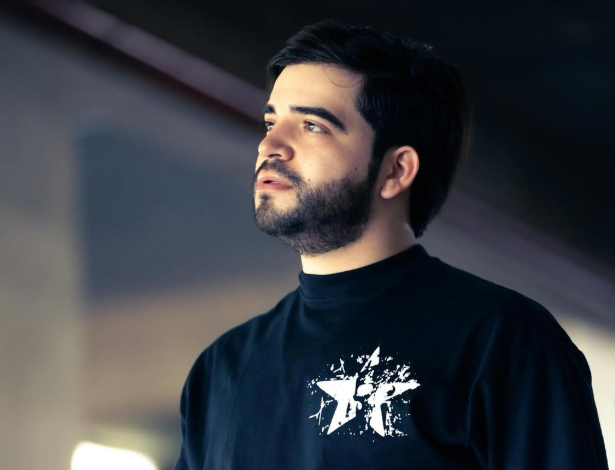
A Mexican TikTok influencer with an enormous online following has been gunned down in broad daylight while livestreaming to friends outside a fast food outlet in Culiacan, the capital of Sinaloa state. Cesar Gastelum, 25, was killed on Tuesday in an attack captured on video when two helmeted assailants on a motorcycle pulled alongside the group and opened fire. The incident marks another shocking reminder of how organized crime violence in Mexico has begun targeting social media personalities with alarming frequency, transforming Mexico's digital entertainment sphere into an increasingly dangerous arena.
Gastelum had cultivated a substantial following of nearly 600,000 people on TikTok, where he built his audience largely through comedy-focused content. While livestreaming that afternoon, he was surrounded by friends when the motorcycle-mounted gunmen approached. In footage reviewed by Reuters, the driver of the bike can be seen firing directly at Gastelum at point-blank range. The livestream feed was quickly cut off and subsequently removed from the platform, though images and video clips from the attack have since proliferated across social media and messaging networks, escaping the initial containment efforts of content moderators.
Local law enforcement initially reported only the death of a delivery worker at the scene, creating confusion about the victim's identity. However, authorities soon corrected their account and confirmed the casualty as Gastelum himself. The announcement prompted an immediate security response, with soldiers and police units deployed to the fast food restaurant location. Forensic teams processed the crime scene, collecting evidence while removing the victim's body as cameras from local television stations documented the recovery operation.
Culiacan, the regional capital where the killing occurred, has become synonymous with narco-related bloodshed across Mexico. The city remains a flashpoint in an ongoing territorial struggle between rival criminal syndicates fighting for dominance in drug trafficking routes and local criminal markets. This latest homicide fits a broader pattern of turf wars and power consolidation among organized crime groups that have shown little regard for civilian life, including those who have achieved prominence through entertainment and social media platforms.
The murder echoes a similarly horrific incident from May 2025, when Mexican beauty influencer Valeria Marquez, aged 23, was shot during a livestream at the salon in Zapopan, Jalisco, where she worked. Marquez's killing was particularly shocking because it occurred in what should have been a safe professional environment, with an armed man entering the salon and opening fire. Prosecutors launched their investigation under femicide protocols, recognizing the case as part of broader violence against women in Mexico. The parallels between these two livestream killings—both young, social media-prominent individuals targeted in public settings while broadcasting to their audiences—suggest an unsettling trend.
Authorities have connected Marquez's death to a significant organized crime figure apprehended during a July operation in Jalisco. Ramon Angel Alvarez Ayala, operating under the alias "El R-1," was arrested and identified by Security Minister Omar Garcia Harfuch as a cell leader with connections to the Jalisco New Generation Cartel, or CJNG, one of Mexico's most powerful criminal organizations. Prosecutors have credited Alvarez Ayala with ordering and financing Marquez's assassination, extending his criminal reach beyond localized turf disputes into the targeting of public personalities.
The same arrested individual has also been linked to the murder of Carlos Manzo, the mayor of Uruapan, who was killed in November 2025 under orders that authorities claim Alvarez Ayala issued and financed. The progression from targeting influencers to eliminating elected officials demonstrates how organized crime in Mexico now operates across traditional institutional boundaries, with criminal enterprises willing to assassinate figures regardless of their profile or the attention such killings generate.
For Malaysian and Southeast Asian observers, the Gastelum case presents a cautionary example of how criminal networks in other regions have evolved to exploit digital platforms and the public visibility that social media creates. While Mexico's violence reflects unique regional factors—particularly the drug trade dynamics and historical state-weakness in certain territories—the underlying vulnerability of online personalities to attack represents a challenge that extends across borders. Content creators across Asia have increasingly become targets for extortion, kidnapping, and violence as criminal enterprises recognize the economic value and leverage that comes with threatening popular social figures.
The rapid circulation of footage from Gastelum's killing, despite platform removal efforts, also raises questions about content moderation and the responsibility of social media companies in managing violent imagery. TikTok and other platforms have invested heavily in safety protocols, yet the ease with which violent videos spread demonstrates the ongoing tension between free expression, user safety, and the technological capacity to contain harmful content. This challenge confronts digital platforms operating throughout Southeast Asia, where similar incidents have occurred with limited institutional capacity for investigation and prosecution.
Mexico's security apparatus faces mounting pressure as criminal violence continues to claim high-profile victims while simultaneously being broadcast to millions in real time. The documented nature of these killings—captured on video and shared widely—creates a feedback loop that simultaneously publicizes crimes while potentially serving as propaganda for criminal organizations seeking to demonstrate their reach and ruthlessness. For authorities in Mexico and across the region, the emergence of livestreamed violence targeting social media personalities represents a new frontier in organized crime strategy.
Culiacan remains under intense security scrutiny following the Gastelum killing, though residents and observers alike recognize that deployments of soldiers and police have proven insufficient to deter organized crime violence in the past. The criminal groups operating in Sinaloa have demonstrated remarkable adaptability, evolving their tactics and targets as circumstances change. The targeting of influencers may represent an effort to extend intimidation beyond traditional rivals to encompass anyone with substantial public platforms, effectively weaponizing fear across Mexico's digital landscape.

