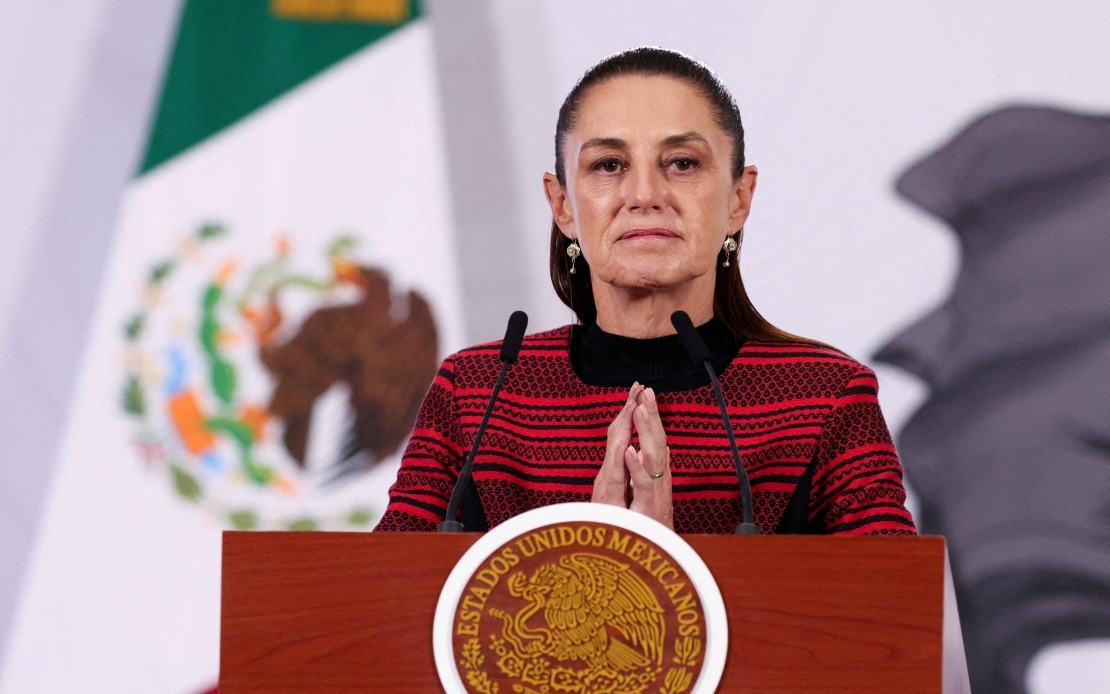
Mexican President Claudia Sheinbaum will travel to the World Cup final this weekend after receiving a direct invitation from United States President Donald Trump, marking a notable diplomatic gesture amid ongoing bilateral tensions. The Mexican leader confirmed the development to journalists on Friday, indicating that Canada's Prime Minister Mark Carney will also be present at the match between Argentina and Spain in East Rutherford, a stadium complex located near New York City. The decision required Sheinbaum to rearrange her schedule in the Mexican state of Quintana Roo to make the journey.
The invitation itself carries symbolic weight given the current state of Mexico-US relations. Trade disputes and security concerns have dominated recent discussions between the two neighboring nations, creating a backdrop of friction that makes the social engagement all the more noteworthy. Sheinbaum's acceptance signals a willingness to maintain diplomatic channels and engage in multilateral sporting occasions despite these underlying disagreements. The gesture from Trump appears designed to reinforce ties between the co-hosting nations during what is shaping up to be one of football's most prestigious tournaments.
This will mark only the second in-person meeting between Sheinbaum and Trump. They previously encountered each other in December when attending the World Cup draw ceremony in Washington, suggesting their personal relationship remains relatively underdeveloped despite leading neighboring countries with deep economic interdependence. The limited face-to-face contact between the two leaders underscores how formal diplomatic channels have become more prominent than casual political engagement in recent times.
Sheinbaum's decision to attend the final stands in contrast to her earlier choice regarding tournament opening ceremonies. In June, she declined to be present at the opening match held at Azteca Stadium in Mexico City, instead giving her ticket to an indigenous woman known for her passionate support of football. That decision reflected her governance priorities and her preference for grassroots engagement over ceremonial attendance. The move was seen by many as an authentic reflection of her values rather than a political snub, demonstrating her willingness to prioritize citizens over protocol.
The Spanish royal family is expected to provide strong support for Spain's campaign in the final. King Felipe VI, Queen Letizia, Crown Princess Leonor, and Infanta Sofía will all be in attendance on Sunday to witness their national team's bid for glory. The presence of such high-profile European dignitaries alongside leaders from the co-hosting nations will create an unusually star-studded crowd for the championship match, elevating the event's diplomatic significance beyond mere sporting competition.
Argentina's President Javier Milei, by contrast, will not be watching from the stadium itself. The Argentine leader has opted to stay away out of superstition, a decision that reflects deeply embedded cultural beliefs within his nation. Argentina has a long tradition of superstitious practices and rituals that supporters believe influence match outcomes. By remaining absent from the stadium, Milei follows a pattern that some Argentine leaders have adopted when their nation reaches major tournament finals, believing that certain behaviors or absences might actually improve their team's chances of victory.
The World Cup's three-nation hosting arrangement between Mexico, the United States, and Canada represents an unprecedented collaborative effort in tournament history. Having political leaders from all three nations converge at the final strengthens the sense of shared ownership over the event and demonstrates that despite bilateral disagreements on trade and security, these countries recognize the unifying power of international sport. For Malaysian and Southeast Asian observers, this serves as a reminder that major sporting events can facilitate dialogue even when diplomatic relations are strained.
The logistics of Sheinbaum's attendance required careful coordination given her official responsibilities in Mexico. Rearranging her schedule in Quintana Roo, a region that typically demands significant presidential attention due to tourism and economic importance, underscores how important the attendance at the World Cup final was deemed by her administration. The willingness to shuffle her domestic commitments sends a clear message about the value her government places on international engagement and maintaining positive relations with Washington.
For regional analysts, Sheinbaum's acceptance of Trump's invitation carries implications for how Mexico navigates its most crucial bilateral relationship. At a time when negotiations over trade, immigration, and security require careful diplomacy, maintaining social connections and goodwill at the highest levels becomes tactically important. The World Cup final provides a neutral, celebratory setting where serious political differences can be temporarily set aside, allowing leaders to build personal rapport that might facilitate smoother negotiations in other domains.
The convergence of world leaders at the final also highlights how major sporting events have evolved beyond their athletic purpose. They have become platforms for international diplomacy, allowing nations to showcase their organizational capacity and their commitment to global cooperation. For Mexico, hosting this tournament alongside its neighbors demonstrates its ability to manage large-scale international events, even during periods of domestic and bilateral challenge. The fact that Sheinbaum is attending the final, rather than the opening ceremony, creates a particular narrative about leadership priorities and the evolution of her public positioning since taking office.

