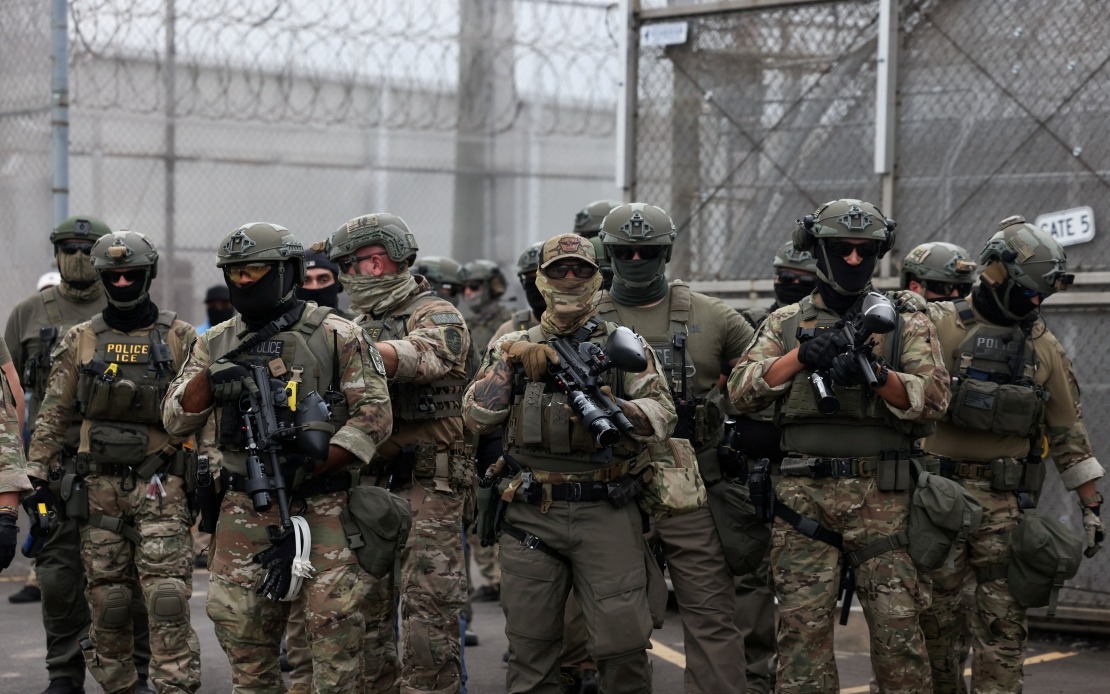
An Immigration and Customs Enforcement officer in the United States fatally shot a Mexican national during a confrontation that unfolded in the early hours of an unspecified date, according to the Department of Homeland Security. The incident has triggered dual investigative reviews, with the department's internal affairs division examining the officer's conduct while the FBI's Houston office investigates the alleged assault on the federal agent. The identity of the deceased has been reported as Lorenzo Salgado Araujo, a man whom authorities allege was residing in the country illegally.
According to the Department of Homeland Security's account, the encounter escalated when the driver refused to comply with officer commands while remaining inside his vehicle. The situation deteriorated rapidly when the man allegedly drove forward and struck an agent's car, then allegedly attempted to strike an officer directly with the vehicle itself. Facing what officers characterised as an imminent threat, one agent discharged his firearm. The driver was transported to a hospital for emergency medical treatment but succumbed to injuries sustained during the shooting.
This incident arrives at a sensitive moment for US law enforcement agencies, particularly those tasked with immigration enforcement and border security. Recent years have witnessed mounting scrutiny of officer-involved shootings, with civil society groups and legal advocates questioning the proportionality of force used in various encounters. The involvement of multiple witnesses at the scene introduces another layer of complexity; NBC News reported that several bystanders recorded photographs and video footage of the unfolding events, material that could prove pivotal in establishing an independent account of what transpired.
Historical precedent weighs heavily on such cases. Video evidence in previous incidents has frequently contradicted official narratives provided by law enforcement agencies, exposing discrepancies between what authorities claimed occurred and what documentation actually captured. Such gaps between institutional accounts and recorded evidence have eroded public confidence and fuelled demands for greater transparency and accountability within federal enforcement agencies.
The parallels to a January incident underscore the gravity of current circumstances. During that earlier operation, federal agents opened fire on two American citizens, Renée Good and Alex Pretti, resulting in their deaths. That shooting generated considerable public backlash and national discourse about the scope of authority granted to federal officers and the safeguards designed to prevent loss of life during enforcement operations. The circumstances surrounding those deaths raised fundamental questions about decision-making protocols and the training officers receive regarding threat assessment and proportional response.
For Malaysian and Southeast Asian observers, this incident illuminates broader concerns about immigration enforcement practices in developed democracies. The United States, as a major destination for international migrants and workers, faces persistent tensions between border security imperatives and the protection of individual rights. The expansion of enforcement agencies and increasingly aggressive operational tactics have become topics of significant debate within American political circles and civil society.
The dual investigation mechanism—with both internal departmental review and external FBI involvement—reflects institutional attempts to maintain credibility and neutrality. However, critics argue such arrangements sometimes lack the independence necessary for genuine accountability, given that investigating agencies remain part of the same federal law enforcement ecosystem. The presence of civilian video evidence may prove decisive in determining whether the official account withstands scrutiny.
The case also raises questions about the legal status determination process and whether adequate safeguards exist before enforcement actions commence. The allegations regarding Salgado Araujo's immigration status remain unsubstantiated in the available reporting, leaving open the possibility that contested status claims may have triggered an enforcement operation that culminated fatally.
For stakeholders across Southeast Asia monitoring US domestic policy, this incident exemplifies the intersection of immigration control, law enforcement authority, and human rights protection. Many nations in the region grapple with similar challenges regarding undocumented migrants and the appropriate level of force officers may employ during apprehension operations. International standards developed through human rights bodies emphasise that force must remain proportional, necessary, and subject to robust oversight mechanisms.
The outcome of both investigations will merit close attention, particularly regarding whether findings lead to disciplinary action, policy modifications, or procedural reforms. Previous investigations into officer-involved shootings have produced varied results, from exoneration of officers to significant settlements and organisational changes. The availability of witness video footage may constrain the range of plausible findings and potentially force greater transparency regarding investigative conclusions.
Ultimately, this incident contributes to the ongoing American conversation about the appropriate balance between security operations and the preservation of life and dignity. It also demonstrates why transparent, credible investigative processes carry importance beyond legal necessity—they influence public perception of institutional legitimacy and the rule of law itself. As immigration enforcement remains a contentious issue in contemporary American politics, incidents such as this one will continue attracting scrutiny and shaping public debate about federal agency practices.

