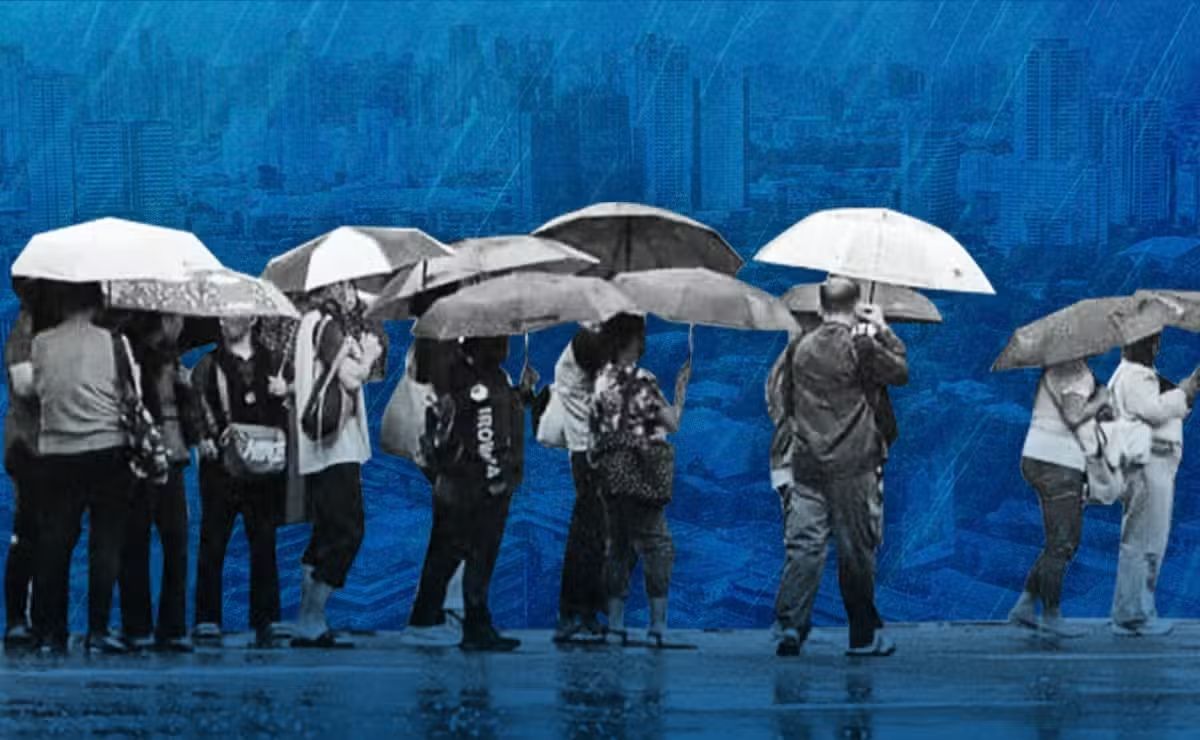
The Philippines' capital endured an extraordinary weather event from August 5 to 14, when the southwest monsoon and successive tropical cyclones dumped an average of 483.4 millimetres of rain across Metro Manila in just ten days. The deluge has reignited urgent questions about whether the region's flood defences are adequately designed and maintained, and whether billions allocated for protection infrastructure actually reach communities vulnerable to inundation.
Dr Alicor Panao, an associate professor at the University of the Philippines and data scientist, analyzed readings from 23 Philippine Atmospheric, Geophysical and Astronomical Services Administration stations that recorded the rainfall episode. His findings reveal that the sheer concentration of water in such a compressed timeframe poses acute challenges for drainage systems and water bodies already strained by rapid urbanization and climate pressures. The daily average of approximately 48.3 millimetres masks far more dramatic variations across monitoring points, with some locations recording dramatically higher accumulations than others.
The rain's intensity peaked sharply during August 9 and 10, when approximately half of the ten-day total descended on Metro Manila. The Airport station recorded a single-day peak of 226.5 millimetres on August 9 alone, an extraordinary concentration that overwhelmed drainage infrastructure and triggered widespread flooding. While this fell short of the catastrophic single-day record of 455 millimetres set during Tropical Storm Ondoy in 2009, the sustained nature of this latest episode presents distinct challenges that single-event comparisons fail to capture.
When translated into absolute volumes, the rainfall statistics become even more striking. Across Metro Manila's roughly 620 square kilometres, the cumulative 483.4 millimetres equates to approximately 120,000 Olympic-size swimming pools of water distributed across the metropolitan area. To contextualize this for residents: the equivalent of nearly 193 Olympic pools fell on every single square kilometre of the capital. Certain elevated areas recorded even more formidable totals, with Sitio Wawa capturing 708 millimetres, San Mateo-2 registering 701 millimetres, and La Mesa Dam accumulating 645.5 millimetres over the same period.
Dr Panao emphasizes that the problem transcends simple infrastructure capacity. When heavy rainfall occurs in rapid succession over days rather than weeks, drainage systems, rivers, and natural water catchments lack time to recede and restore normal function. Each subsequent deluge encounters channels already saturated from previous downpours, creating a cascading failure across the entire hydrological network. This dynamic helps explain why repeated rainfall episodes within compressed timeframes prove far more destructive than equivalent totals spread across longer periods, a crucial distinction often overlooked in public discourse about flood management.
The governance dimension of this infrastructure crisis has become increasingly contentious. Recent investigations have uncovered evidence of ghost projects—infrastructure built incompletely or not at all—alongside substandard construction and inflated contract values within the flood-control sector. These revelations suggest that inadequate flood protection may result not simply from insufficient budget allocation but from systemic failures in project execution, oversight, and accountability. Criminal proceedings are reportedly underway against individuals implicated in these schemes, yet residents continue bearing the consequences of infrastructure that fails to perform its intended protective function.
For Malaysia and other Southeast Asian nations grappling with similar monsoon vulnerabilities and rapid urbanization, the Manila case study offers sobering lessons. The region's tropical climate generates intense precipitation events that any single infrastructure project cannot wholly eliminate. Success requires not only adequate capital investment but rigorous quality assurance, transparent procurement processes, and independent monitoring mechanisms. When powerful interests can manipulate or redirect flood-control budgets, entire populations remain exposed despite substantial expenditure.
The historical context further clarifies the scale of current challenges. Ondoy in 2009 remains the benchmark catastrophe in Metro Manila's living memory, establishing psychological and statistical standards against which subsequent events are measured. Yet Dr Panao's analysis suggests that sustained, multi-day rainfall may pose equivalent or greater challenges than singular extreme events, as infrastructure never fully recovers between successive deluges. This dynamic will become increasingly relevant as climate change alters precipitation patterns across the tropics, potentially increasing the frequency of consecutive heavy-rainfall episodes rather than isolated storms.
Looking forward, Dr Panao argues that flood protection transcends engineering alone. Proper design, conscientious construction, and consistent maintenance form a trilogy of requirements that any city must satisfy simultaneously. When corruption, negligence, or political dysfunction disrupts any element of this sequence, protective infrastructure deteriorates into merely symbolic reassurance rather than functional defense. For Metro Manila and comparable cities throughout Southeast Asia, the lesson is unambiguous: rainfall of 483 millimetres in ten days will continue occurring naturally; the question is whether governance systems can reliably convert financial resources into protection that citizens can depend upon when monsoon rains arrive.

