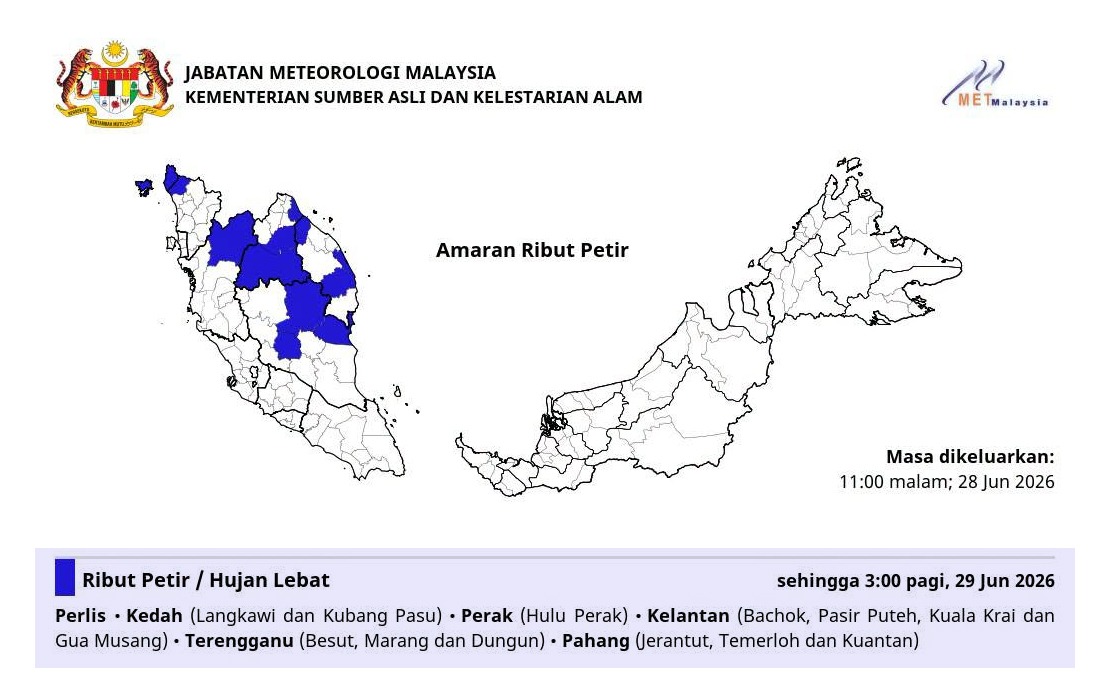
Malaysia's Meteorological Department has sounded an alert for potentially dangerous weather conditions affecting multiple states across the peninsula, with residents in six regions advised to exercise caution and remain vigilant throughout the night. The warning, which remains in effect until 3 am, encompasses a broad geographical swath covering both east and west coasts, indicating a significant atmospheric disturbance affecting the region.
Perlis faces the full brunt of the expected conditions, alongside designated areas in Kedah including the island state of Langkawi and the district of Kubang Pasu. The warnings extend southward into Perak's Hulu Perak region, suggesting the system is affecting the northern corridor with particular intensity. This concentration of alerts in the north reflects typical weather patterns during the monsoon transition period, when atmospheric pressure systems can develop rapidly and produce localized but severe weather phenomena.
Kelantan's east coast position makes it especially vulnerable to such weather systems, with MetMalaysia identifying four specific districts requiring heightened alert: Bachok, Pasir Puteh, Kuala Krai and Gua Musang. These areas, situated along the northeastern coast and inland regions, frequently experience intense rainfall during monsoon periods. The department's precision in naming affected districts allows local authorities and residents to better prepare and respond to potential flooding or wind damage in vulnerable communities.
Terengganu's coastal and near-coastal zones of Besut, Marang and Dungun have also been flagged for significant weather activity. These districts represent Terengganu's most exposed regions, where heavy precipitation can quickly overwhelm drainage systems and create hazardous conditions for transportation and daily activities. The warning reflects the department's assessment that conditions in these areas warrant immediate public notification.
Pahang, the nation's largest state, faces alerts concentrated in three districts: Jerantut, Temerloh and Kuantan. While not affecting the entire state, these locations represent both inland and coastal zones, suggesting the weather system's geographic reach spans considerable distances. Kuantan, as a major port city and commercial hub, bears particular significance; disruptions to weather-dependent activities could ripple through regional commerce and logistics operations.
The combination of thunderstorms, heavy rain and strong winds creates a tripartite weather threat that demands different responses from various sectors. Thunderstorms bring sudden electrical discharge risks and potential for lightning strikes, while heavy rainfall poses flooding dangers to low-lying areas and communities with inadequate drainage infrastructure. Strong winds can topple trees, damage structures and disrupt outdoor activities, creating compounded hazards for motorists and those working in exposed environments.
For Malaysian residents and businesses, such warnings typically prompt precautionary measures including the securing of loose outdoor items, the postponement of unnecessary travel, and increased monitoring of local weather updates. Schools and educational institutions may face operational disruptions, while construction sites and outdoor work schedules require adjustment. The maritime sector, particularly fishing communities and shipping operations, must exercise heightened caution during such periods.
The timing of the warning—persisting until 3 am—suggests the system is expected to move through the affected regions during the night hours, when visibility is reduced and emergency response capabilities may be more constrained. This temporal aspect makes public awareness particularly critical, as residents may be less prepared for sudden weather changes during sleeping hours. The overnight window also increases risks for travellers caught on roads during peak rainfall periods.
MetMalaysia's issuance of district-level warnings rather than broader state alerts reflects modern meteorological capabilities and the department's commitment to precise public communication. This granular approach enables local governments, emergency services and community leaders to concentrate resources and messaging on genuinely affected areas, rather than creating unnecessary alarm across wider regions. Such targeted warnings support more effective disaster preparedness and resource allocation.
The weather alert system remains a critical component of Malaysia's disaster management infrastructure, particularly given the nation's tropical climate and susceptibility to sudden severe weather phenomena. As climate patterns continue evolving globally, the accuracy and timeliness of such warnings become increasingly important for protecting lives and minimizing economic disruption across affected communities and economic sectors.

