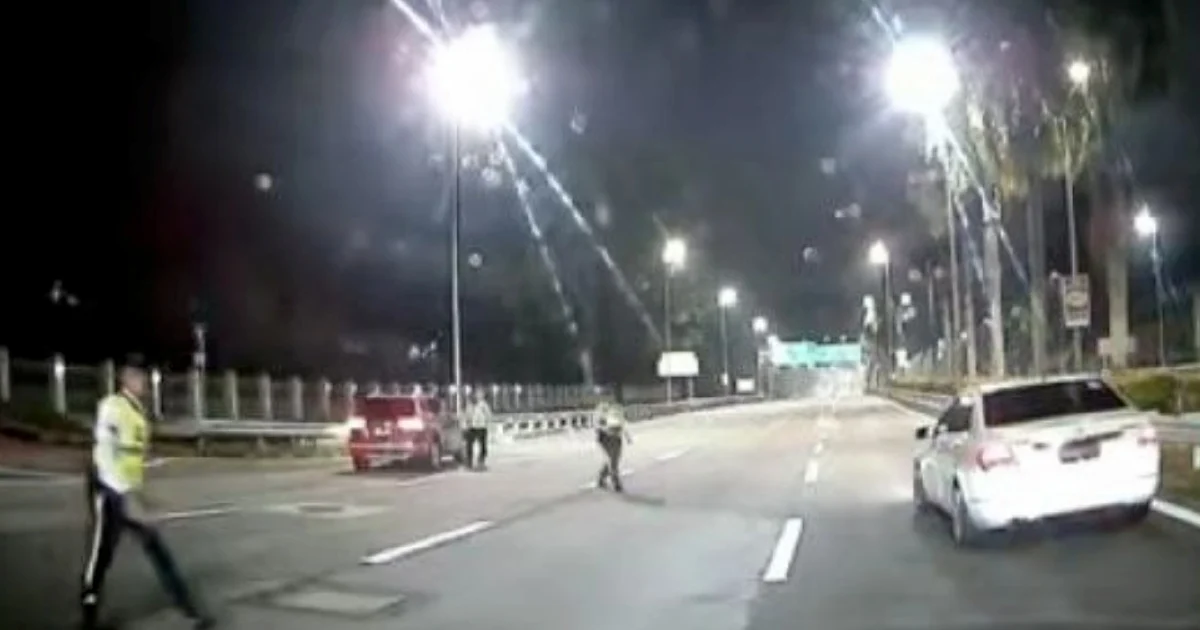
Police in Kuala Lumpur have arrested a 20-year-old motorist whose white Mercedes breached a police roadblock before fleeing along the Sprint Expressway near the National Institute of Public Administration (Intan). The incident, which drew public attention after videos circulated online, has prompted authorities to launch a comprehensive investigation into the driver's actions and the circumstances surrounding the breach.
The young driver was detained shortly after the incident to assist investigations. Authorities are examining several aspects of the case, including how the vehicle managed to break through the checkpoint and the subsequent high-speed journey along the expressway. The roadblock, which was established as part of routine law enforcement operations, was breached in a manner that raised significant concerns about public safety on the major transportation corridor.
Sprint Expressway, which connects various parts of Kuala Lumpur and its surrounding areas, is one of the country's busier routes. The incident near Intan has highlighted vulnerabilities in checkpoint operations and the risks posed when drivers deliberately evade police procedures. Such breaches, if left unaddressed, could undermine confidence in road safety measures that authorities depend upon to manage traffic flow and intercept vehicles of concern.
The viral nature of the incident reflects growing public interest in traffic enforcement videos and police operations in Malaysia. Social media platforms have become increasingly important channels through which such incidents gain prominence, sometimes faster than official police communications. This dynamic creates pressure on law enforcement agencies to respond swiftly and transparently, demonstrating that breaches of checkpoints carry serious consequences.
The detention of the driver marks the beginning of what is likely to be a detailed investigative process. Police will seek to determine whether the breach was deliberate or accidental, whether the driver was fleeing from something specific, and whether any offences beyond the checkpoint violation were committed. Such investigations are crucial because they inform understanding of why motorists choose to evade police authority and what risks they pose to other road users.
Roadblock operations serve multiple purposes in Malaysia's traffic management framework. They allow authorities to check vehicle documentation, conduct random breath tests for impaired driving, intercept vehicles flagged in criminal investigations, and manage traffic during special operations. When a driver breaches such a checkpoint, it signals either a misunderstanding of instructions or a deliberate attempt to avoid police scrutiny. Either way, the response must be proportionate and thorough.
The location near Intan is significant, as the National Institute of Public Administration is a major institutional presence in that area. The expressway segment regularly carries considerable traffic, and an incident involving an erratic driver raises safety concerns for other motorists who may have been at risk. Authorities must assess whether the driver's vehicle endangered others during the breach and subsequent flight.
For Malaysian road users, this incident underscores the importance of complying with police directions at checkpoints. Attempting to breach a roadblock invariably escalates situations and increases legal jeopardy for the driver. The fact that this particular breach achieved viral attention may also serve as a cautionary tale, as the social media exposure intensifies scrutiny and pressure on law enforcement to treat such cases seriously.
The investigation will likely encompass the driver's background, including whether there were outstanding warrants or previous traffic violations on record. Police may also examine vehicle registration details to determine ownership and whether the car was being driven with proper authorization. Toxicology tests may be conducted if authorities suspect substance impairment played a role in the driver's decision-making.
Standard operating procedures at checkpoints are designed to minimize risk to officers and the public. When breaches occur, they represent failures that law enforcement agencies take seriously because they suggest either inadequate physical barriers or insufficient officer positioning. The police response to this incident will likely include an internal review of checkpoint protocols at that specific location.
For the wider Southeast Asian context, Malaysia's experience with traffic enforcement and checkpoint security is relevant. Other countries in the region face similar challenges in deterring drivers from evading police, and the methods employed here—detention for investigation and public awareness through media coverage—represent conventional approaches to managing the problem.
The case also touches on broader questions about driver behaviour and road culture in Malaysia. Why young drivers in particular sometimes attempt such dangerous manoeuvres remains an area of interest for traffic psychologists and law enforcement planners. Understanding motivations can help shape future prevention strategies and public education campaigns.
As the investigation progresses, the outcome will send an important message to other motorists about the consequences of evading police authority. Whether the driver faces charges related to endangering others, traffic violations, or other offences will depend on evidence gathered during the probe. The incident serves as a reminder that such breaches, while momentarily dramatic, typically result in legal consequences that extend well beyond the few seconds of the actual event.

