The government's signature Menu RAHMAH programme is gaining traction across Malaysia, with 3,210 food and beverage establishments having joined the initiative as of July this year, according to Domestic Trade and Cost of Living Deputy Minister Datuk Dr Fuziah Salleh. The strong response from the food industry indicates growing willingness among operators to participate in governmental efforts aimed at providing affordable dining options for ordinary Malaysians grappling with rising expenses.
The breadth of participation across different food service categories reflects the programme's inclusive design. Food stalls and food court operators lead the uptake with 1,016 registered premises, followed by traditional restaurants, independent hawkers, mobile food trucks, and bazaar operators. This diversification ensures that Menu RAHMAH reaches consumers across multiple dining environments, from informal street food establishments to more structured restaurant settings, creating a comprehensive safety net for budget-conscious families seeking quality meals at controlled prices.
Datuk Dr Fuziah's remarks underscored that Menu RAHMAH represents far more than a temporary government subsidy or short-term intervention. Rather, it constitutes a foundational pillar of the administration's long-term commitment to maintaining affordable living standards for all Malaysians. By framing the initiative as a sustained policy priority rather than an emergency measure, the government signals its intention to embed cost-of-living relief into the permanent fabric of domestic economic policy. This distinction carries important implications for business planning and consumer expectations, suggesting that food operators can confidently invest in infrastructure and supply chain adjustments to accommodate Menu RAHMAH requirements without fear of sudden programme termination.
Strategic geographic prioritisation has shaped the programme's expansion trajectory. The government has deliberately concentrated Menu RAHMAH presence in high-demand areas, with particular emphasis on Rest and Service Areas (R&R) along major highways and transport corridors. These locations serve millions of intercity travellers annually and represent critical touchpoints where families often incur discretionary food expenses during long journeys. By securing affordable menu options at R&R facilities, the government extends cost-of-living relief beyond urban residential areas into transit zones where Malaysian consumers have limited dining choices and face monopolistic pricing pressures.
Promotion remains central to the programme's success trajectory. The Ministry of Domestic Trade and Cost of Living has launched the 'Jom Cari Menu RAHMAH' campaign to raise public awareness of participating premises and available menu items. This marketing effort seeks to transform Menu RAHMAH from a passive availability programme into an actively sought consumer experience. By making it culturally cool and patriotic to patronise Menu RAHMAH outlets, the government aims to drive footfall to participating establishments whilst simultaneously demonstrating collective commitment to national affordability initiatives. Continued collaboration with traders' associations and industry groups will facilitate menu expansion across additional locations and municipalities.
Parallel to Menu RAHMAH, the MADANI RAHMAH Sales Programme (PJRM) has emerged as a complementary pillar in the government's cost-of-living architecture. As of July 2026, PJRM had been implemented 19,322 times nationwide, surpassing the annual target of 17,500 implementations and generating nearly 25.5 million consumer transactions. These figures underscore the enormous scale of public demand for subsidised essential goods and the logistical capacity the government has constructed to meet that demand. The programme's success in exceeding targets demonstrates that government estimates of consumer need were conservative, suggesting even deeper levels of cost-of-living pressure than officially acknowledged.
PJRM's pricing advantage cannot be overstated for lower-income households. By offering savings of between 10 and 30 per cent compared with prevailing market prices, the programme delivers tangible monthly savings that meaningfully improve purchasing power for families living on tight budgets. The product range—encompassing chicken, fish, eggs, cooking oil, flour, rice, vegetables, fruits, and household essentials—targets the precise categories where price volatility most acutely impacts household budgets and dietary adequacy. These are not luxury items but foundational food security staples whose affordability determines nutritional outcomes for Malaysia's most vulnerable populations.
Geographic distribution of PJRM reflects deliberate inclusivity in targeting underserved communities. Implementation across 600 state constituencies and 40 Federal Territories zones ensures that urban, semi-urban, and rural populations all maintain access to subsidised essentials. This exhaustive geographic coverage prevents the emergence of cost-of-living relief as an urban-centric programme, a politically critical consideration in a nation where rural constituencies retain disproportionate electoral influence. By extending PJRM deep into rural Malaysia, the government shores up political support whilst simultaneously addressing legitimate equity concerns about unequal access to government assistance.
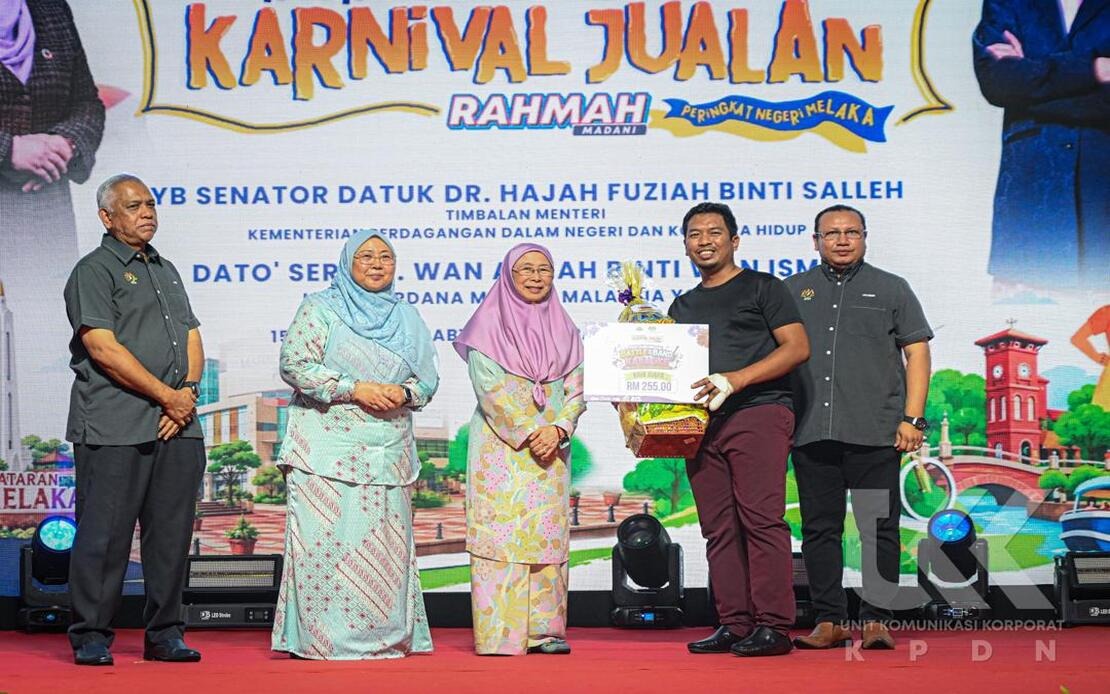
Recent carnival events organised by the Ministry of Domestic Trade and Cost of Living have functioned as comprehensive showcases for the government's broader cost-of-living portfolio. The Melaka-level carnival brought together Menu RAHMAH, PJRM, exhibition stands, business advisory services, and industry networking opportunities beneath a single roof. This integrated approach allows consumers to explore multiple government initiatives simultaneously whilst vendors and entrepreneurs gain exposure to business development support. The event's success, attracting nearly 3,000 visitors on its opening day with expectations of continued growth, signals strong public appetite for government-facilitated cost-of-living assistance across demographic categories.
The carnival's incorporation of diverse entertainment elements—stage performances, public competitions, and an electronic sports tournament organised in collaboration with Todak—reveals sophisticated understanding of how to drive public engagement with government initiatives. By infusing utilitarian cost-of-living messaging with entertainment value and social engagement, the government transforms participation from a necessity-driven transaction into a community experience. This psychological reframing enhances the cultural acceptability of government assistance programmes and builds social momentum around affordability initiatives, potentially generating organic word-of-mouth promotion that extends reach beyond formal marketing channels.
For Malaysian consumers navigating persistent inflationary pressures, Menu RAHMAH and PJRM represent tangible acknowledgment that government recognises genuine hardship and possesses both the will and capacity to provide relief. The programmes' continued expansion and achievement of implementation targets suggest bureaucratic competence in delivery mechanisms that extends beyond typical Malaysian government performance expectations. As cost-of-living concerns remain consistently near the top of voter priorities across Southeast Asia, these initiatives may influence electoral calculations and demonstrate government responsiveness to the bread-and-butter concerns that animate public sentiment. Their sustainability and effectiveness will likely shape national political conversations well into the next electoral cycle.

