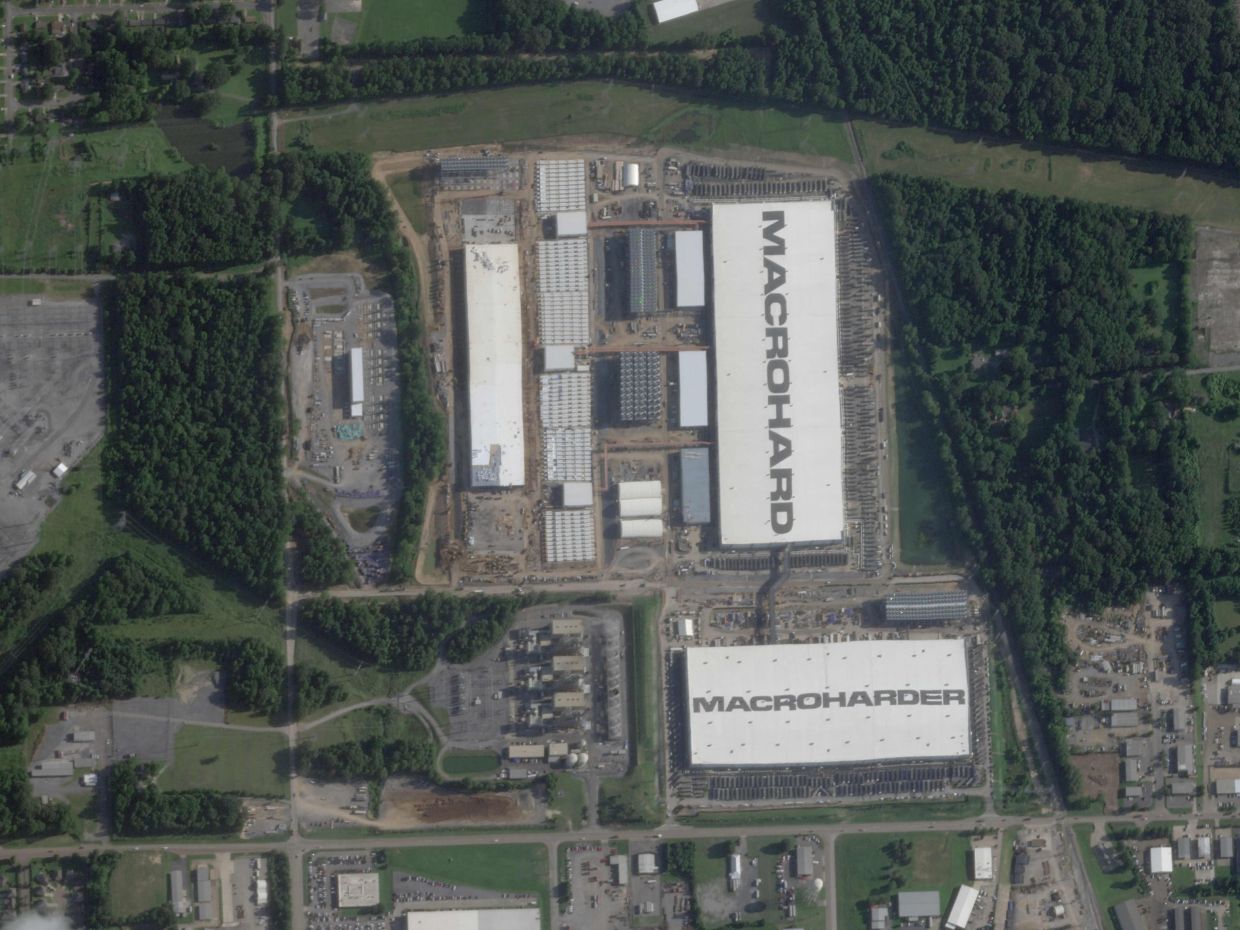
The rush to build infrastructure for the artificial intelligence boom has created a collision between corporate expansion and environmental justice in Memphis, where SpaceX's Colossus facility has ignited community outrage over its toll on a predominantly Black neighbourhood already struggling with pollution. The data centre, hastily constructed in just four months to satisfy voracious demand for computing power in the global AI race, exemplifies a pattern unfolding across the United States where communities least equipped to resist bear the heaviest burden of industrial development.
Boxtown and South Memphis carry the scars of generations of environmental neglect. Founded by freed slaves following the Emancipation Proclamation of 1863, this neighbourhood has endured decades of pollution from manufacturing operations, creating a public health crisis that defies national norms. Residents here face a cancer risk four times higher than the national average, a grim statistic that underscores how wealth, race, and industrial siting decisions intersect in America. When Colossus I arrived, it brought not solutions but amplified an existing catastrophe.
Jasmine Bernard, a seventeen-year-old activist living near Boxtown, has spent two years campaigning against the gas turbines powering the facility, which continuously discharge emissions into neighbourhood air. Her fight reflects a deeper recognition that development decisions in South Memphis have consistently excluded the very communities most affected by them. Bernard frames the struggle not merely as an environmental issue but as a continuation of historical patterns where Black communities are treated as receptacles for unwanted industrial infrastructure. "This community of Boxtown and South Memphis as a whole historically just has been the subject of environmental neglect," she told AFP. "It's deeply tied to the history... it's been a Black community for centuries."
KeShaun Pearson, co-founder of Memphis Community Against Pollution, has emerged as a national voice for resistance, traversing the country to expose how data centre development undermines promised economic benefits. He characterises Colossus I as emblematic of a broken social contract in which elected officials pledge prosperity without meaningfully consulting or protecting those who will experience the direct consequences. Pearson argues that the company and local government collaborated to exclude residents from decisions that would reshape their environment and health outcomes, a pattern he describes as disconnected from genuine democratic participation.
The environmental threat extends beyond visible emissions. Colossus I extracts 1.2 million gallons of groundwater daily from the aquifer supplying Memphis drinking water, according to Sarah Houston of the advocacy group Protect Our Aquifer. This extraction poses a serious risk to long-term water security for the city's population, yet SpaceX's promised solution—a water recycling facility—remains suspended indefinitely. The data centre's water consumption exemplifies how AI infrastructure demands are reshaping resource competition in ways communities never anticipated or endorsed.
While Colossus I generated twelve million dollars in tax revenue within two years, Mayor Paul Young committed only three point three five million dollars toward affected communities, representing less than a third of the facility's tax contribution. This disparity highlights how wealth flows upward while burdens remain localised. The compensation framework fails to acknowledge that residents bear immeasurable costs in health risks, property devaluation, and diminished quality of life that cannot be remedied through modest community grants.
The situation mirrors and compounds across state lines. In Southaven, Mississippi, Colossus II operates with sixty-nine turbines to power SpaceX's Grok AI assistant, subjecting nearby residents to relentless noise pollution. Krystal Polk, whose family has owned property in the area for generations, experiences the data centre's sound as an unceasing mechanical drone akin to a perpetually grounded jet aircraft. The vibrations cause physical nausea and eliminate any possibility of peaceful habitation. This environmental intrusion, occurring around the clock without respite, exemplifies how corporate needs for continuous operation override residential wellbeing.
Legal challenges have exposed how SpaceX circumvented established environmental protections. Laura Thoms, representing the NAACP in litigation against SpaceX through the nonprofit Earthjustice, explains that the company deployed turbines without acquiring required permits, essentially violating the Clean Air Act. The strategy involved installing "temporary" turbines while proceeding through the formal permitting process, allowing uninterrupted operations despite lacking the legal authorisation that should precede construction. This characterisation of turbines as temporary enabled SpaceX to operate outside regulatory frameworks designed to protect public health.
In July, SpaceX agreed to dismantle the turbines and construct a compliant power plant, but the timeline extends to July 2027, providing an extended grace period for continued non-compliance. Critics contend that the agreement was negotiated in opaque sessions with local officials, again excluding the residents and advocates who organised formal complaints. Additionally, the Justice Department has attempted to dismiss the NAACP's lawsuit by invoking national security concerns, a manoeuvre that effectively shields corporate development from civil rights scrutiny and raises troubling questions about whether national security rhetoric can indefinitely override community welfare.
The Colossus expansion continues unabated. A third data centre has commenced operations near Colossus II while a fourth remains under construction, yet residents report receiving no clarity regarding how these facilities will be powered or what environmental safeguards will apply. This information vacuum suggests a pattern of managed obscurity designed to minimise organised resistance. Boxtown residents successfully blocked a pipeline project in 2021 through sustained community pressure, demonstrating that organised resistance can constrain industrial encroachment. Many now harbour hopes of mounting comparable campaigns against future data centre proliferation, though the speed of SpaceX's expansion and government support for these projects pose formidable obstacles.
The Memphis conflict encapsulates a fundamental tension within technological progress: who bears the costs when societies race to capture the benefits of artificial intelligence dominance? The answer, as rendered in Boxtown and South Memphis, reveals that marginalised Black communities absorb environmental and health burdens while distant corporate shareholders and global consumers capture AI's productivity gains. Unless environmental justice becomes integral to data centre regulation and urban planning, the pattern of localised sacrifice for dispersed advantage will persist, deepening inequality under the banner of technological necessity.

