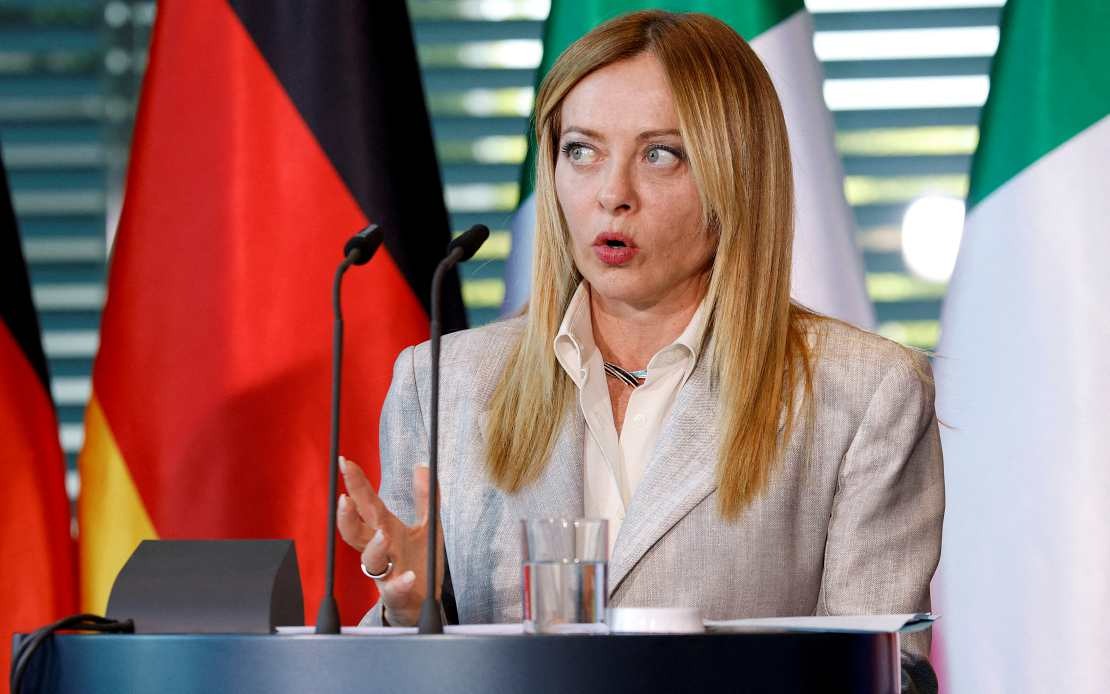
Italy's approach to managing irregular migration is shifting toward a more ambitious regional strategy. Prime Minister Giorgia Meloni has put forward a proposal for the creation of migrant return centres located in countries outside the European Union, with the first facility potentially commencing operations as early as 2027. The initiative reflects growing frustration within European capitals over the management of asylum seekers and undocumented arrivals, and signals an attempt to externalize processing mechanisms far beyond traditional EU borders.
The proposal will feature prominently in discussions at an informal gathering of EU home affairs ministers scheduled for Tuesday, conducted as an online session. Italy's Interior Minister Matteo Piantedosi will lead the Italian delegation, underscoring Rome's determination to position this initiative as a central pillar of European migration policy. The timing of this proposal comes amid heightened pressure on Mediterranean and border regions, with migration flows intensifying across multiple European entry points simultaneously.
Rome's strategy deliberately mirrors its existing arrangement with Albania, which has served as a testing ground for processing migrants outside Italian territory. Italian officials are working to secure similar bilateral agreements with additional third countries before the calendar year concludes, with the understanding that EU financial resources would support these offshore operations. The government views third-country processing as a mechanism to reduce arrivals at European shores while maintaining capacity to assess asylum applications and manage deportations more efficiently than current domestic systems allow.
Significant diplomatic momentum exists behind this concept. Twenty-two EU member states have collectively addressed European Commission President Ursula von der Leyen and European Council President Antonio Costa, formally requesting consideration of enhanced protective measures against irregular migration pathways. Danish Prime Minister Mette Frederiksen has publicly endorsed Italy's initiative, providing crucial political backing from a Nordic perspective. Meanwhile, Rwanda and Uganda have progressed furthest in preliminary negotiations with European counterparts, with Denmark, Austria, the Netherlands, and Germany actively driving discussions in this direction.
Greece has similarly committed to launching its own variant of this experiment, also targeting a 2027 operational timeline. The convergence of multiple EU nations around offshore processing reflects a fundamental shift in how European policymakers conceptualize migration management—moving away from border-centric solutions toward what proponents frame as burden-sharing mechanisms that distribute responsibility across wider geographical areas.
Italy's existing migrant infrastructure abroad, operated independently at Italian expense and under Italian legal jurisdiction, processes asylum petitions while simultaneously detaining and removing undocumented migrants. However, this framework faces persistent legal challenges domestically. Italian courts have repeatedly overturned detention decisions, ordering affected migrants returned to Italian territory, and have contested accelerated procedures for citizens originating from designated safe countries. These judicial interventions have substantially weakened the government's capacity to implement its preferred policy architecture.
Data from the Albania experiment illustrates the substantial implementation challenges facing such schemes. Between May 2025 and mid-July 2026, only 685 individuals were transferred to the Gjader facility, with fewer than 15 percent ultimately repatriated. The expense profile has proven substantial; maintaining the Gjader centre during 2025 alone cost approximately €50 million, according to Italian media analysis. These figures suggest that offshore processing, while theoretically appealing to policymakers, encounters significant practical obstacles when executed at scale.
The proposal gains fresh urgency from recent Mediterranean developments. The Spanish autonomous city of Ceuta, positioned on the North African coast immediately adjacent to Morocco, experienced an extraordinary migration surge in late July. Mayor-President Juan Jesus Vivas reported that roughly 60,000 individuals crossed into Ceuta within a single 24-hour period—a figure representing approximately 70 percent of the city's resident population of 85,000. The Spanish government responded with mobilized reinforcements, dispatching additional police units, Civil Guard contingents, and military personnel to suppress unauthorized crossings.
The Ceuta crisis exemplifies the urgent pressure confronting southern European nations and illustrates why migration management has ascended to paramount importance in Brussels policy discussions. A single episode of mass arrival can overwhelm local infrastructure, strain municipal services, and generate political turbulence that reverberates across national governments. Such incidents validate, in the minds of policymakers advocating offshore processing, the necessity of preventive mechanisms that intercept migrants before arrival on European soil.
For Southeast Asian observers, Italy's proposal carries implications beyond European borders. Malaysia, as a major host nation for irregular migrants and refugee populations, faces comparable policy dilemmas regarding processing capacity, resource constraints, and the political sustainability of asylum systems. The European debate around offshore processing, third-country agreements, and burden-sharing mechanisms provides relevant reference points as regional governments across Southeast Asia contemplate their own migration governance frameworks. The tension between humanitarian obligations and sovereignty preservation, evident in Italy's approach, mirrors challenges confronting Malaysian policymakers navigating migration policy.
The initiative also reflects a broader recalibration of EU approaches to irregular migration, moving beyond internal redistribution agreements toward external processing architectures. Whether offshore centres prove legally sustainable, fiscally efficient, and operationally effective remains uncertain, particularly given Italian court rulings that have undermined related domestic schemes. The trajectory of this proposal will significantly influence how European nations, and potentially other regions including Southeast Asia, address migration governance over the coming decade.

