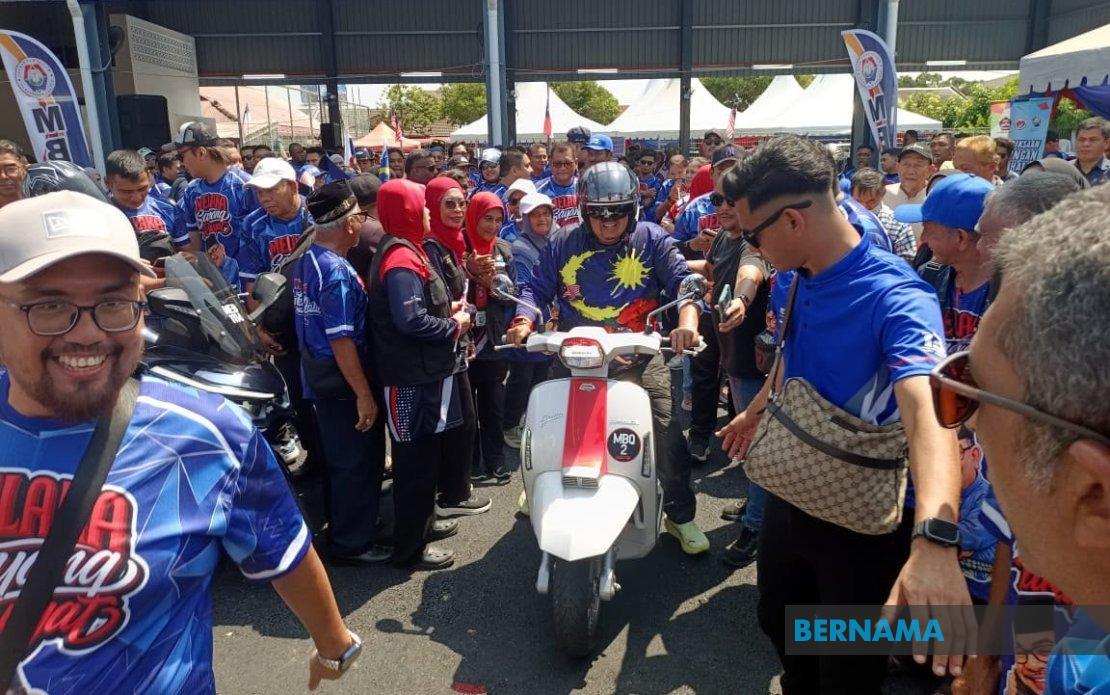
Melaka Chief Minister Datuk Seri Ab Rauf Yusoh has positioned the ongoing 'Jelajah Ketua Menteri Sayang Rakyat' tour as an integral component of the state government's broader commitment to constituent engagement, rather than a temporary or election-driven initiative. Speaking after the 10th installment of the tour in Pengkalan Batu, he emphasised that the programme represents a continuation of the 'Wakil Rakyat Untuk Rakyat' (WRUR) framework established two years ago, demonstrating a sustained effort to maintain direct lines of communication between elected representatives and the communities they serve.
The approach reflects a deliberate strategy to streamline government responsiveness at the grassroots level. By creating platforms for constituents to voice concerns directly to senior leadership, the state administration aims to reduce bureaucratic delays and enable swift resolution of issues that do not require lengthy procedural intervention. Ab Rauf underscored how this methodology allows the government to prioritise matters that can be addressed immediately, preventing problems from becoming entrenched through prolonged administrative processes.
The timing of the WRUR initiative's launch predates any electoral campaign cycle, according to the Chief Minister, signalling that the programme was conceived as a core policy instrument rather than a tactical manoeuvre. This framing carries significance in the context of Malaysian state governance, where distinguishing between genuine governance innovation and electoral positioning remains a persistent public concern. By anchoring the tour to a two-year track record, Ab Rauf attempts to establish credibility for the programme's non-partisan nature and institutional permanence.
The Pengkalan Batu installment delivered tangible outcomes that illustrate the programme's operational mechanics. Eight previously unresolved issues originating from both the WRUR and the companion 'Hari Exco Bersama Rakyat' (HEBAT) initiative were successfully addressed during the tour. These successes ranged from infrastructural improvements to community welfare initiatives, demonstrating that the platform generates substantive rather than symbolic gains. The progression from complaint to resolution across these multiple programmes suggests an integrated governance structure designed to capture issues at different institutional touchpoints and track them to completion.
Among the highlighted accomplishments was the acquisition of land for a Muslim cemetery, previously owned by a private landowner. The resolution involved a significant commercial component: the Chinese proprietor offered a fifty percent discount from the prevailing market valuation of the land in Pengkalan Batu. This transaction carries social implications beyond its immediate logistical function, as it reflects intercommunal cooperation and the proprietor's symbolic gesture of support for the Muslim community's welfare. Such outcomes, when publicised and attributed to government facilitation, reinforce narratives of harmonious community relations and responsive governance.
Housing improvements featured prominently among the tour's deliverables. The state government facilitated repairs to five dilapidated residential structures and provided a dwelling valued at RM100,000 through the 'Baiti Jannati' programme, which operates in partnership with Tenaga Nasional Berhad. This housing initiative extends beyond emergency assistance, representing a structured welfare approach targeting housing inadequacy. The involvement of a major utility corporation in the programme adds institutional weight and suggests coordination across the public sector to leverage combined resources for social objectives.
Infrastructural development also featured in the tour's outcomes. The Melaka Historic City Council (MBMB) constructed an open multipurpose hall within the Pengkalan Batu constituency, a facility designated for community benefit and public gatherings. The handover of such infrastructure during a high-profile state leadership visit serves dual functions: it fulfills a tangible community need while simultaneously providing visual documentation of government delivery capacity. For Malaysian readers, such infrastructural commitments often represent markers of governance efficacy and state attention to local priorities.
The Chief Minister emphasised that the hands-on engagement model serves a critical informational function for elected representatives. By maintaining direct contact with constituents and their circumstances, political leaders develop granular understanding of community needs beyond what can be captured through formal reporting mechanisms. This knowledge foundation ostensibly informs the refinement of state policies and the calibration of resource allocation across constituencies, creating a feedback loop between grassroots experience and institutional strategy.
The geographical reach of the WRUR programme indicates progressive expansion across the state's representative geography. Having completed 25 series of the tour with only five state constituencies remaining unvisited, the initiative is approaching comprehensive coverage of Melaka's political constituencies. This systematic approach mirrors administrative census-taking, suggesting that the government intends the programme to achieve full territorial penetration rather than focusing selectively on particular constituencies or demographic groups.
For Southeast Asian observers, Melaka's governance model presents an instructive case in how state administrations attempt to balance constituent service delivery with broader policy objectives. The integration of multiple complementary programmes—WRUR, HEBAT, and the Sayang Rakyat tours—creates a differentiated but coordinated infrastructure for citizen engagement. This multi-layered approach potentially maximises opportunities for issues to surface while distributing the burden of constituent management across institutional mechanisms.
The distinction Ab Rauf draws between campaign-driven engagement and institutionalised constituent service reflects broader evolution in Malaysian state governance. Rather than concentrating political visibility activities solely around election periods, the Melaka government frames continuous constituent interaction as a permanent governance function. This framing aligns with contemporary expectations in developed democracies where governments maintain ongoing citizen engagement infrastructure. Whether such practices become standardised across Malaysian state administrations or remain specific to particular state governments will influence how Malaysian politics evolves over coming electoral cycles.
The programme's emphasis on resolving follow-up issues from previous engagement rounds demonstrates commitment to closure rather than mere issue collection. Many constituent engagement initiatives collapse when government bodies fail to complete the resolution cycle, allowing issues to remain open indefinitely. By explicitly tracking and publicising resolutions achieved, the Melaka government creates accountability benchmarks against which constituent satisfaction can be measured, potentially establishing expectations that other state and federal agencies will struggle to meet unless they adopt comparable practices.

