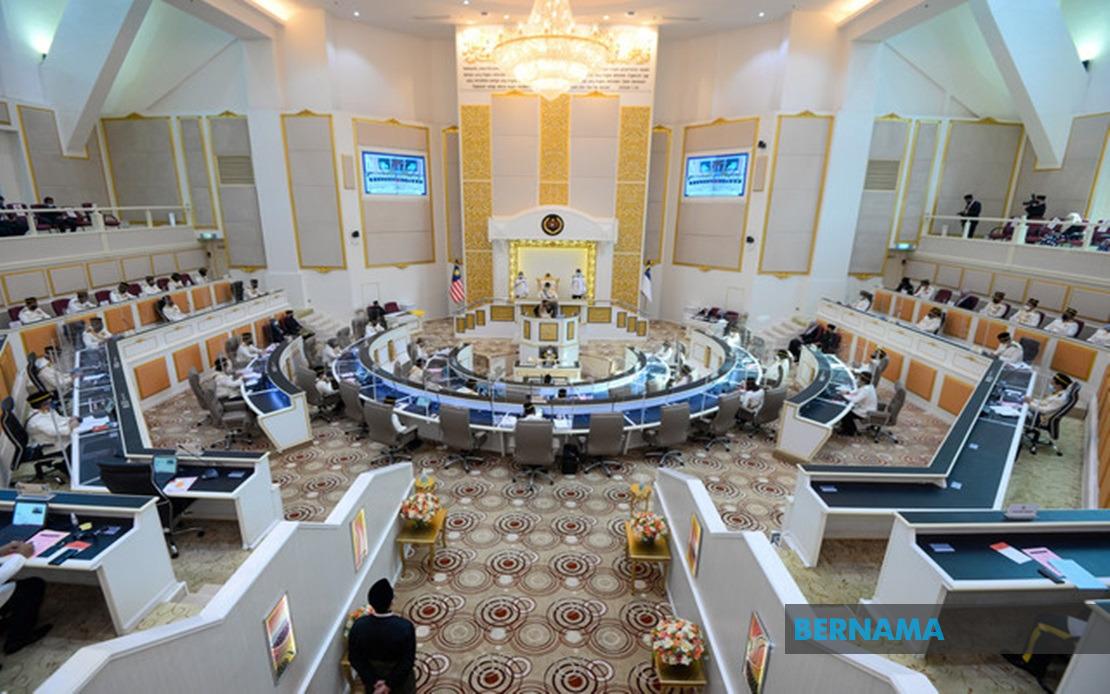
The Melaka state government is banking on the upcoming 2027 Budget announcement to green-light a significant healthcare infrastructure project in the Bukit Rambai district. Datuk Ngwe Hee Sem, chairman of the State Health, Human Resources and Unity Committee, revealed during the state assembly session that the funding decision for the proposed Type 3 Bukit Rambai Health Clinic is expected when Parliament tables the 2027 Budget in October. This timeline places the project squarely within the government's broader healthcare modernisation agenda and reflects the incremental approach to funding major health facilities across Malaysia's states.
The proposal itself has already navigated significant bureaucratic groundwork, having been formally submitted to the Ministry of Economy as part of the Rolling Plan 2 (RP2) under the 13th Malaysia Plan (13MP). This placement within Malaysia's medium-term economic planning framework signals that the project has undergone technical and financial vetting at the federal level. The fact that site preparation work has already commenced at a location opposite the existing Bukit Rambai Health Clinic demonstrates state-level commitment and suggests that physical planning constraints have largely been resolved. This preparatory work reduces implementation timelines once funding is secured, allowing construction to begin relatively quickly if the budget allocation proceeds as anticipated.
The three-year construction timeline aligns with typical healthcare facility development in Malaysia, accounting for architectural design refinement, tender processes, and the staged completion of different facility components. This duration is neither unusually lengthy nor compressed, reflecting realistic assessment of the challenges involved in building a modern primary care facility with multiple specialised services. For residents of Bukit Rambai and surrounding areas, the project represents a substantial upgrade to healthcare accessibility and capacity in what is likely a densely populated suburban region of Melaka.
Expanding service offerings forms the core rationale for this health clinic upgrade. The new facility will incorporate radiology and X-ray services, marking a significant leap from basic primary care. Dental services will be substantially enhanced with five dedicated dental chairs, addressing a common gap in Malaysian public health clinics where dental care capacity frequently cannot meet demand. Nutrition and dietetics services will be added, reflecting modern recognition of preventive healthcare's role in managing chronic diseases. These additions directly address service gaps that residents currently experience through referrals to larger facilities or private providers.
The clinic will also offer optometry services, enabling on-site vision screening and spectacle prescriptions without referral. Physiotherapy and occupational therapy services cater to elderly populations and post-acute rehabilitation needs increasingly prevalent in aging urban communities. Speech therapy addresses paediatric and acquired communication disorders, while counselling psychology provides mental health support at the primary care level—a critical gap in Malaysia's healthcare system where mental health services remain concentrated in urban centres and secondary facilities. Medical social work services will connect vulnerable patients with welfare assistance programmes and community resources.
This comprehensive service array reflects current Malaysian health policy emphasizing integrated primary healthcare that reduces downstream pressure on secondary and tertiary facilities. By treating and managing conditions at the primary care level, the clinic reduces unnecessary hospital referrals and associated system costs. The consolidation of outpatient, emergency, maternal and child health, laboratory, and pharmacy services within a single modern facility streamlines patient journeys and improves care coordination. School health services delivery through the clinic strengthens preventive health coverage for the district's student population.
The expansion addresses persistent challenges in Malaysian healthcare delivery. Waiting times at overburdened primary care facilities frequently stretch to several hours, frustrating patients and limiting appointment availability. A new, purpose-built facility will substantially increase throughput capacity. Patient comfort—often neglected in aging health clinics—will improve through contemporary facility design with appropriate waiting areas, privacy in consultation spaces, and functional clinical environments. Congestion at the existing clinic will ease as demand distributes across two facilities, though the original clinic likely continues operating with modified scope.
For Melaka's healthcare ecosystem, this project strengthens the state's primary care backbone in a suburban district likely experiencing population growth. It aligns with national health system direction toward decentralising specialist services to district-level facilities rather than concentrating all advanced care in state capitals. Bukit Rambai residents gain immediate access to services previously requiring travel to Melaka City, reducing opportunity costs and improving health-seeking behaviour among lower-income populations for whom transportation costs present barriers.
The October 2027 Budget announcement will determine whether this facility becomes reality or remains aspirational planning. Competitive demands on healthcare budgets from other states and competing priorities create genuine uncertainty. However, the fact that site preparation has already proceeded suggests strong local political backing and confidence in eventual approval. The three-year construction timeline means completion would occur around 2030, aligning with broader health system modernisation efforts across Malaysian states during the 13MP implementation period.
For Malaysian healthcare observers, the Bukit Rambai project exemplifies how states manage healthcare infrastructure development through federal budget cycles. It demonstrates the extended timelines and phased approval processes characteristic of public sector health capital projects. Success here could validate the model for similar district-level clinic upgrades elsewhere, while delays would highlight systemic bottlenecks in healthcare infrastructure financing. The project's focus on comprehensive primary care services rather than specialist expansion reflects current policy wisdom, though actual delivery of promised services depends on subsequent government operational funding commitments after construction completion.

