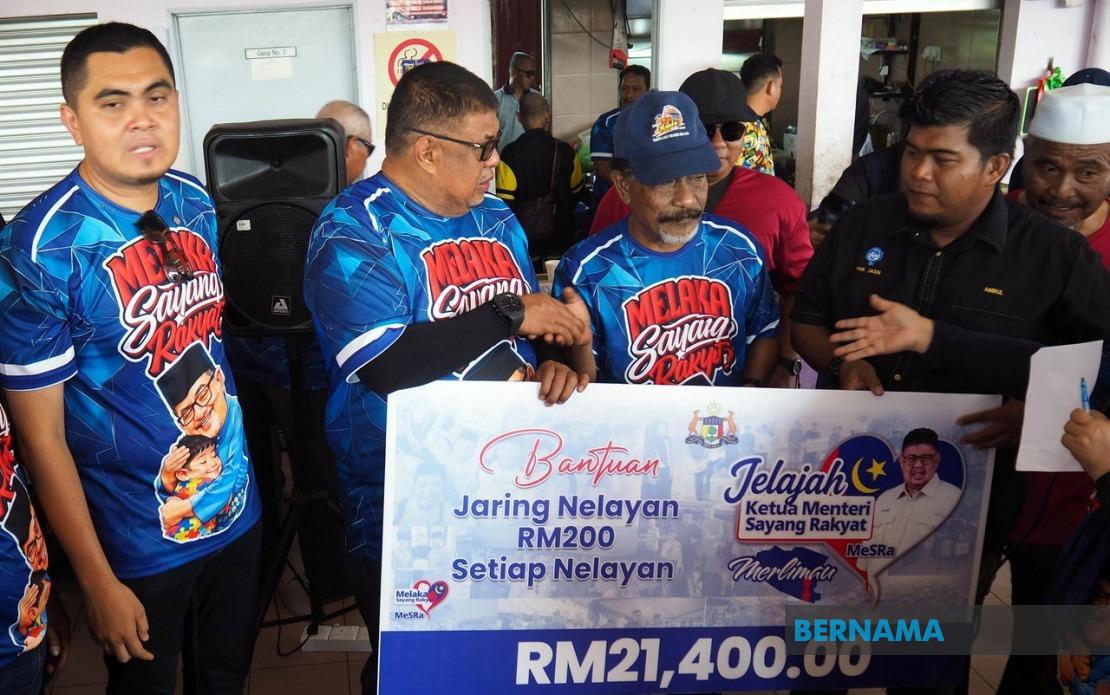
Melaka will not seek replacements for the positions vacated by Pakatan Harapan (PH) after the coalition's departure from the state Cabinet, Chief Minister Datuk Seri Ab Rauf Yusoh announced on July 17. Speaking in Jasin, Ab Rauf indicated that the state government had decided against appointing successors to the various posts held by PH members, citing the short window remaining in the current legislative term as the primary reason for this approach.
The vacant positions encompass multiple tiers of administration, ranging from state executive council (Exco) positions down to local government councillors and representatives serving on Village Development and Security Committee (JPKK) bodies. Upon PH's decision to exit the coalition government, all these roles became automatically vacant under constitutional provisions. Rather than initiate a recruitment and appointment process that would require significant time and resources, the Melaka administration opted to allow these positions to remain unfilled until the state's electoral cycle concludes.
Ab Rauf's decision reflects a pragmatic assessment of the political calendar. With state elections expected within the current term, any appointments made now would be temporary arrangements that would likely be superseded following the next ballot. This approach minimises administrative disruption and avoids the perception of hasty political manoeuvring in response to the coalition's exit. The Chief Minister characterised the situation as a natural consequence of PH's choice to withdraw, presenting the lack of replacements as an inevitable administrative outcome rather than a punitive measure.
In his comments to the media, Ab Rauf struck a notably conciliatory tone regarding PH's departure. He stated explicitly that the Melaka state government respected the coalition's decision and harboured no intention of escalating the dispute or allowing political disagreements to devolve into personal recriminations. This measured response signals an effort to maintain institutional stability even as the political alliance fractures, suggesting that despite their divergence on constitutional amendments, both sides wish to avoid prolonged acrimony.
The Chief Minister emphasised that differences in political position are acceptable within democratic systems, provided they are expressed through appropriate channels and maintained at a professional level. He acknowledged that competing viewpoints can coexist without necessarily descending into hostility or public antagonism. This framing positions the PH withdrawal as a legitimate political choice rather than a betrayal or act of betrayal, allowing both sides to claim some measure of integrity in their respective positions.
Ab Rauf reflected positively on the approximately three years of collaboration between Melaka BN and PH within the state government structure. During this period, the coalition had managed to function effectively despite underlying political tensions. However, the convergence of differing ideological positions and strategic priorities eventually created sufficient friction to make continued cooperation untenable for the PH component parties. The Chief Minister's acknowledgement of this productive period, even as it concludes, suggests a desire to avoid completely burning bridges with the coalition.
The circumstances surrounding PH's withdrawal centre on constitutional amendments that Melaka BN proposed to introduce appointed state assembly seats. PH leadership rejected these constitutional changes, viewing them as potentially destabilising to representative democracy and contrary to its political principles. The coalition's decision to exit the state government represented a principled stand against modifications to the constitutional framework that they deemed problematic. Yesterday, the coalition formalised this position through a joint statement endorsed by party leadership and all PH state assembly members.
The joint announcement came from key PH figures including Melaka chairman Adly Zahari, acting Melaka PKR chairman Adam Adli Abdul Halim, Melaka DAP chairman Khoo Poay Tiong, and Melaka Amanah chairman Datuk Ashraf Mukhlis Minghat. Their coordinated statement underscored the unity of the coalition's decision-making process and the deliberate nature of the withdrawal. This level of consensus among diverse components of the PH coalition suggests that the disagreement over constitutional amendments represented a fundamental point of principle rather than a temporary disagreement capable of negotiation.
When asked about potential future cooperation between Barisan Nasional and Perikatan Nasional in Melaka, similar to arrangements that have emerged in Negeri Sembilan, Ab Rauf remained non-committal. He indicated that he had observed no concrete developments pointing toward such an alignment in Melaka, though he acknowledged that the possibility of improved understanding between the two coalitions could not be entirely excluded. This careful neutrality reflects the ongoing uncertainty in Malaysian state-level politics, where coalition configurations remain fluid and subject to shifting circumstances.
The Melaka situation represents a microcosm of broader challenges in Malaysian coalition politics. The difficulty of sustaining multi-party alliances around shared governance agendas persists across different state jurisdictions, driven by disagreements over fundamental issues such as constitutional structure and democratic representation. PH's willingness to exit government rather than accept constitutional modifications reflects the coalition's stated commitment to democratic principles, though it simultaneously reduces its influence over state policy-making during the remainder of the current term.
For Malaysian and Southeast Asian observers, the Melaka developments illustrate how constitutional questions about representation and appointed positions continue to generate political friction in Malaysian politics. The debate over whether state legislative seats should be filled through democratic election or executive appointment touches upon fundamental governance questions that extend beyond Melaka's specific circumstances. PH's principled resistance to the proposed amendments signals that such constitutional issues remain potent sources of political division, capable of rupturing established political arrangements.
The decision not to fill PH vacancies also carries practical implications for Melaka's governance capacity. With unfilled council positions and Exco seats, the state administration will operate with reduced representation from certain communities and constituencies. This may affect service delivery and policy responsiveness in areas previously served by PH representatives, though the brevity of the remaining term mitigates the severity of this impact. The state's administrative machinery will need to adapt to functioning with fewer appointed officials, potentially requiring some reallocation of responsibilities among remaining officeholders.
Looking forward, the Melaka case may inform how subsequent state governments handle coalition departures and administrative vacancies. Ab Rauf's decision to leave positions unfilled rather than consolidate power through new appointments demonstrates one approach to managing political transitions. Whether this approach becomes precedent or merely reflects the specific circumstances of Melaka remains to be seen. The coming state elections will ultimately determine the next configuration of political power, potentially reshaping alliances and governance arrangements across the state.

