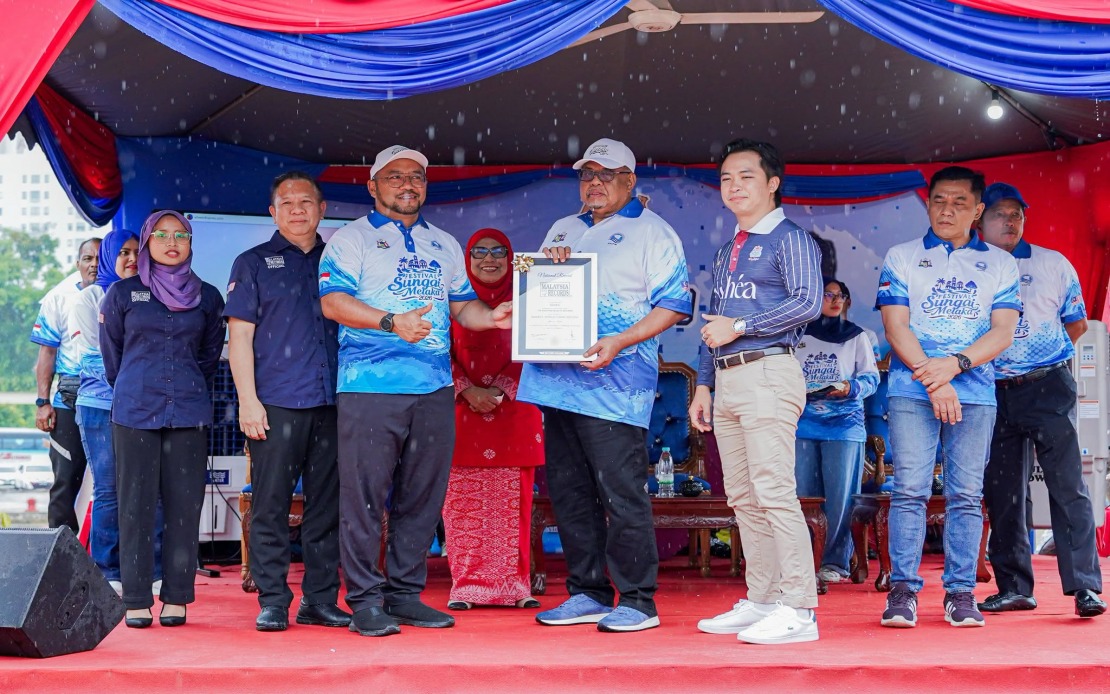
Melaka has joined the ranks of Malaysia's most innovative tourism destinations by securing four Malaysia Book of Records (MBOR) recognitions within a mere three-year window, signalling a remarkable acceleration in the state's creative output and tourism competitiveness. The latest in this string of achievements was presented during a ceremony held at Dataran Pengkalan Rama, underscoring the state government's deliberate strategy to position Melaka as a destination capable of generating globally recognised tourism experiences.
Chief Minister Ab Rauf Yusoh characterised these record-breaking accomplishments as evidence of Melaka's tourism renaissance, built on foundations of innovation and purposeful execution. Rather than viewing such recognitions as mere bureaucratic milestones, he articulated a vision where each accolade catalyses fresh thinking within the tourism ecosystem. His remarks reflected a pragmatic understanding that international recognition carries limited value unless it translates into tangible visitor experiences and sustained economic circulation throughout local communities.
The chief minister's emphasis on moving beyond symbolic achievements reveals a critical strategic shift in how Malaysian state governments conceptualise tourism development. Rather than allowing certificates to accumulate as decorative fixtures in government offices, Melaka's leadership has committed to leveraging each recognition as a springboard for developing additional tourism products and experiences. This approach recognises that global record-holders maintain competitive advantage only through continuous innovation and market responsiveness.
The 17th Sungai Melaka Festival, which served as the backdrop for the MBOR presentation ceremony, exemplifies this forward-looking strategy. The festival encompasses over thirty distinct programmes distributed across all three districts within the state, creating opportunities for equitable distribution of tourism benefits and ensuring that visitor engagement extends beyond central locations. This spatial distribution of activities represents a deliberate effort to prevent tourism concentration in specific zones, a challenge many Malaysian destinations face.
Within this broader festival framework, the freshwater fishing competition emerged as a particularly instructive case study in converting sporting activities into tourism commodities. The competition attracted 1,123 participants, including substantial numbers from outside Melaka, demonstrating the appeal of participation-based tourism experiences. The RM30,000 prize purse, with individual prizes reaching RM10,000, provided sufficient financial incentive to motivate serious competitors and lend credibility to the event as a legitimate sporting platform rather than a casual community exercise.
The demographic composition of participants—spanning both resident and visiting anglers—reveals important insights into tourism consumption patterns within Malaysia's regional markets. Fishing enthusiasts constitute a defined, organised community with established networks and communication channels, suggesting that Melaka's tourism authorities have successfully identified and tapped into existing niche markets rather than attempting to artificially manufacture demand. This market-led approach contrasts with top-down tourism development strategies that often misallocate resources toward experiences lacking genuine consumer interest.
The state government's articulation of plans to expand the fishing competition into a larger-scale tourism product demonstrates recognition that single-iteration events carry limited strategic value. Sustainable tourism development requires ongoing refinement, progressive investment, and continuous enhancement of participant experiences. By committing to scale up future iterations with greater appeal and enhanced prize offerings, Melaka's leadership indicates a longer-term vision extending beyond immediate publicity generation.
From a regional Southeast Asian perspective, Melaka's record-setting achievements acquire additional significance. As a destination competing with Thailand's established fishing tourism infrastructure and Singapore's premium experiential offerings, Melaka's ability to generate internationally recognised tourism innovations positions it competitively within the broader region. These records serve as soft power assets, attracting media attention and international visitor interest that no conventional advertising campaign could efficiently purchase.
The role of the Melaka River and Beach Development Corporation (PPSPM) in facilitating these achievements underscores the importance of dedicated, focused governance structures within tourism development. Rather than dispersing tourism responsibilities across multiple bureaucratic entities, concentrating authority and accountability within purpose-built agencies accelerates decision-making and enables more rapid experimentation with novel tourism concepts. The corporation's involvement in the festival coordination demonstrates practical commitment to translating policy rhetoric into operational reality.
For Malaysian readers across other states, Melaka's strategic approach offers instructive lessons in sustainable tourism economics. The emphasis on community-focused activities ensures that tourism benefits distribute beyond hotel operators and large commercial enterprises, creating employment and entrepreneurial opportunities for residents in peripheral sectors of the economy. Small-scale vendors, local guides, accommodation providers, and service workers benefit substantially when tourism development prioritises participatory experiences over passive sightseeing.
Looking forward, Melaka's trajectory suggests that tourism competitiveness in Malaysia increasingly depends on achieving distinctive, measurable accomplishments rather than relying on historical significance or geographical advantages alone. The four MBOR recognitions within three years indicate that continuous innovation and ambitious thinking yield measurable competitive returns. Other Malaysian destinations seeking to enhance tourism revenues and visitor arrivals may find instructive value in examining Melaka's methodology of converting records into products and programmes.
The intersection of record-breaking achievements with practical economic development through expanded fishing tourism competitions illustrates how strategic state governance can align symbolic recognition with material community benefit. As Malaysian tourism authorities contemplate post-pandemic recovery strategies and intensifying regional competition, Melaka's demonstrated capacity to consistently generate novel, record-worthy experiences provides a compelling model for prioritisation and resource allocation within the broader national tourism sector.

