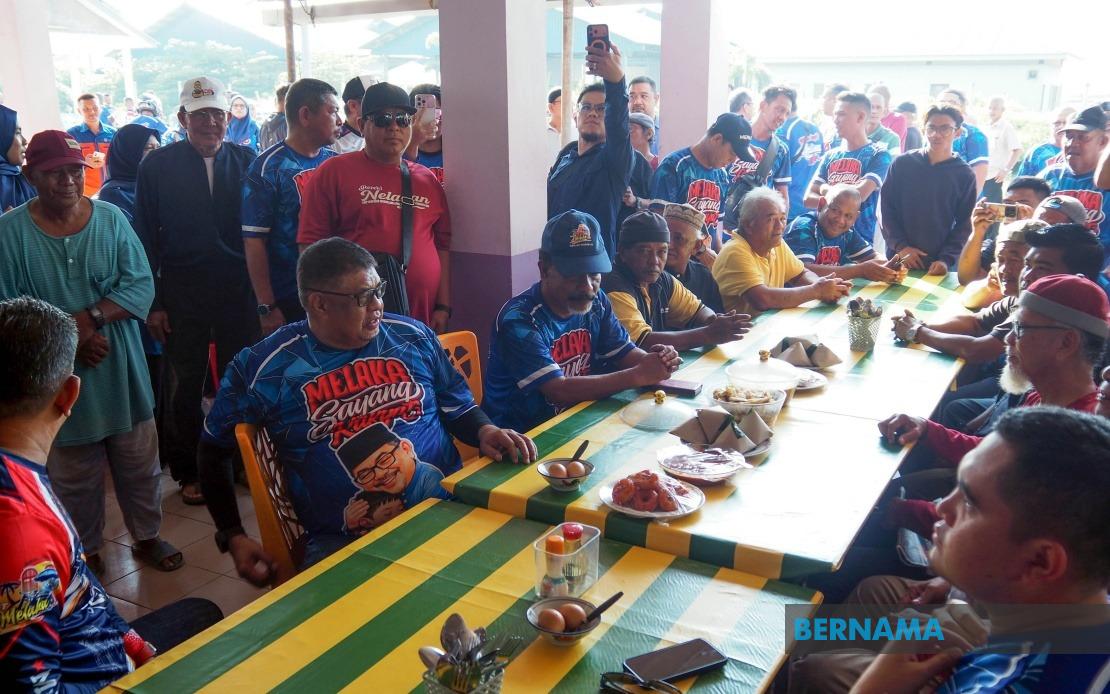
Melaka is stepping up support for its fishing communities through a comprehensive welfare package that combines traditional social protection with modern maritime technology. The state government has committed to extending PERKESO (Social Security Organisation) coverage to all registered fishermen while simultaneously equipping them with fish finders—electronic devices that use sonar to locate schools of fish beneath the water's surface. The dual initiative was unveiled during Chief Minister Datuk Seri Ab Rauf Yusoh's visit to the Kuala Sempang Jetty in the Merlimau constituency, part of a broader grassroots engagement programme called 'Jelajah Ketua Menteri Sayang Rakyat'.
The fishing sector in Melaka, like many Southeast Asian coastal regions, faces persistent challenges balancing traditional livelihoods with economic pressures and occupational hazards. By introducing PERKESO coverage, the state government is acknowledging the inherent risks that fishermen face while working at sea—from equipment accidents to occupational illnesses. This protection is particularly significant for elderly fishermen who depend almost entirely on daily catch income with minimal alternative safety nets. The initiative represents a formal recognition that fishing deserves the same employment protections afforded to workers in other sectors, a principle that some coastal economies have been slow to implement across the region.
Equally noteworthy is the provision of fish-finder technology, which marks a deliberate push toward modernising Melaka's traditional fishing industry. Fish finders employ sonar technology to detect fish concentration zones, allowing fishermen to deploy nets more strategically rather than relying solely on experience and intuition. The technology can cost between RM1,000 and RM2,000 if purchased privately, placing it beyond the reach of most small-scale fishermen. By subsidising or providing these devices, Melaka is investing in productivity improvements that could meaningfully increase catch volumes and incomes for participating fishermen.
At the Kuala Sempang event, the state government distributed direct cash assistance totalling RM21,400 through the 'Bantuan Jaring Nelayan' scheme, with 107 registered fishermen each receiving RM200. This targeted support acknowledges the cash-flow challenges that characterise artisanal fishing, where income fluctuates based on seasonal patterns and market conditions. The allocation, while modest in individual terms, provides a buffer that fishing families can deploy for equipment maintenance, net repairs, or household expenses during lean periods. Such direct transfers are increasingly recognised as effective poverty-alleviation tools in fishing-dependent communities.
Beyond the fishermen themselves, the government also engaged the broader public through a fish distribution programme. Some 360 kilogrammes of fish, valued at RM3,600, were distributed to community members at approximately 1.5 kilogrammes per person. This initiative serves multiple purposes: it provides affordable protein to households, creates a visible public goods component to the announcement, and helps move product from producers to consumers efficiently. For a state with significant coastal populations, such direct distribution can meaningfully affect household food security while supporting local fishery economics.
The reception from fishing community leaders has been notably positive. Amirul Shah Fuad Shah, a 35-year-old fisherman with over two decades of experience in Kuala Merlimau, characterised the fish-finder provision as genuinely transformative. He explained that the technology would enable fishermen to transition from probabilistic searching—casting nets in locations chosen through experience—to data-driven positioning based on actual fish concentrations. This methodological shift could reduce wasted effort and fuel consumption while increasing per-trip yields, directly improving economic returns without requiring fishermen to alter their fundamental operational practices. His perspective underscores how technology adoption in traditional sectors, when properly subsidised and supported, need not displace workers but rather enhance their existing capabilities.
Md Khalil Md Jadi, chairman of the Kampung Sempang Fishermen's Association at age 67, framed the PERKESO initiative as recognition of the fishing community's contributions and vulnerabilities. He emphasised that many fishing community members are elderly individuals who have structured their entire working lives around maritime livelihoods and lack alternative income sources or formal retirement provisions. The provision of social security coverage addresses a demographic reality in coastal Southeast Asia: as populations age, fishing-dependent communities face heightened economic fragility without institutional safety nets. Md Khalil's comments also highlight how technological modernisation and social protection must proceed together; distributing fish finders to an unprotected workforce would incomplete policymaking.
Chief Minister Ab Rauf Yusoh's emphasis on direct community engagement through the 'Jelajah Ketua Menteri Sayang Rakyat' tour reflects a governance approach increasingly popular across Malaysian states: leaders visiting constituencies to identify needs firsthand rather than relying on intermediaries or bureaucratic assessments. This method has proven effective for surfacing issues that might otherwise remain buried in administrative processes. In the fishing context, where communities often sit outside major urban centres and their concerns may lack political salience, such direct engagement can be consequential for agenda-setting.
The broader significance of Melaka's initiatives extends beyond the immediate beneficiaries. Fishing remains economically important across Southeast Asia and Malaysia specifically, yet policy attention has often focused on large-scale industrial operations rather than artisanal and small-scale fisheries where the vast majority of the workforce operates. By simultaneously addressing social protection and productivity enhancement, Melaka is signalling that traditional fishing deserves policy innovation comparable to that granted to manufacturing or services sectors. This sets a potentially important precedent for other Malaysian states with significant fishing populations.
However, the sustainability and scalability of these initiatives will depend on implementation rigour. PERKESO coverage requires sustained funding and administrative infrastructure to process claims and ensure fishermen understand their benefits. Fish-finder distribution must include training and technical support, as equipment value dissipates without corresponding knowledge transfer. Cash assistance through 'Bantuan Jaring Nelayan' requires transparent mechanisms for identifying and registering eligible fishermen. The state government's commitment to these programmes will be tested as implementation moves from announcement to operational reality across Melaka's fishing communities.

