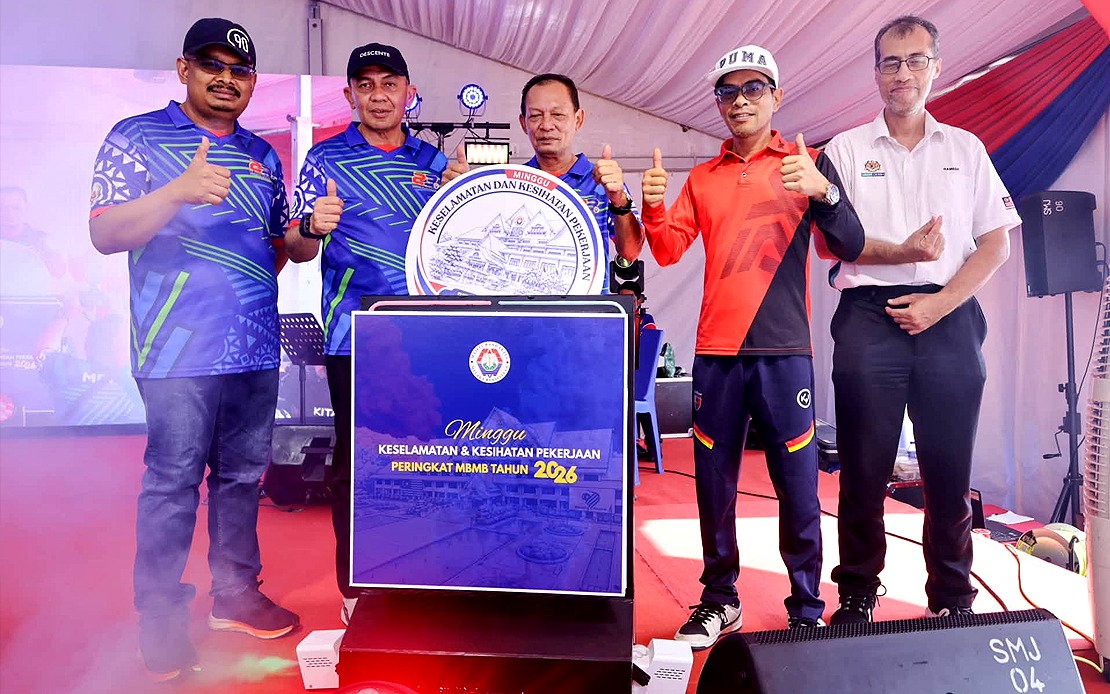
Melaka's occupational safety landscape has revealed concerning trends in the opening months of 2026, with authorities documenting a significant volume of workplace incidents across diverse industries. The Department of Occupational Safety and Health (DOSH) in Melaka confirmed that 277 accidents resulting in varying degrees of disability—both permanent and temporary—occurred between January and June this year. Alongside these incidents, the state recorded three workplace fatalities, with two deaths occurring within the construction sector and one in manufacturing operations. These figures emerged during the launch of the Melaka Historic City Council's 2026 Occupational Safety and Health Week celebration, an event designed to reinforce commitment to workplace protection standards across the region.
Ramesh Zakir Shamsul, the director of Melaka DOSH, characterised the overall accident situation as remaining relatively contained, despite the numerical weight of reported cases. His assessment reflects a nuanced perspective on workplace safety performance in the state, acknowledging both the incidents documented and the regulatory frameworks that continue to govern industrial operations. DOSH maintains active oversight of industrial and commercial operations throughout Melaka, ensuring that both employers and workers adhere to established occupational safety and health protocols. The agency's monitoring posture underscores its role as a regulatory watchdog, tasked with bridging compliance gaps and fostering safer work environments across multiple economic sectors.
The construction sector's involvement in two of the three fatalities highlights particular vulnerability within this industry segment. Construction work inherently carries elevated risk profiles due to hazardous conditions, work-at-height scenarios, and complex machinery operations. Malaysia's construction boom, driven by infrastructure development and urban renewal projects, has intensified employment in this sector, potentially amplifying both the absolute number of workers exposed to risks and the frequency of incidents. Manufacturing, which accounted for the third fatality, represents another traditionally labour-intensive sector where mechanical hazards, chemical exposures, and operational pressures can precipitate serious accidents if safety measures falter.
Under the Occupational Safety and Health Act 1994 (Act 514), employers bear explicit responsibility for documenting every workplace accident and submitting detailed reports to authorities. Ramesh Zakir emphasised this legal obligation, indicating that DOSH conducts thorough investigations into all reported incidents to determine causation, identify systemic failures, and recommend corrective measures. This investigative function serves dual purposes: establishing accountability and extracting lessons that can prevent recurrence. The statutory framework, while nearly three decades old, remains the foundational legal instrument governing workplace safety across Malaysia, demonstrating the longevity of legislative approaches to occupational health governance.
The event's official proceedings involved multiple stakeholders reflecting the collaborative governance model underpinning Melaka's safety initiatives. Datuk Zulkiflee Mohd Zin, the state deputy senior executive councillor overseeing housing, local government, drainage, climate change and disaster management, officiated proceedings, positioning occupational safety within a broader government portfolio that encompasses disaster management and climate adaptation. Mayor Datuk Shadan Othman and Ahmad Jailani Mansor, DOSH's deputy director-general for Occupational Health, attended, signifying institutional alignment across municipal and federal-level safety bodies. This multi-layered participation pattern illustrates how occupational health governance extends beyond a single agency, requiring coordination among local authorities, state government, and federal regulatory bodies.
Ramesh Zakir articulated an important philosophical principle regarding safety promotion: that responsibility cannot rest exclusively with DOSH. This perspective acknowledges the limitations of regulatory enforcement and reflects an emerging understanding within Malaysian governance that workplace safety depends on distributed accountability. Employers must internalize safety culture, recognizing that compliance transcends mere legal obligation to encompass genuine commitment to worker protection. Local authorities like Melaka Historic City Council (MBMB) amplify these efforts through partnership arrangements, organising workshops and information sessions that disseminate safety knowledge to diverse audiences.
The MBMB's active participation in occupational safety promotion represents municipal-level engagement with workplace governance. Local councils in Malaysia increasingly participate in safety campaigns and community education initiatives, recognising that workplace incidents generate broader social costs—lost productivity, healthcare expenditure, disability support services, and family disruption. By integrating occupational safety into council-level governance, Melaka demonstrates how localised implementation can reinforce national policy objectives. This vertical integration from federal legislation through state administration to municipal programming creates multiple touchpoints for safety messaging and enforcement.
Workshop-based learning and ceramah (informal talks) represent traditional Malaysian approaches to knowledge dissemination that remain valuable within occupational safety contexts. These formats allow direct engagement with employers, supervisors, and workers, enabling dialogue about sector-specific hazards and practical mitigation strategies. Such educational initiatives acknowledge that many workplace accidents stem from insufficient knowledge, inadequate training, or cultural attitudes underestimating risks. By providing accessible platforms for safety discussion, authorities create opportunities for behavioural change at the point of work delivery.
For Malaysian manufacturers and construction companies operating in Melaka, the accident figures carry strategic implications. High incident rates can attract regulatory scrutiny, increase insurance premiums, reduce worker productivity through absences and reduced morale, and damage corporate reputation. Companies operating internationally face additional pressure, as multinational supply chains increasingly demand evidence of workplace safety compliance from suppliers and subcontractors. The 277 incidents recorded across first-half 2026 suggest that despite regulatory frameworks and promotional campaigns, significant safety gaps persist within Melaka's industrial base.
The three fatalities recorded warrant particular examination within Southeast Asian contexts. While Malaysia maintains relatively developed occupational health infrastructure compared to some regional peers, fatality rates in construction and manufacturing still reflect systemic challenges common across developing and middle-income economies. Rapid industrial expansion sometimes outpaces safety culture development, with employers prioritising production schedules over hazard controls. Migrant workers, constituting significant portions of Malaysia's construction and manufacturing workforces, may face additional vulnerabilities including language barriers affecting safety instruction comprehension and reduced likelihood of reporting hazards due to employment insecurity.
Moving forward, Melaka DOSH's emphasis on compliance monitoring and investigation suggests that regulatory responses will likely intensify. Companies failing to meet safety standards face potential penalties, operational shutdowns, or legal prosecution under Act 514. The regulatory approach combines deterrence—making non-compliance costly—with education and support, aiming to shift employer behaviour toward proactive safety investment. However, the persistence of significant accident numbers despite decades of regulation suggests that compliance measures alone may prove insufficient without deeper transformation of workplace cultures and economic incentives favouring safety.
The broader Malaysian context matters here. National development strategies emphasize economic growth and industrial expansion, sometimes creating tensions with rigorous safety enforcement. However, accumulating evidence indicates that safety investments generate long-term economic benefits through reduced healthcare costs, sustained workforce productivity, and enhanced competitiveness. Melaka's approach—combining legislative framework, active monitoring, collaborative partnerships, and educational promotion—represents reasonable contemporaneous practice, though continued vigilance and innovation remain necessary to reduce preventable workplace harm across the state's industrial sectors.

