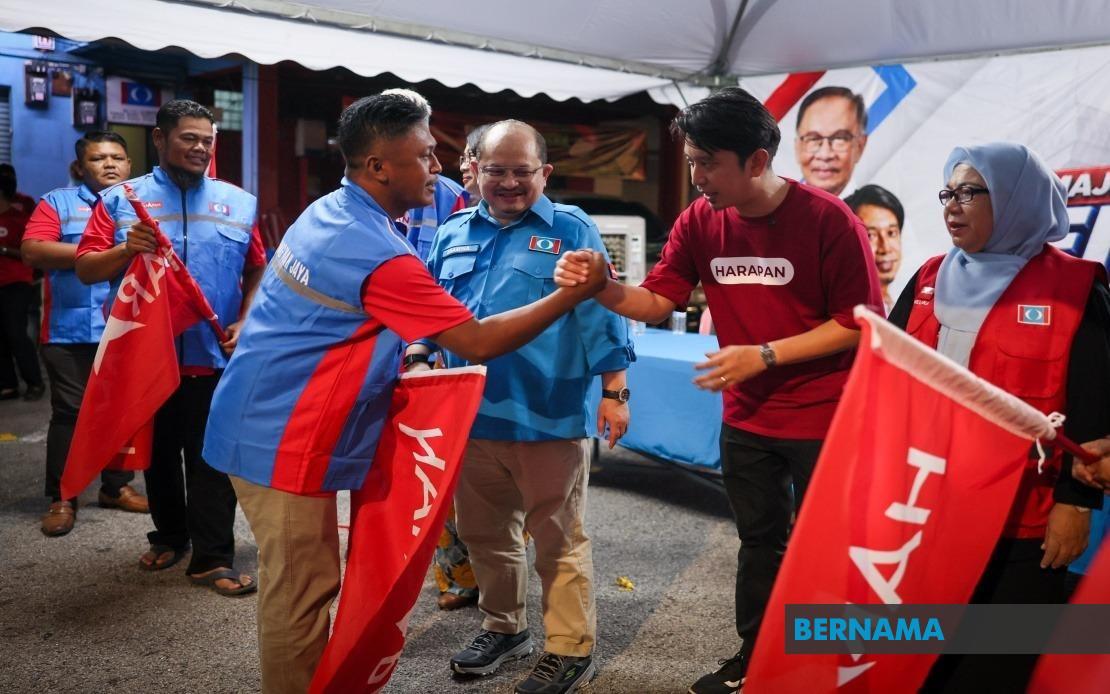
Parti Keadilan Rakyat's Melaka chapter has signalled its intention to accelerate the announcement of state election candidates, a departure from previous cycles where timing constraints have periodically hampered the party's readiness. The decision reflects a deliberate strategy to afford emerging party members adequate preparation time before engaging with voters, particularly as PKR seeks to inject new energy into its electoral lineup through candidates who have not previously contested at the state level.
Adam Adli Abdul Halim, acting chairman of Melaka PKR's leadership council, explained that the accelerated timeline responds to institutional challenges the party has faced in earlier elections. Past contests have seen PKR struggling to announce candidates with sufficient lead time due to competing demands and resource constraints. This cycle, the party has structured its vetting procedures to commence substantially earlier, beginning at branch level before progressing through state-level assessments and ultimately receiving final approval from party president Anwar Ibrahim's office.
The emphasis on fielding new candidates reflects PKR's broader positioning within Melaka politics. Rather than relying exclusively on established names, the party views fresh faces as instrumental to revitalising its appeal, particularly among younger voters and in constituencies where incumbent representatives may face fatigue or credibility questions. This approach mirrors broader trends within Malaysian opposition politics, where generational renewal has become strategically important as parties attempt to distinguish themselves from long-established establishment competitors.
Gender representation forms another cornerstone of PKR's candidate selection philosophy. The party has explicitly committed to achieving better balance between male and female contenders, recognising that demographic parity in candidate slates carries symbolic weight with increasingly sophisticated electorate segments. Achieving such equilibrium requires intensive preliminary work—identifying capable female candidates, supporting their nomination through internal processes, and ensuring they receive comparable campaign resources as their male counterparts. This necessitates the extended preparation timeline Adam Adli emphasised.
Adam Adli, who simultaneously serves as Deputy Minister of Higher Education, stressed that robust electoral machinery constitutes the party's immediate priority. Rather than rushing toward candidate announcements, PKR has prioritised establishing operational infrastructure capable of supporting whoever eventually receives nomination. This reflects recognition that even outstanding individual candidates cannot overcome poorly organised campaign structures. Consequently, the party has scheduled machinery-launching events across five constituencies—Tangga Batu, Hang Tuah Jaya, Alor Gajah, Masjid Tanah and Jasin—designed to mobilise party volunteers and coordinate grassroots activities.
The separation of machinery development from candidate selection also allows PKR flexibility in nomination decisions. Once operational frameworks are solid, the party can confidently field replacements or adjust lineups without compromising campaign capacity. This approach diminishes risks inherent in last-minute candidacy changes that have previously disrupted opposition campaigns when internal disputes or external circumstances forced adjustments immediately before nominations closed.
Meanwhile, PKR's broader positioning within Melaka politics remains fluid. Adam Adli confirmed that preliminary informal discussions have occurred between Pakatan Harapan and Barisan Nasional regarding potential electoral cooperation. These preliminary exchanges lack the formal structure necessary to constitute genuine negotiations toward a coalition framework. However, both coalitions have demonstrated willingness to escalate discussions, with PH election director Datuk Seri Amirudin Shari reportedly approaching Melaka Chief Minister Datuk Seri Ab Rauf Yusof regarding scheduling substantive talks.
The possibility of PH-BN cooperation carries significant implications for Melaka's political landscape. Should both coalitions reach agreement on seat-sharing arrangements, the state election would likely feature reduced three-cornered contests, potentially benefiting both establishments against smaller parties or independent candidates. Alternatively, should negotiations collapse, Melaka could witness intensified polarisation as PH contests all seats independently, creating scenarios where vote-splitting allows third parties or weak candidates to win through plurality margins rather than popular endorsement.
Adam Adli characterised intercoalition communication as valuable for more than potential seat-sharing arrangements. He argued that dialogue between major political forces could elevate overall campaign conduct by reducing reliance on personal attacks and inflammatory rhetoric. This positioning reflects PKR's desire to occupy the ethical high ground while simultaneously acknowledging practical realities—that cooperation with BN, despite historical antagonism, may serve both coalitions' interests in particular Melaka constituencies where fragmented opposition votes have historically handed victories to stronger competitors.
The PKR leadership stopped short of committing to any particular electoral format. Should BN negotiations fail to produce acceptable terms, PKR remains prepared to contest the election independently, fielding candidates across all constituencies and competing for majority control of the state assembly. This hedging protects PKR's negotiating position, signalling flexibility without appearing desperate for accommodation with BN. In Malaysian politics, parties negotiating from positions of apparent strength extract better terms than those appearing dependent on coalition arrangements.
Melaka's political economy adds texture to these considerations. The state possesses particular significance for Pakatan Harapan as one of BN's remaining strongholds in Peninsular Malaysia. Victory or substantial gains in Melaka would enhance PH's credibility heading toward federal elections, validating its governance claims and demonstrating capacity to challenge BN in its heartlands. Conversely, BN retains institutional advantages in Melaka through established networks and administrative resources, making the state a crucial holding for the coalition's regeneration narrative.
For Malaysian political observers, Melaka's unfolding contest offers insights into PH-BN realignment possibilities. Cooperation in Melaka, if implemented, would establish procedural precedents potentially applicable elsewhere. It would also signal that ideological differences between Pakatan Harapan and Barisan Nasional, while genuine, need not prevent tactical accommodation on specific contests. Alternatively, electoral competition unburdened by cooperation arrangements would test whether PH has fundamentally altered Melaka's political character since 2018 or whether BN retains sufficient structural advantages to reassert dominance.

