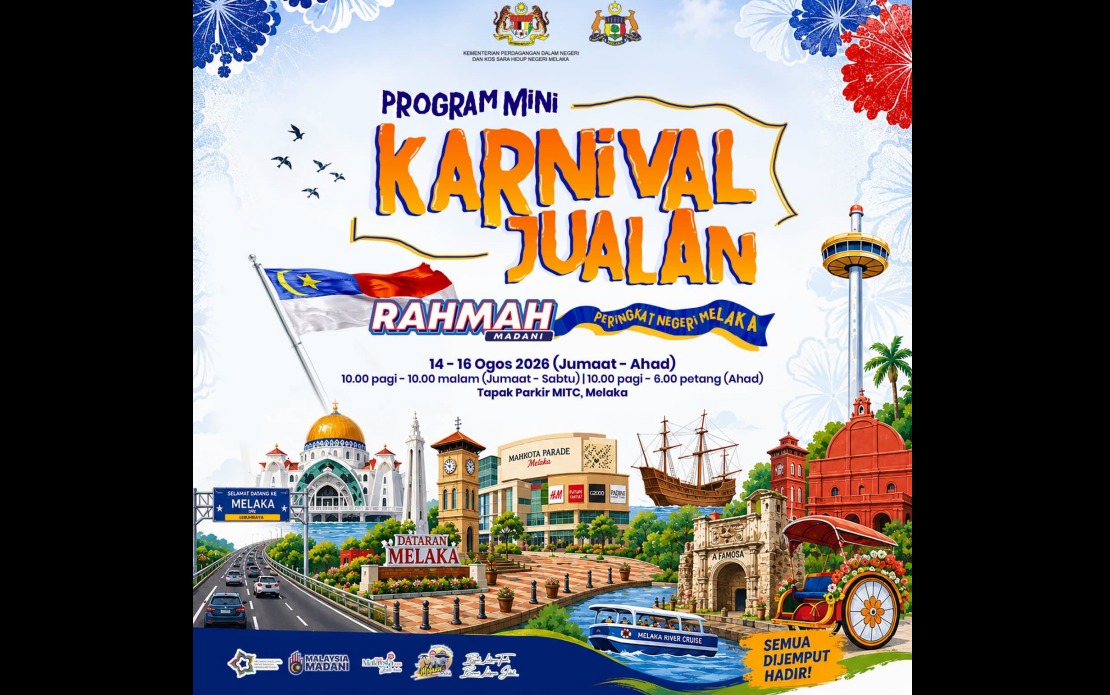
The Ministry of Domestic Trade and Cost of Living (KPDN) is preparing for a major community outreach event this weekend in Melaka, with organisers anticipating over 10,000 visitors to the Melaka Domestic Trade and Cost of Living Mini Carnival. Running across three days from Friday through Sunday at the Melaka International Trade Centre (MITC), the carnival represents a strategic pivot toward engaging ordinary Malaysians through interactive, grassroots programming rather than conventional top-down government communication. Deputy Minister Senator Datuk Dr. Fuziah Salleh framed the event as part of a broader ministry initiative to demonstrate relevance and accessibility to households grappling with affordability pressures.
At the heart of the carnival sits the MADANI Rahmah Sales Programme (PJRM), the government's marquee initiative for providing everyday items—from groceries to household staples—at substantially discounted prices. By showcasing PJRM within a festival atmosphere, KPDN seeks to reduce the friction often associated with accessing subsidy programmes, allowing residents to browse offerings and collect information without bureaucratic formality. The approach acknowledges that many Malaysians, particularly in smaller states like Melaka, may have limited awareness of or difficulty reaching government cost-of-living assistance schemes. Placing these resources within a celebratory environment signals government confidence that the programme delivers tangible value.
Beyond commerce, the carnival is structured as a family-oriented destination spanning multiple attractions and engagement points. An esports tournament partnered with Todak will draw younger audiences, while a Menu Rahmah food-truck initiative offers prepared meals at subsidised rates. These layered offerings—including children's colouring competitions, live performances, and exhibitions of classic vehicles—reflect recognition that sustained public engagement requires entertainment value alongside utilitarian benefits. The three-day schedule, with extended evening hours on Friday and Saturday (10 am to 10 pm) and daytime programming on Sunday, indicates planning to accommodate working families and weekend activity seekers.
The carnival also functions as a soft-power communication tool for KPDN itself, introducing or reinforcing the ministry's core functions to the public. Consumer protection, price monitoring, and law enforcement represent critical but often invisible government work. Most Malaysians encounter KPDN's efforts only when prices seem to spike or when violations occur, creating a reactive rather than proactive public perception. By hosting exhibition booths, providing advisory services, and facilitating business matching sessions, the carnival invites direct dialogue between KPDN officials and residents, humanising the ministry and demystifying its roles. This educational component may prove as valuable as the material discounts offered through PJRM.
For Melaka specifically, such events carry particular strategic weight. As a state with a substantial tourism economy alongside a significant domestic population, Melaka serves as a proving ground for national initiatives before broader rollout. The carnival's location at MITC—a venue associated with commerce and trade—anchors the event within the business ecosystem while remaining accessible to the general public. Success in Melaka could provide a template for similar carnivals in other states, amplifying KPDN's reach across the peninsula without requiring massive centralised investment.
The pricing and affordability messaging underpinning the carnival addresses an enduring political vulnerability for the Malaysian government. Cost-of-living pressures, particularly food and transport expenses, consistently rank among public concerns in surveys and social media discourse. While systemic price controls carry economic risks, targeted subsidy programmes and direct discount initiatives offer politically visible short-term relief. The MADANI Rahmah Sales Programme, despite its limited scale relative to national consumption, generates goodwill and demonstrates government attentiveness to household budgets. Carnivals amplify this messaging by creating spectacle and social media moments that transcend traditional news cycles.
The involvement of food vendors, artistes, and entertainment providers also supports broader economic participation beyond KPDN's direct remit. Local vendors gain foot traffic and sales opportunities, while artists and esports organisers secure sponsorship and visibility. This multiplier effect strengthens the carnival's appeal to stakeholders beyond government, building coalitions that can sustain similar events. Regional organisers and small businesses, often squeezed by larger players, find these platforms valuable for direct consumer access.
Regional readers should note that such carnivals reflect evolving government communication strategies across Southeast Asia. Increasingly, Asean governments employ participatory festivals and experiential marketing to supplement or replace traditional media outreach. Thailand, Indonesia, and the Philippines have similarly embraced carnival-style platforms for launching or promoting social programmes. This trend suggests that Malaysian voters can expect more such events, potentially tailored to local concerns and cultural preferences within each state or district.
The three-day duration and phased timing suggest KPDN anticipates demand spikes and has designed the schedule to manage crowd flow while maximising accessibility. Friday and Saturday evening extensions recognise that working-age adults dominate certain hours, while Sunday's daytime-only schedule may target families with school-age children and retirees. Such granularity in planning indicates sophistication in audience research and logistics management, likely informed by prior carnival experiences within the ministry or other government agencies.
Ultimately, the Melaka KPDN Mini Carnival encapsulates a shift in how Malaysian governance institutions attempt to connect with constituents. Rather than expecting the public to navigate government office queues, official websites, or formal application processes, KPDN is bringing programmes, information, and transactions into a familiar social space—the carnival—where transactions feel optional and enjoyable. Whether this approach measurably increases PJRM participation or deepens public understanding of KPDN's mandate will likely influence the frequency and scale of future similar events. For Melaka residents, the carnival offers a rare opportunity to access subsidised essentials while enjoying family entertainment, all within a single venue.

