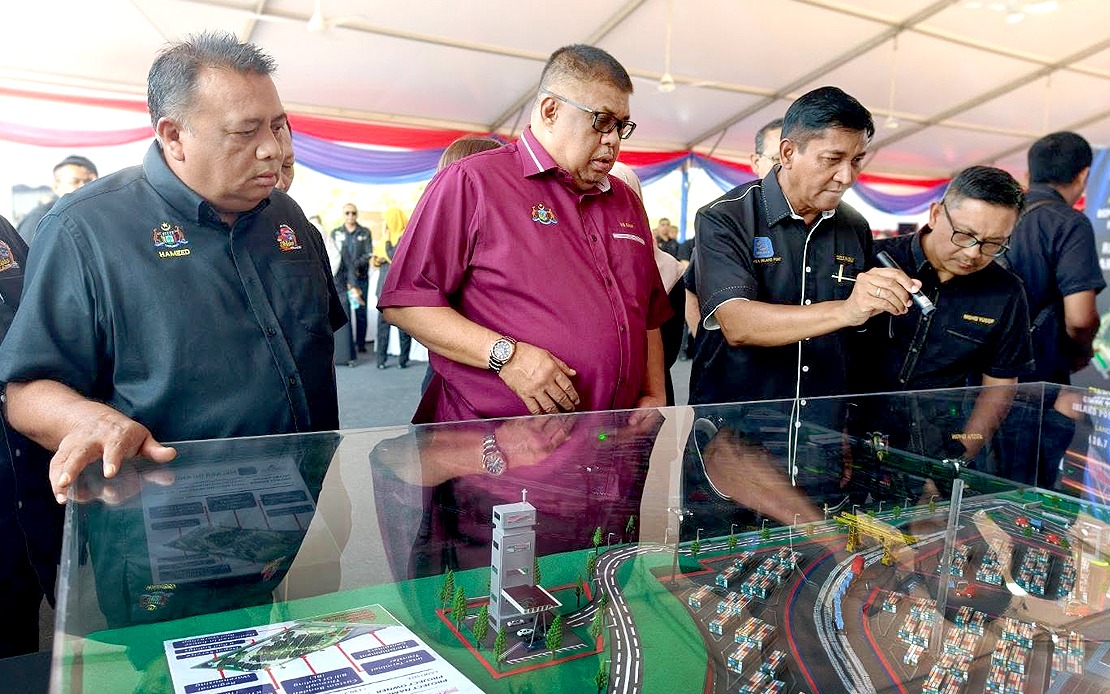
The Melaka government has unveiled an ambitious RM129 million highway project designed to overhaul connectivity between major port facilities and the inland distribution ecosystem. The 12-kilometre road, which will link Kuala Linggi International Port (KLIP) with Ayer Molek and Kuala Sungai Baru, represents a strategic investment in regional logistics infrastructure aimed at reducing operational bottlenecks and positioning Melaka as a more competitive trading hub. The initiative was announced following a groundbreaking ceremony at the Melaka Inland Port (MIP), with Datuk Hameed Mytheen Kunju Basheer, chairman of the state's Public Works, Infrastructure, Public Facilities and Transport Committee, outlining the timeline and scope of the undertaking.
The rationale behind the project centres on dramatically shortening travel distances for vehicles moving cargo between port terminals. Currently, vehicles must traverse a 28-kilometre route to connect the coastal port with inland facilities. Once completed, the new alignment will compress this distance to approximately 12 kilometres, delivering substantial time savings and operational cost reductions for freight handlers and logistics operators. This efficiency gain carries particular significance for Malaysia's southern region, where port congestion and suboptimal road infrastructure have historically constrained cargo throughput and elevated transport expenses.
Design work for the primary KLIP-to-Ayer Molek corridor is currently underway by Malaysia's Works Ministry, with formal procurement processes expected to commence in the coming year. The project follows a conventional sequence of quotation, tender evaluation, and contractor selection before physical construction can begin. This measured approach reflects the scale of the undertaking and ensures competitive bidding and quality oversight. Officials anticipate the contracting phase will move relatively swiftly, paving the way for construction mobilization within a reasonable timeframe, though specific completion dates for this primary segment have not yet been formally announced.
Beyond the headline project, the Melaka administration is pursuing a complementary suite of port-access improvements that collectively represent a significant commitment to logistics infrastructure modernization. A parallel initiative involves widening the existing road network between Tangga Batu and Sungai Udang, which currently serves as the primary land link to Tanjung Bruas Port. By expanding this corridor, planners aim to increase vehicle capacity and reduce congestion during peak traffic periods, thereby supporting higher cargo volumes without requiring investment in entirely new infrastructure.
A second major undertaking involves constructing an additional six-kilometre road extending from Telok Gong through Kampung Pulau to Paya Lebar, estimated at RM49 million. This route is intended to establish a dedicated inland corridor connecting the port zone directly to the Melaka Inland Port without requiring vehicles to traverse established residential areas and traditional villages. The design approach reflects contemporary logistics planning principles, which prioritize separation of heavy traffic flows from populated districts to reduce congestion and environmental impacts on local communities.
The Telok Gong-to-Paya Lebar project is progressing through different design stages, with the Paya Lebar-to-Kampung Pulau segment currently undergoing quotation processes and the Kampung Pulau-to-Telok Gong alignment still in preliminary design phases. This phased advancement suggests that portions of this road may advance toward construction at varying speeds, potentially allowing for sequential development rather than simultaneous execution of the entire corridor. Completion of the full six-kilometre route is projected for approximately 2028 or 2029, indicating a multi-year implementation horizon that aligns with broader infrastructure timelines across Southeast Asia.
The collective investment in road connectivity reflects Melaka's strategic positioning within Malaysia's port and logistics ecosystem. As a state positioned between the major industrial zones of the central Klang Valley and the southern industrial regions of Johor, Melaka functions as a natural transhipment hub and inland distribution point. Enhanced road infrastructure directly translates to competitive advantages in handling containerized cargo, automotive components, petrochemical products, and other high-value goods that flow through the region's port network.
From a regional perspective, improved Melaka port connectivity carries implications for broader Southeast Asian supply chain efficiency. The state's ports compete directly with facilities in Singapore, Johor, and Thailand for cargo volumes, with operational costs and transit times serving as critical differentiators. Investments in landside infrastructure—roads, inland terminals, and intermodal facilities—directly influence shipper decisions and freight flow patterns. By reducing congestion and shortening dwell times, Melaka's projects enhance the competitiveness of all three state ports simultaneously and strengthen Malaysia's position within regional trade networks.
The timing of these infrastructure investments aligns with broader industry trends toward supply chain regionalization and the establishment of inland port complexes that serve as distribution hubs for larger hinterland areas. The Melaka Inland Port itself, for which these road projects are designed to serve, represents a significant shift in thinking about port functionality, moving beyond traditional waterfront operations toward integrated logistics zones that combine warehouse, distribution, and value-added services.
For businesses operating within Melaka and the broader southern corridor, these infrastructure upgrades offer tangible operational benefits. Reduced transport costs, faster cargo clearance, and improved reliability of delivery schedules all contribute to enhanced business competitiveness. For smaller logistics operators and freight forwarders particularly, even modest reductions in per-unit transport costs can significantly impact profitability and market competitiveness.
The projects also carry environmental considerations that merit attention. By establishing dedicated cargo corridors that bypass residential areas, planners reduce air pollution, noise disturbance, and road safety risks in populated districts. Furthermore, more efficient port-to-inland distribution pathways may reduce the total vehicle-kilometres required for cargo movement, potentially lowering aggregate carbon emissions from logistics operations, though quantifying these benefits would require detailed modeling.
Implementation challenges will inevitably emerge during the project lifecycle. Land acquisition, environmental clearances, and utility relocations are standard hurdles in Malaysian road construction, and the scale of these undertakings suggests protracted negotiations and coordination among multiple government agencies. Local communities, particularly those in Kampung Pulau and surrounding areas, will require consultation and potentially compensation as development proceeds. Effective stakeholder engagement during planning and construction phases will be essential to maintaining social license and avoiding project delays.
Looking forward, the success of these initiatives will be measured not merely by construction completion dates but by their actual impact on cargo throughput, transport cost reductions, and logistics operator satisfaction. Complementary investments in port terminal capacity, customs modernization, and digital connectivity will ultimately determine whether improved road access translates into the hoped-for competitive gains. For Malaysian policymakers tracking regional competitiveness, Melaka's logistics infrastructure push represents a rational response to competitive pressures and a reasonable allocation of state resources toward economic infrastructure.

