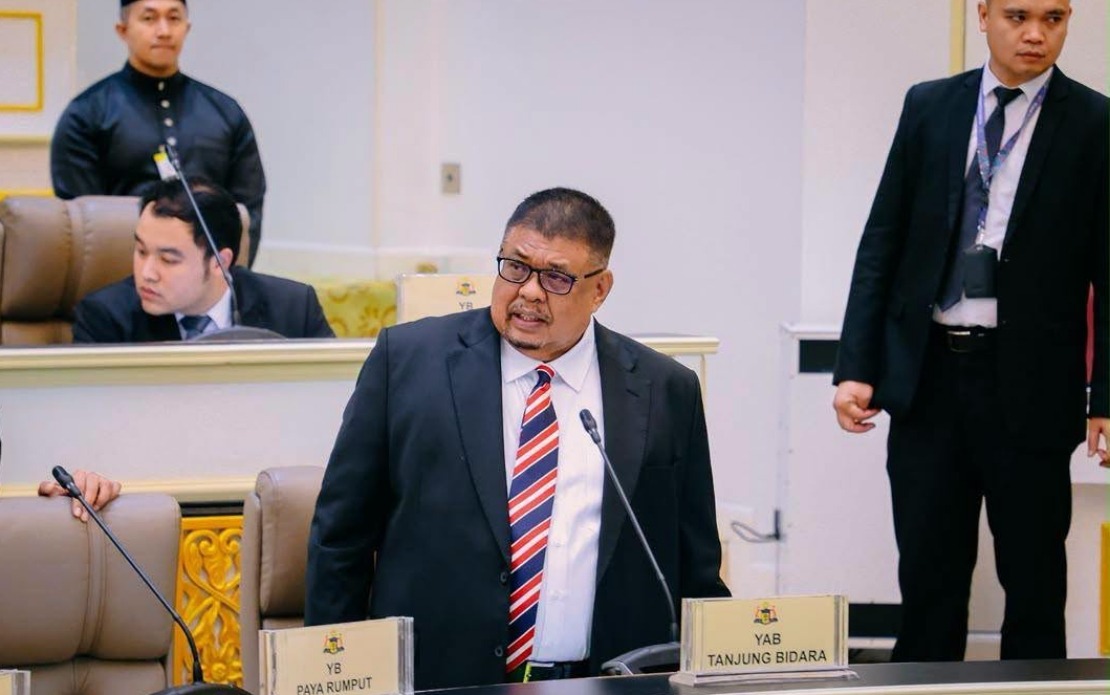
Melaka's government machinery will operate without disruption despite the Democratic Action Party's abrupt withdrawal from the state administration, Chief Minister Datuk Seri Ab Rauf Yusoh declared on Monday, signalling stability as the state navigates an unexpected political realignment at the regional level. Speaking at the Seri Negeri Complex in Ayer Keroh, Ab Rauf sought to calm public concerns and reassure the business community that the departure of DAP representatives would not compromise the delivery of services or derail ongoing developmental initiatives across the state.
The DAP's exit followed a constitutional amendment approved by the Melaka State Legislative Assembly that would permit the appointment of assemblymen by nomination rather than election—a procedural change that prompted the party to reconsider its participation in the governing coalition. Four DAP state assemblymen—Allex Seah Shoo Chin from Kesidang, Low Chee Leong from Kota Laksamana, Leng Chau Yen from Banda Hilir, and Kerk Chee Yee from Ayer Keroh—formally tendered their resignations immediately following a party press conference, effectively ending their roles in the state executive council.
Ab Rauf acknowledged the party's right to make decisions aligned with its own political principles while emphasizing that ideological differences need not translate into antagonism or obstruction. His measured response reflected an attempt to maintain institutional continuity and prevent the political dispute from escalating into broader acrimony that could affect governance. The Chief Minister's public acknowledgement that the state government would not prolong debate over the DAP's departure suggested a desire to move beyond the immediate controversy and refocus administrative energies on delivering results for constituents.
The timing of the DAP's withdrawal created a diplomatic puzzle, as Prime Minister Datuk Seri Anwar Ibrahim had publicly urged the party to postpone its departure decision and concentrate instead on advancing the state's development agenda and enhancing residents' wellbeing. However, Ab Rauf explained that the DAP's decision became final upon submission of resignation letters immediately after the party's public announcement, making further negotiations moot. This sequence of events highlights the tension between federal-level political coordination and state-level autonomy, particularly when coalitions face unexpected constitutional changes.
The absence of an executive council member will be managed through a temporary redistribution of duties among existing administrative officials, Ab Rauf confirmed, indicating that the government has opted for a conservative approach rather than immediately appointing a replacement. This pragmatic solution allows the state machinery to continue functioning while avoiding the appearance of immediately rewarding political allies with the vacant position, a move that could have invited further criticism and suggested opportunism.
For investors and the broader business community operating in Melaka, the Chief Minister's assurances carry practical significance. Political instability at the state level can create uncertainty regarding policy direction, implementation timelines, and regulatory consistency—all factors that influence investment decisions and business confidence. By explicitly committing to systematic and orderly governance, Ab Rauf attempted to signal that commercial interests would remain protected regardless of coalition dynamics at the political level.
Ab Rauf also emphasized the state government's intention to preserve positive working relations with the federal government, a statement carrying implications beyond administrative courtesy. Since the government is constitutionally subordinate to federal authorities on certain matters and dependent on federal funding for development projects, maintaining harmonious relations with Putrajaya remains essential for the state's capacity to deliver on infrastructure and social programmes. The Chief Minister's public commitment to this relationship served as a reassuring signal to both investors and residents that state-level political disputes would not compromise the flow of federal resources or support.
The Chief Minister's measured tone and explicit gratitude toward DAP representatives for their past cooperation stood in contrast to the potential for recrimination or blame-shifting that often accompanies coalition breakdowns. This diplomatic language, whether or not reflecting genuine sentiments, served to reduce the rhetorical temperature surrounding the departure and positioned Melaka's government as fundamentally stable rather than fractious. The state administration's capacity to continue functioning smoothly despite losing coalition partners depends significantly on whether remaining officials maintain professional relationships and focus on collective governance objectives rather than partisan scoring.
The constitutional amendment that triggered the crisis deserves examination, as it reflects broader debates across Malaysian states about the balance between electoral democracy and executive governance. By permitting appointment-based representation, the amendment suggested an intention to enhance executive flexibility and potentially circumvent electoral constraints on coalition building. However, the DAP's objection to this mechanism revealed the party's concerns about democratic accountability and the risks that unelected representatives might prioritize executive interests over constituent representation.
Melaka's political situation also carries implications for the broader Pakatan Harapan coalition at the national level. The DAP's withdrawal from the state government, while framed locally as a principled objection to constitutional amendment, nonetheless represents a fracture in coalition unity. Other PH components observing this development may draw conclusions about whether coalition partnerships can withstand policy disagreements and constitutional disputes, particularly as tensions emerge over governance approaches and power-sharing arrangements in other states.
The state's development trajectory in coming months will serve as the ultimate test of Ab Rauf's assurances. Should projects proceed on schedule, civil service morale remain intact, and investor confidence persist, the Chief Minister's projections of uninterrupted governance will gain credibility. Conversely, if administrative delays, implementation bottlenecks, or service delivery lapses emerge, the political costs of the DAP departure will become tangible and potentially fuel demands for renewed coalition negotiations or broader political recalibration.

