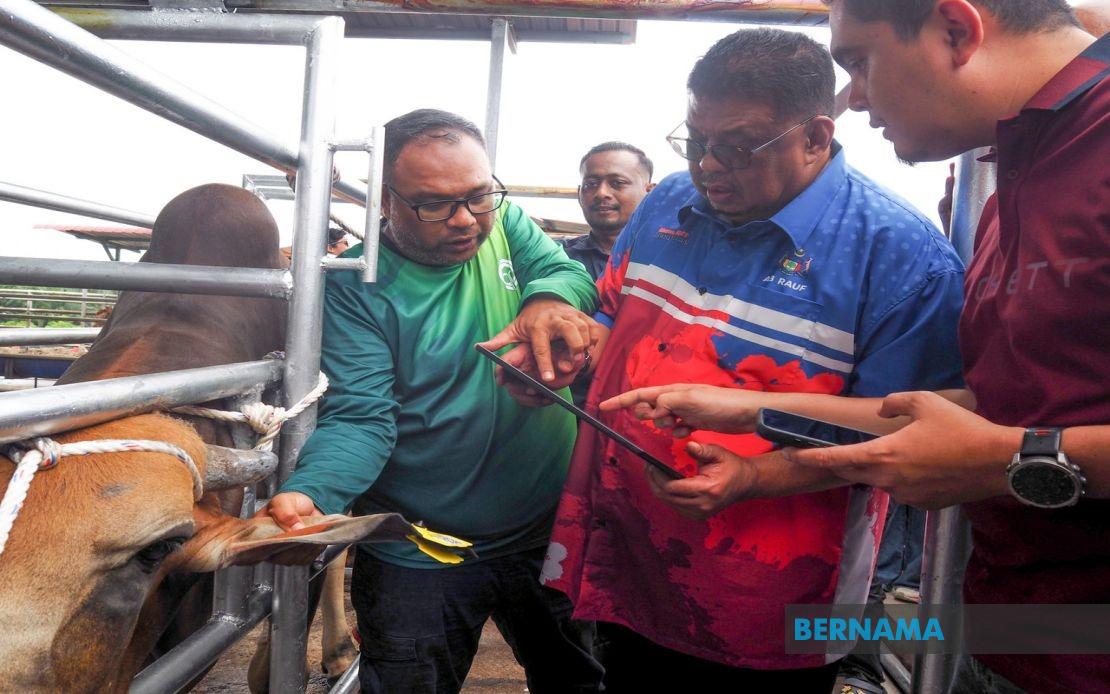
Melaka's state government has unveiled a digital livestock identification system using QR codes, marking a significant modernisation of animal husbandry oversight in the state. The initiative, spearheaded by Chief Minister Datuk Seri Ab Rauf Yusoh, represents a strategic pivot towards technology-enabled agricultural management and forms a cornerstone of the administration's broader digitalisation strategy. Through collaboration with the Melaka Veterinary Services Department, the scheme aims to transform how authorities monitor, track, and manage livestock across the peninsular state.
The mechanics of the system are straightforward but powerful. Each registered animal receives a physical tag embedded with a unique QR code and identification number. When scanned via smartphone, the code instantly reveals essential information including the breeder's name, farm location, and premises identification. This immediate access to ownership data addresses a critical pain point in livestock management—the difficulty authorities historically faced in identifying responsible owners when incidents occur. For a state grappling with rising problems related to stray animals, this technological solution offers tangible operational benefits that extend beyond simple record-keeping.
The urgency underlying this initiative becomes apparent when examining recent incident data. Since 2023, Melaka recorded 835 accidents involving livestock on roads and highways, alongside more than 50 formal complaints about stray animals creating public nuisances. These figures underscore the genuine safety risks posed by uncontrolled animals roaming residential and commercial areas. Stray livestock endanger motorists, damage property, and create liability questions when incidents occur. Traditional owner-identification methods proved too slow and unreliable to address these recurring crises effectively, motivating the government to seek technological solutions.
Rollout of the programme has already commenced, with approximately 2,000 animals tagged by early June. The state government's target encompasses the entire registered cattle and buffalo population in Melaka, estimated at over 32,000 head. This phased expansion approach allows authorities to refine implementation procedures and gather feedback from farmers before reaching full deployment. The deliberate pace also provides breeders with time to adapt to new administrative requirements and understand the system's benefits.
Financial incentives designed by the government aim to accelerate adoption among farmers. Until the end of 2024, the Melaka state government will absorb the full installation cost of RM6.50 per animal. Breeders need only register livestock with the Melaka Veterinary Services Department to receive tags at no charge during this promotional period. This subsidy strategy recognises that upfront costs, while modest, could discourage participation among smallholder farmers operating on tight margins. By removing this barrier temporarily, the government hopes to achieve rapid penetration and widespread coverage before transitioning to a cost-sharing model.
From 2027 onwards, responsibility for tag costs shifts to farmers, with replacement tags priced at RM5 per head. This transition timeline provides a buffer period during which breeders can incorporate tag expenses into their operational planning and budgeting. The pricing structure reflects a pragmatic balance between government support and sustainable cost-sharing, ensuring that the programme remains financially viable long-term without imposing unsustainable burdens on the farming community. Notably, the initial tag carries permanent identification value across an animal's lifetime, eliminating repeated identification changes even if ownership transfers occur.
Ownership updates present an elegant design feature within the system's architecture. When livestock changes hands, the physical QR tag remains unchanged—maintaining continuity of the animal's permanent identity. New owners simply update records within the eVetPermit Malaysia digital system, ensuring ownership information stays current without requiring physical tag replacement. This approach minimises operational friction while maintaining accurate ownership records, which proves critical for enforcement actions and liability determination when incidents occur.
Beyond immediate safety applications, the QR Tag system facilitates disease monitoring and control initiatives. By creating a comprehensive digital database of livestock locations and ownership, veterinary authorities gain unprecedented capability to track disease spread, coordinate quarantine efforts, and manage outbreaks more effectively. In an era of rising concerns about animal disease transmission, both within Malaysia and across Southeast Asia, this enhanced surveillance capacity represents significant public health value. The system essentially transforms individual farm operations into nodes within a coordinated regional agricultural health network.
Reception among farming communities has reportedly been positive, with breeders recognising that systematic identification and ownership documentation protect their commercial interests. When stray animals are apprehended, clear ownership identification accelerates return of valuable livestock to legitimate owners. Additionally, the system's existence may improve the livestock industry's public reputation by demonstrating farmer responsibility and commitment to preventing animals from creating community problems. This reputational dimension carries particular weight in densely populated areas where urban and agricultural zones intertwine.
Successful implementation depends critically on coordination among three governmental bodies: the Chief Minister's Department Local Government Unit, the Veterinary Services Department, and local authorities. This multi-agency approach ensures that tag installation, veterinary oversight, and enforcement mechanisms align effectively. Regular communication between these entities and direct engagement with farming communities will determine whether the programme achieves its objectives or encounters implementation obstacles.
Melaka's adoption of QR Tag technology positions the state as an early adopter of agricultural digitalisation within Malaysia. The success or challenges experienced during rollout will likely influence similar initiatives in other states, making this pilot programme significant beyond Melaka's boundaries. Neighbouring states and federal agricultural authorities will monitor implementation outcomes closely, particularly regarding cost-effectiveness, farmer adoption rates, and measurable improvements in stray animal incidents. Should the programme achieve its targets, it could serve as a template for nationwide livestock management enhancement.
The broader context of Melaka's smart state ambitions frames this initiative as part of comprehensive modernisation efforts. Digitalising livestock management aligns with visions of creating responsive, efficient governmental systems that leverage technology to solve practical problems affecting citizen welfare. As Southeast Asian states increasingly embrace digital governance approaches, agricultural modernisation represents a meaningful testing ground where technology's benefits become tangible and measurable for farming communities and public safety stakeholders alike.

