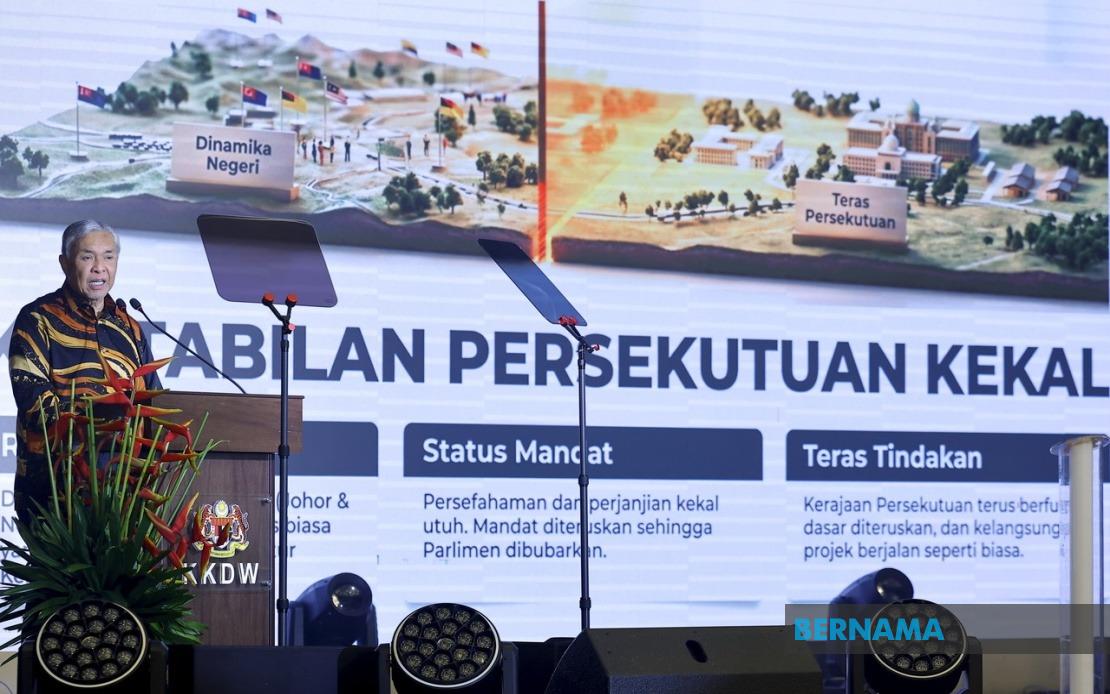
The Melaka branch of Barisan Nasional has set its sights on a complete electoral sweep, targeting victory in all 21 state assembly constituencies it presently controls ahead of the 16th state election. BN chairman Datuk Seri Dr Ahmad Zahid Hamidi disclosed this objective while speaking to reporters in Putrajaya on August 6, revealing that Melaka Chief Minister Datuk Seri Ab Rauf Yusoh had personally conveyed the coalition's ambitions to him during discussions about the upcoming campaign.
The goal reflects confidence within Melaka's BN establishment that the ruling coalition maintains sufficient ground support to maintain its current dominance in the state legislature. Such a performance would represent a significant political achievement, particularly in an era when opposition parties have made electoral inroads in several Malaysian states. The 21-seat target underscores the strategic importance Putrajaya's BN leadership places on Melaka, a traditionally BN-friendly state on Malaysia's west coast that has remained under coalition administration.
However, Ahmad Zahid's statement also signalled pragmatism within the coalition's decision-making structures. While expressing the defensive objective, he explicitly noted that BN remains receptive to forging electoral understandings with other political parties, provided such arrangements receive approval from the coalition's central leadership. This qualification carries significance in the context of Malaysia's evolving political landscape, where national coalitions have increasingly experimented with seat-sharing agreements and electoral pacts to maximise their combined appeal.
The chief minister himself has previously indicated openness to discussions with potential allies, suggesting that Melaka's BN leadership views strategic flexibility as complementary rather than contradictory to its core objective of retaining power. Such discussions would likely explore whether BN's interests in Melaka might be better served through formal cooperation with specific parties on certain constituencies, rather than contesting every seat independently. This approach reflects broader coalition management trends observed across Malaysia's states.
The decision-making process will ultimately rest with BN's central hierarchy rather than remaining solely within Melaka's purview. Ahmad Zahid's remarks made clear that while Ab Rauf Yusoh has articulated the state-level ambition, any final commitments regarding coalition arrangements or seat allocations must receive endorsement from senior BN figures at the national level. This hierarchical structure ensures consistency with the coalition's broader electoral strategy across multiple state elections.
Melaka's political context has undergone notable shifts in recent years. The state experienced considerable volatility following the 2018 general election, with leadership changes and internal party realignments affecting governance stability. The current BN administration has worked to consolidate its position and rebuild constituent confidence. The upcoming state election will serve as a critical indicator of whether those efforts have successfully reversed earlier setbacks or whether opposition momentum remains significant enough to challenge BN's dominance.
The timing of the election announcement and campaign preparation reflects broader calculations about optimal electoral windows. Political analysts have observed that states with longer intervals between elections sometimes benefit from the incumbent government's ability to implement popular policies and demonstrate administrative competence. For Melaka BN, the period leading up to the 16th state election will likely witness intensive grassroots organising and policy announcements designed to reinforce the coalition's claim to continued stewardship.
Regional implications extend beyond Melaka's borders. The state election will influence perceptions about BN's resilience and ability to retain power in its traditional strongholds. Success in Melaka could strengthen BN's position heading into future national elections or additional state polls, while setbacks might embolden opposition parties and complicate coalition dynamics at the federal level. Neighbouring states and national opposition coalitions will closely monitor Melaka's electoral dynamics as a bellwether of broader political trends.
The openness to coalition discussions, while preserving the core objective of seat retention, reflects BN's evolving approach to multi-party politics in Malaysia. Rather than pursuing purely combative campaigns, the coalition has increasingly pursued partnerships where mutual interests align. In Melaka, such arrangements might involve agreements with parties sharing similar policy priorities or territorial considerations, thereby optimising overall anti-opposition vote consolidation across constituencies.
As campaign preparations intensify, the interplay between Ab Rauf Yusoh's state-level leadership and Ahmad Zahid's national coordination will shape Melaka BN's ultimate electoral positioning. The coming months will clarify whether the coalition contests all 21 seats independently, reaches formal agreements with allies, or pursues a hybrid approach combining competitive independence in some constituencies with strategic partnerships elsewhere. These tactical decisions will carry implications not only for Melaka's political future but also for understanding how Malaysia's major coalitions continue adapting their strategies in an increasingly complex electoral environment.

