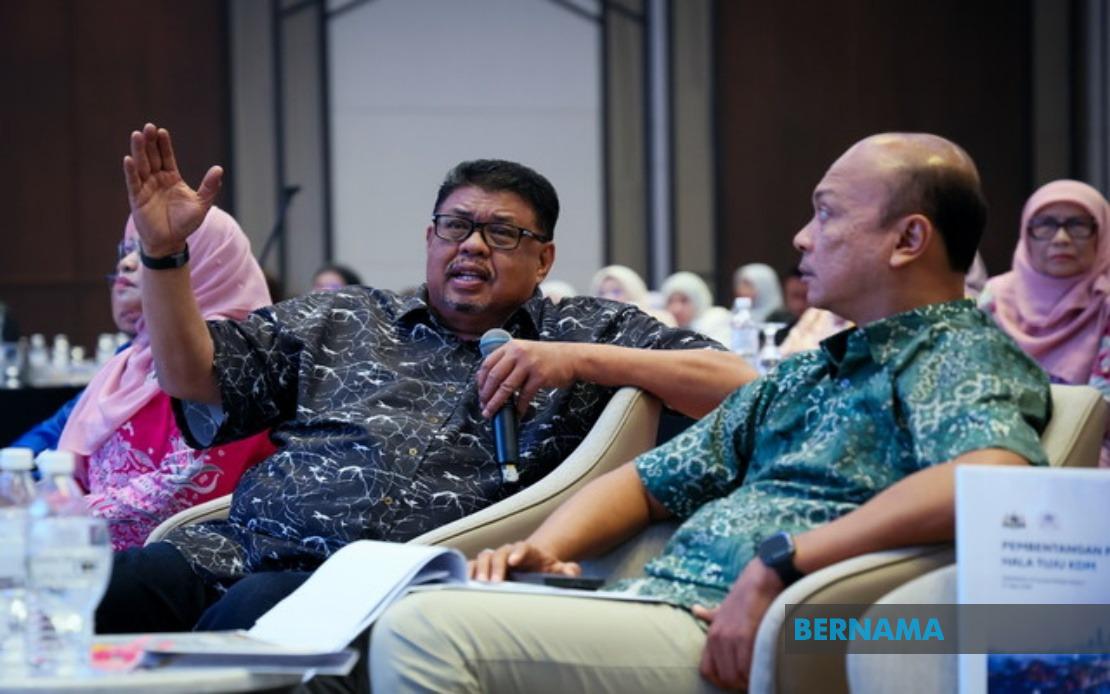
Melaka's Barisan Nasional leadership has drawn a hard line on its electoral territory, announcing an uncompromising stance that all 21 State Legislative Assembly seats won in the last election will remain within the coalition's control for the upcoming state polls. The declaration, made by Melaka BN chairman Datuk Seri Ab Rauf Yusoh during the Melaka Digital Kampung Directional Alignment Workshop in Alor Gajah, signals that the coalition views its current parliamentary strength as inviolable ground in pre-election negotiations.
Ab Rauf, who simultaneously holds the posts of Melaka Chief Minister and chairman of the Melaka UMNO liaison committee, framed the retention of all 21 seats not merely as a strategic preference but as a fundamental prerequisite for any party seeking to collaborate with BN in the forthcoming election. His characterisation of the 21 seats as a non-negotiable "boundary for negotiations" underscores the coalition's determination to prevent any dilution of its strength, particularly as speculation intensifies about a potential September dissolution of the state legislative assembly.
The strategic context underpinning this position becomes clearer when examining Melaka's current political configuration. The state assembly comprises 28 seats in total, of which BN secured 21 in the 15th state election, Pakatan Harapan captured five, and Perikatan Nasional won two. This distribution gives BN a commanding majority, and the coalition's leadership appears acutely aware that surrendering even a handful of these seats to coalition partners could jeopardise its comfortable governing position, particularly given the fractious nature of multi-party alliances in Malaysian politics.
When pressed about anticipated discussions with PAS senior leaders expected to occur during the week, Ab Rauf adopted a more welcoming rhetorical posture, publicly inviting any party interested in joining coalition negotiations. However, this apparent openness came with a crucial caveat: any such discussions would need to proceed on what he termed "a very reasonable rationale." This carefully calibrated language suggests that while BN may consider partnerships, such cooperation would necessarily involve other concessions or arrangements rather than any reallocation of its existing seats.
Furthermore, Ab Rauf emphasised that he lacks unilateral authority to make binding decisions regarding coalition matters, requiring approval from the coalition's Supreme Council, or MT. This procedural constraint may provide useful political cover should negotiations with potential partners prove contentious or unsuccessful. By invoking the need for MT blessing, BN's Melaka leadership effectively shifts responsibility for any rejections of partnership proposals to a higher institutional body, thereby insulating individual decision-makers from direct political fallout.
The timing of these negotiations assumes heightened significance given the constitutional timeline governing Melaka's political cycle. The current state government's term expires on December 31, establishing a hard deadline by which elections must be held. Ab Rauf's cryptic suggestion that dissolution could occur "at any time" and his somewhat humorous refusal to disclose the specific election date until it transpires reflect the customary political brinkmanship that characterises Malaysian state-level politics, where the timing of elections can itself become a tactical consideration.
For regional observers and analysts tracking Malaysia's evolving political landscape, Melaka's positioning holds particular importance. The state has emerged as a microcosm of broader coalitional dynamics in Malaysian politics, where the traditional BN structure has been strained by the rise of Perikatan Nasional and shifting allegiances within PAS. The strict defence of BN's Melaka redoubt may signal a broader coalition strategy to consolidate existing bases rather than pursue aggressive expansion elsewhere, a posture that reflects the sobering electoral arithmetic facing the coalition nationally.
The insistence on retaining all 21 seats also reflects pragmatic calculations about internal coalition management. Any reduction in BN's Melaka representation could provoke discord among UMNO members, who likely view these seats as their rightful property within the broader coalition framework. By refusing to cede ground, Ab Rauf forestalls potential intra-coalition grievances that might otherwise fester and weaken BN's internal cohesion during the crucial campaign period.
Moreover, the stance carries implications for PAS's strategic positioning, particularly given reports of imminent discussions between PAS leadership and Ab Rauf. If PAS harboured hopes of gaining Melaka seats through coalition partnership, this latest declaration effectively forecloses that avenue. The party must therefore consider whether participating in a Melaka electoral coalition on BN's rigid terms—without securing additional seats—serves its organisational interests or whether it might be better served by contesting independently or through Perikatan Nasional, where its relative bargaining power might prove stronger.
The broader political economy of Melaka's electoral cycle also merits consideration. As a relatively small state by Malaysian standards, Melaka lacks the substantial financial or demographic resources that might compel BN to compromise on seat distribution. Unlike larger states where coalition partners might leverage significant vote-winning capabilities, Melaka's limited scale means that BN may calculate it can manage without outside coalition partners if necessary, thereby reducing its incentive to make territorial concessions.
Looking ahead, the coming weeks will test whether BN's hard line on the 21 seats proves sustainable or whether electoral realities force adjustments. Should September dissolution occur as anticipated, the coalition will enter a campaign season with clear demarcation of its available space for partnership. Any party seriously contemplating collaboration with BN in Melaka must accept operating within the parameters the coalition has now publicly established, leaving precious little room for renegotiation once the election calendar begins in earnest.

