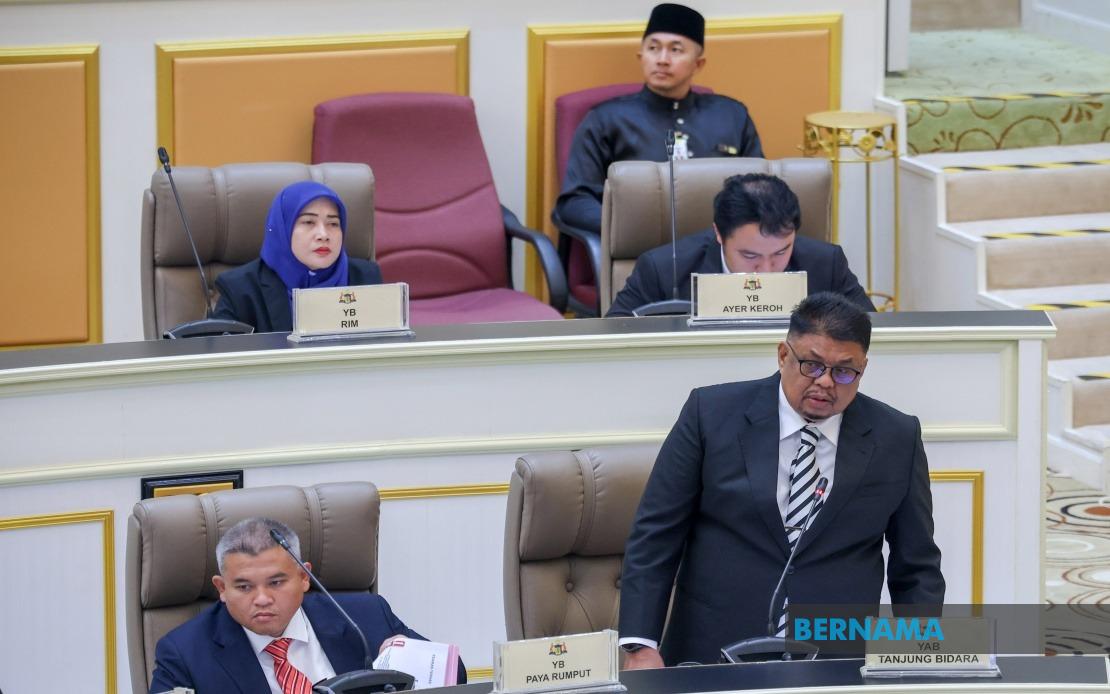
The Melaka State Legislative Assembly has taken a significant step in its governance structure by endorsing constitutional changes that will permit the appointment of nominated state assemblymen. On July 14, the assembly voted to pass the Melaka State Constitution (Amendment) Bill 2026, with 23 members backing the legislation and five opposing it. The measure represents a landmark shift in how the state legislature will compose its membership, introducing a hybrid model that combines electoral representation with merit-based appointments.
Chief Minister Datuk Seri Ab Rauf Yusoh championed the amendment, with Senior State Executive Councillor Datuk Rais Yasin offering his support. The reform has been designed to address specific gaps in legislative representation by bringing individuals with specialised knowledge into the assembly chamber. Ab Rauf articulated a vision where experts in law, economics, education, investment, technology, and state development could contribute their professional insights directly to policymaking processes and parliamentary discussions, bypassing the traditional electoral route.
The amendment carries particular implications for Malaysia's broader governance landscape. At present, most states in the federation rely exclusively on elected representatives, making Melaka's move to introduce appointed members noteworthy. The approach mirrors mechanisms already established at the federal level, where nominated Dewan Negara members contribute specialised perspectives to national legislation. By adopting a similar framework, Melaka is experimenting with what proponents argue is a more inclusive and technically rigorous legislative model.
A central justification for the amendment focuses on enhancing representation for constituencies traditionally disadvantaged in electoral contests. Ab Rauf emphasised that appointments could facilitate greater participation from women, younger Malaysians, indigenous Orang Asli communities, minority groups, and industry professionals who might struggle to secure elected seats but possess substantial capacity to advance state interests. This rationale reflects growing recognition across Malaysian politics that electoral outcomes do not always reflect the full spectrum of expertise and demographic diversity available within society.
The legislative quality argument provides another dimension to understanding the amendment's purpose. Appointed members are positioned as contributors who can offer more detached, technical assessments of bills and administrative matters. By introducing individuals selected primarily for their professional credentials rather than political affiliation, the amendment aims to strengthen institutional checks and balances. This mechanism seeks to elevate debate standards by ensuring that committee work and legislative scrutiny benefit from specialised knowledge that might not otherwise enter assembly proceedings.
Opposition to the measure was not uniform across party lines. While five assemblymen voted against the amendment, the Melaka Opposition Leader Dr Mohd Yadzil Yaakub signalled conditional support from the opposition benches. His position centred on the potential value of the reform if administered with genuine transparency and authentic commitment to public interest. Drawing parallels with federal Dewan Negara appointments, Yadzil acknowledged that individuals demonstrating expertise and demonstrated commitment to national development could legitimately participate in legislative processes alongside elected representatives.
The timing of this constitutional change reflects commitments made during the 2021 Melaka state election campaign. The appointed assemblymen provision formed part of Barisan Nasional's Thrust 1 manifesto plank, which emphasised Political Stability and Promoting Mature Politics. That the amendment reaches implementation five years after the initial electoral pledge indicates the deliberative pace of constitutional reform within Malaysian states, where such changes require extensive consensus-building and procedural compliance.
For Malaysian observers, the Melaka experiment merits attention as states across the federation grapple with questions about optimal legislative design. The move introduces a tension worth examining: how do democracies balance the principle that power should flow from elected mandates with the recognition that technical governance often benefits from specialist input? The appointment mechanism creates accountability challenges distinct from electoral representation, requiring robust frameworks to ensure that nominated members remain responsive to public welfare rather than factional interests.
Implementation mechanics will prove decisive in determining whether the reform delivers its stated benefits. The amendment creates space for up to seven appointments, leaving discretionary decisions to the chief minister and state leadership regarding composition, selection criteria, and the balance between different expertise areas. Whether appointments reflect genuine merit-based selection or become vehicles for political patronage will shape perceptions of the amendment's legitimacy and effectiveness among Melaka constituents.
The amendment also occurs within a broader Malaysian context of incremental institutional innovation. Several states have experimented with variations of consultation mechanisms and specialised advisory structures, though Melaka's direct constitutional integration of appointed legislators represents a more ambitious structural change. Should the model prove successful in delivering enhanced deliberation and inclusive representation, it could prompt consideration of similar arrangements elsewhere in the federation, creating a minor but potentially significant shift in how Malaysian states manage their legislative institutions over coming years.

