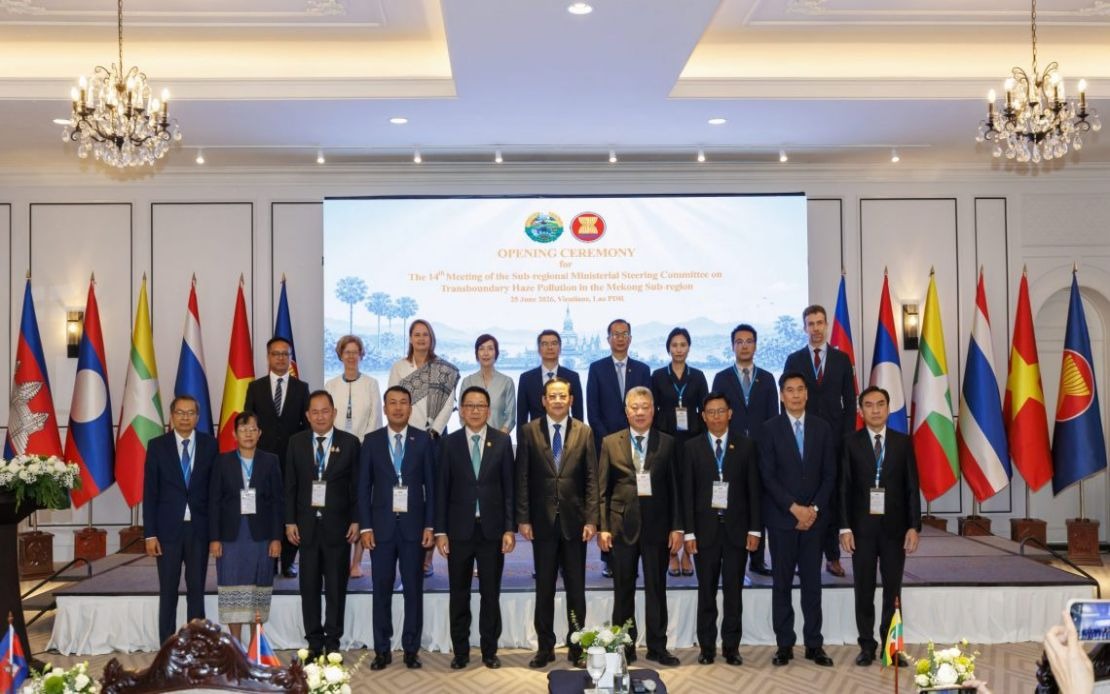
Governments throughout the Mekong region are mobilizing joint efforts to forestall another devastating episode of transboundary haze as soaring temperatures and climatic pressures converge to heighten the danger of destructive forest and peatland fires. The challenge has become increasingly urgent, with major urban centers from Bangkok to Ho Chi Minh City already experiencing unseasonable heat waves that signal deeper environmental stress across Southeast Asia's vital watershed. The timing is critical, as climate scientists warn of a possible Super El Niño event developing this year, which could dramatically amplify fire risk during the traditionally vulnerable dry season.
The convergence of multiple environmental stressors has alarmed regional policymakers. Despite the arrival of monsoon rains, the Mekong basin is experiencing erratic precipitation patterns, with some areas recording insufficient rainfall and prolonged dry spells. Bangkok continues to endure acute heat conditions even as the rainy season advances, while Ho Chi Minh City faces an anomalous heatwave that defies seasonal norms. Weather scientists attribute these paradoxical conditions to the compounding effects of climate change and El Niño oscillation patterns, which are disrupting the region's historically predictable weather cycles.
The scale of the fire risk was underscored at the 14th Meeting of the Sub-Regional Ministerial Steering Committee on Transboundary Haze Pollution in the Mekong Sub-Region, convened in Vientiane, Laos on June 25. Alarming data presented at the gathering revealed that hotspot counts in the region rose by approximately eight per cent between December 2025 and May 2026 compared to the same period in the previous year, signaling an intensifying trend that demands immediate intervention. The meeting's findings were subsequently posted on the ASEAN Secretariat website, broadening awareness of the crisis across member states.
Lao Prime Minister Sonexay Siphandone issued a stark warning about the mounting dangers, characterizing forest fires and transboundary air pollution as major threats that have already inflicted severe consequences across the Greater Mekong Subregion. Beyond immediate environmental destruction, these phenomena have triggered cascading losses in biodiversity, deteriorated public health outcomes, and generated substantial economic damage that ripples through interconnected regional economies. The cumulative impact underscores how environmental degradation in one nation directly compromises the welfare and prosperity of neighboring countries, making coordinated regional response essential rather than optional.
The Lao Ministry of Agriculture and Environment has issued forecasts that heighten concern about the coming months. Temperature projections indicate that certain areas within the region could reach between 35 and 38 degrees Celsius, accompanied by irregular rainfall distribution and extended periods of moisture deficit. Such conditions create a perfect storm for ecosystem stress: water levels in critical rivers and reservoirs are expected to decline, agricultural productivity faces threats from drought, and livestock sectors confront mounting challenges. The interconnected nature of these hazards means that fire risk prevention must be paired with water management and agricultural support systems to ensure holistic resilience.
The transboundary dimensions of this crisis have prompted ASEAN member states to pledge coordinated action during the vulnerable dry season months. The commitment to reduce fire hotspots and control haze pollution represents a shift toward proactive regional governance, moving beyond reactive responses to disasters that have repeatedly ravaged the Mekong basin in previous years. However, the effectiveness of such pledges hinges on implementing rigorous enforcement mechanisms, adequate resource allocation, and genuine political will across capitals that sometimes compete for natural resources and economic advantage.
For Malaysia and other Southeast Asian nations outside the immediate Mekong zone, transboundary haze remains a recurring threat that demands regional vigilance. Historical episodes, particularly the severe 1997 and 2015 haze crises, demonstrated how smoke and air pollutants can travel thousands of kilometers, affecting air quality and public health across the broader region. Malaysia's experience with these episodes provides valuable lessons in monitoring systems, public health response, and the economic costs of inaction, expertise that could inform regional collaborative efforts.
The El Niño phenomenon adds another layer of complexity to the regional challenge. Super El Niño events are associated with warming ocean temperatures that suppress rainfall across Southeast Asia, prolonging drought conditions and extending the fire season. The prospect of such an event occurring during the same period when temperatures are already elevated creates a worst-case scenario that requires unprecedented preparedness. Weather prediction agencies have cautioned regional governments to factor this possibility into their planning, even as the probability remains subject to scientific uncertainty.
The agricultural and economic implications of uncontrolled transboundary haze extend far beyond the immediate Mekong region. Supply chains for agricultural products, timber, and other commodities that span across Southeast Asia face disruption when fires suppress production and haze degrades working conditions. Southeast Asian economies that rely on tourism, manufacturing, and services all suffer when haze episodes drive away visitors, reduce worker productivity, and create health-related costs. For Malaysia specifically, haze impacts on neighboring economies can reverberate through ASEAN trade networks and affect bilateral relationships.
Addressing this crisis requires sustained commitment beyond ministerial meetings and political declarations. Regional governments must invest in fire detection and suppression infrastructure, enforce regulations against illegal land clearing and agricultural burning, and develop early warning systems that can mobilize rapid response teams. Community engagement is equally critical, as local populations often bear responsibility for agricultural practices that ignite fires, and education campaigns must demonstrate the mutual benefits of fire prevention. International support through technology transfer and financial assistance can accelerate capacity building in countries with limited resources.
The underlying challenge extends to broader environmental governance across the Mekong region. Land-use planning that protects natural forests and peatlands, water resource management that maintains adequate moisture levels during dry seasons, and climate adaptation strategies that build resilience represent long-term foundations for haze prevention. These measures require investments in monitoring, enforcement, and alternative livelihoods for communities dependent on destructive practices, commitments that extend beyond the immediate fire season into sustained development pathways.
Singapore and Brunei, which have suffered acutely from historical haze episodes, have championed regional cooperation mechanisms and transboundary pollution agreements. Their experiences underscore how smaller, economically vulnerable nations can effectively advocate for environmental protection within regional forums, leveraging collective pressure and technical expertise. Such regional leadership may prove essential in sustaining momentum for haze prevention efforts that require consistency across multiple years and political cycles.
The June 2024 ministerial meeting in Vientiane represents a critical moment for regional environmental governance. Whether the pledges translate into concrete action, adequate funding, and institutional capacity will determine whether the Mekong region can break the cycle of recurring haze crises. For Southeast Asia more broadly, the outcome signals whether regional cooperation mechanisms can effectively address transboundary environmental challenges that threaten shared prosperity and public welfare.

