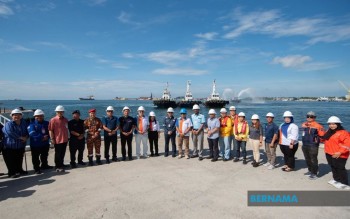
Megah Port Management Sdn Bhd (MPM) has officially inaugurated its marine services division at Labuan Port with a significant infrastructure commitment: four newly acquired tugboats worth RM23 million. The fleet deployment marks a strategic expansion of the port operator's capabilities, designed to strengthen maritime operations across one of Malaysia's key offshore hubs in federal territory waters. Managing director Datuk Seri Patrick Tiong described the investment as a tangible demonstration of the company's dedication to fulfilling its contractual obligations and establishing higher operational standards within the port zone.
The acquisition represents more than a simple capital expenditure; it embodies MPM's interpretation of its responsibilities under the recently executed Operation, Facility and Management Continuation Agreement with the Labuan Port Authority (LPA). Under the terms of this arrangement, providing marine services—encompassing tugboat operations, vessel assistance and emergency response—constitutes a mandatory function rather than an optional service enhancement. Tiong emphasized that the company views this obligation not as a regulatory burden but as an opportunity to demonstrate professional commitment to the maritime sector and the broader communities dependent upon Labuan's infrastructure.
The tugboat fleet will serve multiple operational functions across Labuan's harbour complex. These vessels provide essential assistance during critical phases of port operations, including vessel entry, exit, berthing and unberthing manoeuvres. Within the confined waters characteristic of tropical port environments, tugboats prove indispensable for controlling vessel movements, particularly when weather deterioration or unfavourable current conditions complicate navigation. The fleet also extends its utility to disabled vessels experiencing mechanical problems, power loss or manoeuvring difficulties—scenarios that occur periodically in any active port and require prompt, professional intervention to prevent accidents or environmental damage.
Beyond routine maritime operations, MPM's tugboats substantially amplify the port's emergency preparedness infrastructure. The vessels function as first-response assets for maritime incidents, capable of rapid deployment to contain crises before specialized emergency services arrive. During firefighting operations, tugboats can be repositioned to suppress flames, move endangered vessels away from high-risk zones, and create protective corridors for evacuation activities. This capability proves particularly critical given Labuan's concentration of hazardous cargo terminals, including facilities operated by Petronas Chemicals Methanol Labuan, Shell Timur and Asian Supply Base Fuel. The potential consequences of uncontrolled maritime incidents in these zones—spanning risks to human life, environmental contamination, asset destruction and operational continuity—justify the substantial capital investment undertaken.
Labuan Port's operational geography necessitates these enhanced marine capabilities. The facility encompasses multiple specialized terminals serving distinct maritime sectors: the Dangerous Goods Terminal, petrochemical handling installations, fuel supply bases and dedicated service terminals. Each facility operates with specialized safety protocols and regulatory requirements. The tugboat service provision, therefore, extends across a complex operational ecosystem rather than a simple single-berth scenario. Coordinating vessel movements across these interconnected terminals, while maintaining compliance with international maritime law and Malaysian regulatory frameworks, demands professional marine personnel with appropriate vessel assets.
MPM's approach to marine service delivery emphasizes collaborative governance with Malaysia's maritime enforcement infrastructure. Close coordination with the Malaysian Maritime Enforcement Agency and Marine Police Force ensures that all tugboat operations, vessel movements and related maritime activities maintain full compliance with applicable legislation and safety standards. Rather than operating in isolation, MPM has positioned itself as a cooperative partner within the broader maritime security and enforcement ecosystem. This collaborative stance reflects recognition that port safety ultimately depends upon seamless integration between private operators and government authorities, creating unified maritime governance rather than fragmented responsibility.
The launch ceremony included a live emergency response demonstration, where tugboats showcased their firefighting and incident-response capabilities through a simulated maritime fire scenario in Labuan waters. Such demonstrations serve multiple purposes: they validate operational readiness, provide practical training for personnel, build confidence among stakeholders regarding capability levels, and satisfy regulatory authorities that contracted services meet agreed performance standards. For port users, ship operators and insurance entities, such tangible evidence of emergency preparedness reduces perceived operational risk and enhances confidence in Labuan's management standards.
The significance of this development extends beyond Labuan's immediate operational context. Labuan functions as a critical offshore energy services hub supporting petroleum extraction activities across the South China Sea and surrounding waters. Enhanced port safety, operational reliability and emergency response capabilities benefit not only Labuan-based industries but also the broader network of offshore operations that depend upon the port for supply vessel operations, crew rotation, cargo handling and maintenance services. Regional shipping operators and multinational energy companies operating across Southeast Asia increasingly prioritize ports demonstrating professional safety cultures and modern operational infrastructure—criteria that MPM's investment addresses directly.
Datak Seri Patrick Tiong's emphasis on continuous improvement and receptiveness to stakeholder feedback signals MPM's commitment to operating beyond minimum regulatory compliance. The company has invited ongoing guidance from enforcement agencies, industry participants and other stakeholders, positioning operational excellence as an aspirational objective rather than a static achievement. This orientation proves particularly important in the competitive regional port environment, where Malaysian facilities compete for vessel traffic and service contracts against other Southeast Asian ports offering comparable geographic advantages.
From a Malaysian federal territory perspective, the investment demonstrates confidence in Labuan's continued role as a maritime centre despite broader regional economic transitions. The RM23 million capital commitment reflects MPM's belief that demand for marine services will justify ongoing operational expansion. This confidence carries implications for employment generation, technological skill development and broader economic activity within the federal territory, particularly as offshore industries continue evolving across Southeast Asia's maritime zones.

