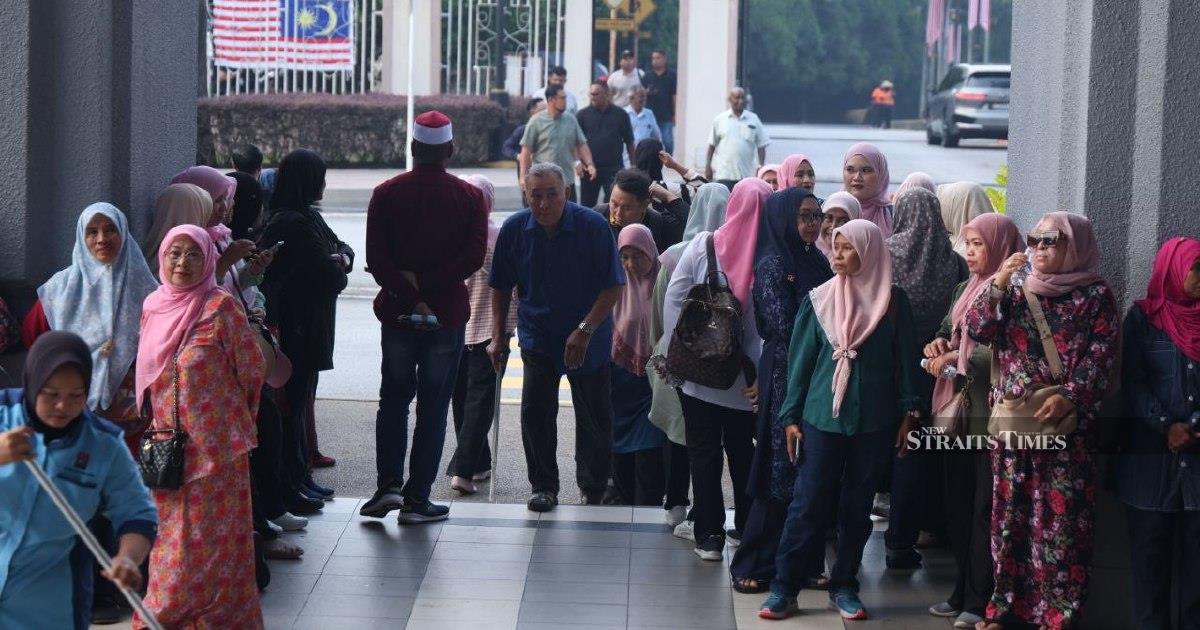
The Kuala Lumpur Court Complex experienced heightened activity on Tuesday as media personnel assembled in anticipation of former Prime Minister Datuk Seri Ismail Sabri Yaakob's arrival for his scheduled court appearance. More than 30 journalists and camera crews converged in the main lobby, positioning themselves to document what marks a significant moment in Malaysia's political landscape—the formal charging of a former head of government.
The gathering reflects the considerable public interest surrounding the legal proceedings against Ismail Sabri, whose tenure as Prime Minister between August 2021 and November 2022 was marked by economic challenges and shifting political alliances. His government succeeded the Perikatan Nasional administration and preceded the Unity Government framework currently in place, making any developments in his legal status a matter of keen interest across political circles and the general electorate.
The presence of such substantial media coverage underscores the judiciary's role as a balancing force in Malaysia's political ecosystem. Unlike in some democracies, the country's court system has historically attracted intense scrutiny when sitting prime ministers or their predecessors face legal challenges, particularly when such proceedings carry the potential to reshape parliamentary dynamics or influence voter sentiment ahead of elections.
For Malaysian citizens and regional observers, the case carries implications beyond the individual defendant. It touches upon questions of institutional accountability, the separation of powers, and whether political office provides insulation from criminal proceedings—concerns that resonate across Southeast Asia where transitions of government have sometimes been accompanied by legal action against predecessors.
The formal charging process represents a procedural milestone distinct from investigation or initial detention. Court complexes across Malaysia have become familiar with high-profile cases involving former or sitting political figures, creating established protocols for managing media presence while ensuring courtroom decorum. The concentration of journalists at the lobby level reflects their awareness that the substance of charges, any statements made by Ismail Sabri or his legal representatives, and the judicial response will generate headlines throughout Malaysia and potentially beyond.
This particular proceeding also arrives at a moment when Malaysia's political climate remains characterised by coalition negotiations and the ongoing dynamics of the Unity Government. Any developments affecting a former Prime Minister carry potential ripple effects across the parliamentary arithmetic and the strategic calculations of various political parties positioning themselves for the next general election.
The courtroom itself represents neutral ground where political standing and executive rank carry no weight—a principle fundamental to democratic governance. That former premiers must answer before the judiciary on equal legal footing as ordinary citizens constitutes an important safeguard against the concentration of unchecked authority. The public and media observation of such proceedings reinforces this principle's practical application.
For legal professionals monitoring the case, Ismail Sabri's appearance initiates a formal phase where charges are read and responses are recorded. The complexity of the charges and whether they involve financial matters, abuse of power, or other categories of offence will influence both the technical legal proceedings and the broader public discourse surrounding accountability in high office.
The substantial media turnout also reflects the competitiveness of Malaysia's news industry and the demand from multiple outlets—traditional broadcast and print media alongside digital platforms—for comprehensive coverage of major political and legal developments. In an era of continuous news cycles, the opportunity to document a former Prime Minister's court appearance generates assignments across numerous newsrooms seeking distinct angles and exclusive observations.
Regionally, such proceedings attract attention from observers in other Southeast Asian nations where questions of political accountability and rule of law remain subjects of ongoing debate. Malaysia's willingness to subject former executives to the same judicial processes as other citizens demonstrates institutional maturity that contrasts with some neighbours where such mechanisms remain weaker or more selectively applied.
The gathering at the Court Complex lobby also indicates the degree to which legal proceedings involving prominent political figures intersect with media management and strategic communication. Both the prosecution and defence will likely issue statements for public consumption, and the choreography of courthouse appearances has become an element of broader political messaging in Malaysia's contemporary landscape.
As Ismail Sabri prepares to enter the courtroom, the assembled media presence ensures that whatever transpires will be immediately disseminated to an attentive public. The proceedings ahead will establish the formal legal record while contributing to an ongoing national conversation about governance, responsibility, and the institutions designed to enforce accountability across all levels of Malaysian society.

