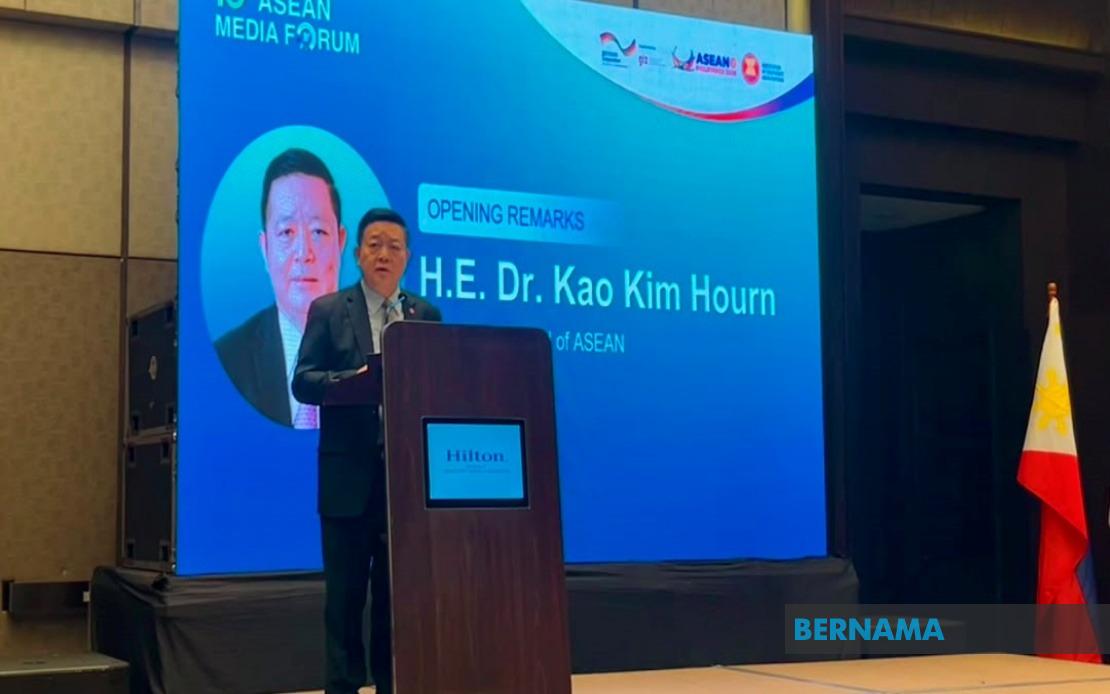
The media stands at the intersection of ASEAN's ambitions and public understanding, according to ASEAN Secretary-General Dr Kao Kim Hourn, who addressed delegates at the 10th ASEAN Media Forum in Manila this week. As the 10-member association charts its course towards the ASEAN Community Vision 2045, the responsibility of journalists and news organisations to explain complex regional policies and foster a cohesive sense of shared purpose has never been more pressing, he suggested. The forum, which convenes journalists, editors and policymakers from across Southeast Asia, represents a rare opportunity to reflect on how the region communicates its identity and values to its 650 million citizens.
The information environment has undergone seismic shifts over the past decade, fundamentally altering how Southeast Asian audiences access news and form opinions. Digital platforms, social media networks and artificial intelligence systems have democratised content production, allowing stories to reach readers instantaneously across borders. Yet this same technological transformation has created new vulnerabilities. Misinformation, deliberately fabricated narratives, and AI-generated deepfakes now spread with alarming speed, often outpacing fact-checkers and overwhelming editorial gatekeepers. These dynamics have particular significance for a diverse, multilingual region like ASEAN, where language barriers and varying levels of digital literacy mean that false information can take root in local communities before any correction reaches them.
Generative artificial intelligence represents both promise and peril for regional newsrooms. On one hand, AI tools can streamline reporting workflows, enabling journalists to investigate stories more thoroughly and expand coverage into underserved languages and communities. Real-time multilingual reporting becomes feasible when machines handle routine translation and data analysis. Yet these same technologies raise troubling questions about editorial responsibility and authenticity. Who verifies the information that AI systems synthesise? How do newsrooms maintain journalistic standards when algorithms make editorial decisions? The proliferation of synthetic media—videos and images manipulated so seamlessly that they appear genuine—threatens to erode public confidence in visual evidence itself. Dr Kao Kim Hourn pointedly noted that once public trust evaporates, rebuilding it demands extraordinary effort, making credibility the media's most fragile yet invaluable asset.
For ASEAN specifically, the stakes extend beyond abstract principles of press freedom. The association's Vision 2045 rests on three pillars: political and security cooperation, economic integration, and socio-cultural cohesion. Each pillar depends fundamentally on informed, engaged publics who understand why regional cooperation matters to their daily lives. A farmer in rural Thailand needs to grasp how ASEAN's trade agreements affect the price of rice. A small business owner in Indonesia must understand how regional standards harmonisation shapes her export opportunities. A student in Malaysia should recognise how ASEAN's educational exchanges enrich her career prospects. Without media that can translate technocratic policy into human consequence, these connections remain invisible, and public support for regional integration weakens.
Leo M. Herrera-Lim, Undersecretary for Foreign Affairs of the Philippines, which currently chairs ASEAN, framed journalism as integral to realising the Vision 2045 agenda. He emphasised that media organisations are not merely chroniclers of regional developments—they are active architects of ASEAN's future, shaping how the region understands itself and communicates with its own citizens. This framing reflects a subtle but important shift in how ASEAN leadership views the press. Rather than seeing journalists as external observers or potential critics, officials increasingly recognise them as partners in a collaborative enterprise. The implication is significant for Malaysian editors and journalists: your work transcends national borders and contributes to regional stability and cohesion.
Geopolitical complexity in Southeast Asia renders responsible journalism more critical than ever. China's assertiveness in disputed waters, great power competition between the United States and China, Myanmar's political crisis, and the economic aftershocks of the pandemic have created an environment where clarity and accuracy in reporting directly influence policy responses and public behaviour. Sensationalism, partisan spin, and half-truths amplify existing tensions and make diplomatic solutions harder to achieve. Conversely, journalism that explains competing interests with nuance, that acknowledges uncertainty rather than manufacturing false certainty, and that holds power accountable while remaining scrupulously fair, strengthens the conditions for consensus-building.
The 10th ASEAN Media Forum itself represents the maturation of a platform established in 2017 to commemorate the bloc's 50th anniversary. Over seven years, it has evolved from a commemorative gathering into a genuine mechanism for professional exchange. Journalists and editors bring lessons from their national contexts, sharing strategies for combating disinformation, maintaining editorial independence under pressure, and reporting on sensitive regional issues responsibly. The forum, supported by the German government through GIZ, reflects international recognition that ASEAN's future depends partly on the quality of information flowing through Southeast Asian media ecosystems. For Malaysian participants, this forum offers rare access to editorial peers across the region, enabling collaboration on transnational stories and mutual learning about best practices.
Professional standards grounded in verification, contextual depth, and ethical rigour have become the bedrock of credible journalism in an age of algorithmic misinformation. This is not a nostalgic call to return to some imagined golden age of news—indeed, journalism has always been contested and imperfect. Rather, it reflects a hard-won understanding that shortcuts, whether driven by commercial pressure or political favour, ultimately undermine both press credibility and public discourse. Southeast Asian newsrooms increasingly recognise this challenge. Many have strengthened fact-checking operations, invested in reporter training, and developed editorial policies designed to maintain standards even as audiences fragment across platforms and business models fracture.
For Malaysia specifically, the ASEAN Media Forum offers both a mirror and a roadmap. Malaysian journalists navigate complex political terrain at home while also covering an increasingly consequential region. The ability to report accurately on ASEAN issues—whether trade disputes, humanitarian crises, or security developments—strengthens Malaysia's own democratic discourse while contributing to regional understanding. Conversely, the professional challenges facing journalists in one ASEAN country often echo across others: economic pressure on news outlets, government pressure on editorial independence, audience fragmentation, and competition from social media. By participating in forums like the AMF, Malaysian editors and journalists tap into a network of peers facing similar struggles and developing solutions collaboratively.
As ASEAN advances towards Vision 2045, the region faces a choice about what kind of information environment will shape its future. One path leads towards fragmented, sensationalised, algorithmically-driven discourse where disinformation flourishes and shared understanding becomes impossible. Another path, requiring sustained investment in professional journalism and editorial integrity, offers the possibility of informed publics capable of holding leaders accountable while also recognising the region's common interests. The media's unique contribution lies not in cheerleading ASEAN or criticising it uncritically, but in explaining it clearly, connecting regional policies to lived experience, and holding all actors—governmental and private, national and regional—to consistent standards of truthfulness and accountability. The 10th ASEAN Media Forum represents a commitment to this harder, more demanding path.

