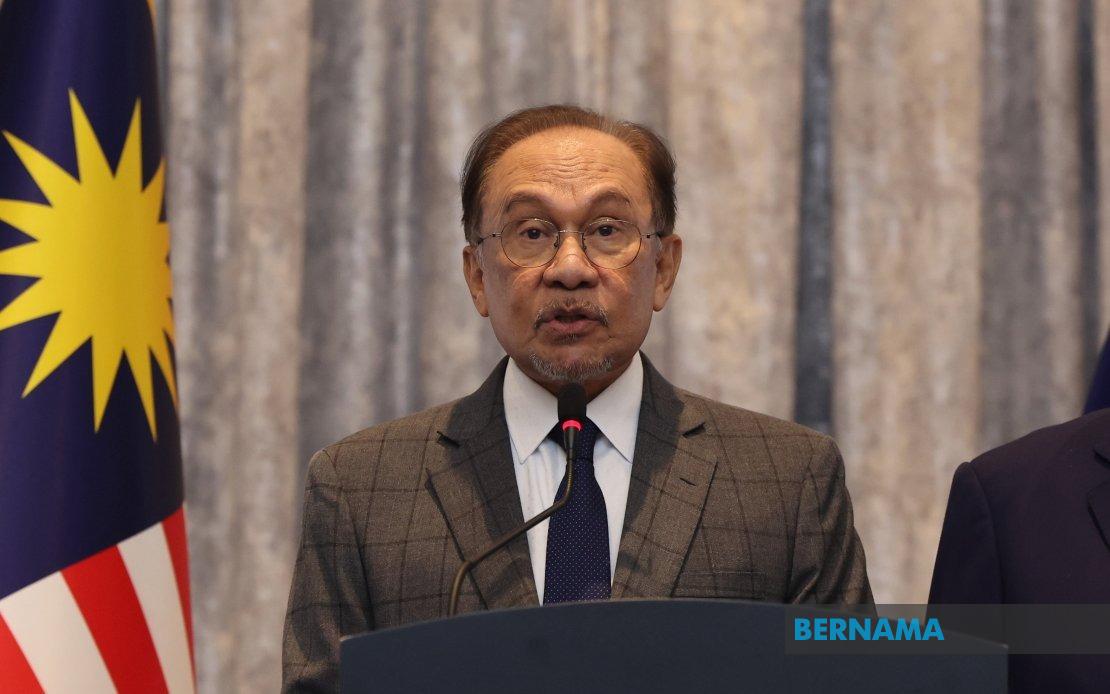
Prime Minister Datuk Seri Anwar Ibrahim has delivered a pointed message to Malaysia's media community: technological progress must never come at the expense of fundamental journalistic principles and the country's cultural identity. Speaking at the Malaysian Press Night 2025 and the Malaysian Press Institute-PETRONAS Journalism Awards 2026 in Kuala Lumpur, Anwar emphasised that while innovation in information technology, digital platforms and artificial intelligence should be actively pursued, these tools cannot be deployed in ways that abandon ethical standards or compromise national values.
The prime minister framed his remarks as a critical reminder at a pivotal moment for the country. He warned that Malaysia faces genuine risks if it remains complacent in monitoring the challenges that technological advancement inevitably brings. This is not, in Anwar's view, a matter of resisting change but rather of ensuring that change serves the nation's long-term interests rather than external agendas. The government, through Communications Minister Datuk Seri Fahmi Fadzil and the Malaysian Communications and Multimedia Commission, bears responsibility for supporting media institutions as they navigate this complex landscape.
Anwar drew a historical parallel to illustrate his concern. For decades, he noted, Western powers leveraged their dominance in global media infrastructure to construct and propagate narratives aligned with their own strategic interests and worldview. Today, he suggested, a comparable dynamic is emerging through technological channels. A new power is working to challenge nations' freedom and sovereignty by controlling the technology infrastructure itself and wielding it to spread ideological or cultural values that often sit uncomfortably with local societies and traditions. This represents a subtler but potentially more pervasive form of external influence than earlier colonial or Cold War-era models.
The concept of the "captive mind," historically understood as a consequence of political domination or colonial rule, has evolved in the digital age. Anwar argued that technology itself has become a primary vector for constraining how populations think and what narratives they encounter. As countries race to master emerging technologies, they simultaneously confront the challenge of maintaining intellectual and cultural autonomy. This dual imperative—developing technological capability while preserving independence—defines the contemporary challenge for developing nations including Malaysia.
The prime minister expressed confidence in Malaysia's institutional response to these challenges. He commended the Malaysian Press Institute, supported by PETRONAS, alongside the Malaysian Media Council for their initiatives aimed at driving media innovation and systemic reform. These bodies, he indicated, are working deliberately to prevent Malaysia from becoming trapped in narratives shaped by external technological or ideological forces. Their work is understood not as resistance to progress but as a framework for ensuring that progress strengthens rather than undermines national autonomy and cultural continuity.
Anwar's remarks also constituted a recognition of the press's essential democratic function. He expressed appreciation to journalists across the country for their ongoing commitment to upholding press freedom and democratic principles. The media's provision of diverse viewpoints, constructive criticism and policy recommendations—alongside straightforward news reporting—remains vital to the health of Malaysia's political system and public discourse. This acknowledgment suggests that the government views a strong, independent media as compatible with, rather than opposed to, national development objectives.
The emphasis on open dialogue between government and media was particularly notable. Anwar stressed that the country cannot afford internal division on these questions and pledged that the government would listen to media perspectives and welcome criticism presented constructively. This framing suggests an attempt to position government support for media sustainability not as censorship or control but as a shared project to ensure that Malaysian journalism thrives in the digital era while retaining its moral compass.
For Malaysian media practitioners and organisations, the message carries practical implications. Investment in technology and digital transformation remains essential for remaining competitive and reaching audiences where they increasingly gather. However, this investment must be coupled with sustained commitment to editorial integrity, factual accuracy and ethical decision-making. The prime minister's remarks indicate that government support—through the MCMC and other mechanisms—will likely continue to flow toward media outlets that demonstrate this balance.
Regionally, Anwar's speech reflects concerns shared across Southeast Asia about maintaining cultural and informational sovereignty amid rapid globalisation. Malaysia, like its neighbours, confronts the challenge of enabling digital innovation while protecting citizens from manipulation, misinformation and the imposition of values that contradict local traditions. The articulation of this tension at a high-profile media event signals that these questions are moving from the margins to the centre of policy discussions in the region.
The gathering itself—bringing together journalists, government officials, and representatives from major news organisations—underscored the collaborative approach the government is attempting to foster. Rather than issuing edicts, Anwar engaged in dialogue with the media community, inviting input and emphasising shared responsibility. This rhetorical strategy may reflect recognition that sustainable solutions to questions about media, technology and values cannot be imposed from above but must emerge through ongoing conversation between government, media institutions and civil society.
Looking forward, the challenge for Malaysia's media will be translating these principles into concrete editorial and organisational practices. How news outlets balance the drive for digital engagement with the maintenance of traditional journalistic standards, how they deploy algorithms and artificial intelligence without compromising editorial judgment, and how they navigate international pressure while maintaining local relevance will largely determine whether the aspirations articulated by the prime minister become reality. The next phase will test whether Malaysia's media institutions can innovate sustainably without sacrificing their ethical foundations.

