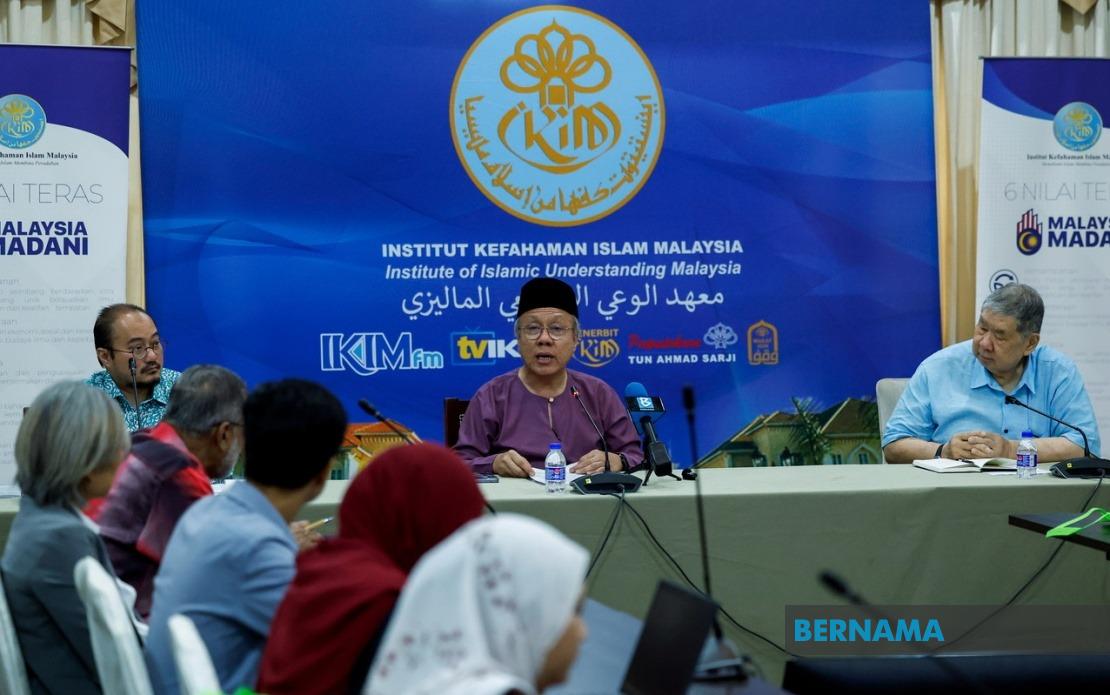
A collaborative effort between the Malaysian Press Institute, the Institute of Islamic Understanding Malaysia, and Tabung Haji has brought together journalists and senior officials to discuss the findings of the pilgrim fund's recently concluded Royal Commission of Inquiry. The initiative, conducted at IKIM's headquarters in Kuala Lumpur, represents an attempt to equip newsroom practitioners with factual context on an issue that has affected millions of Malaysians with savings in the institution.
The briefing session drew Tabung Haji Group Managing Director and Chief Executive Officer Mustakim Mohamad, alongside MPI president Datuk Yong Soo Heong and IKIM Director-General Associate Professor Datuk Dr Mohamed Azam Mohamed Adil. More than two dozen media professionals participated in the nearly two-hour closed-door discussion, during which Mustakim provided a comprehensive overview of the RCI's conclusions and fielded questions from journalists covering developments surrounding the fund.
For Malaysian press leadership, the programme underscores an emerging concern within the news industry about ensuring accurate public communication on matters of significant national importance. Yong framed the initiative as essential groundwork for journalists tasked with interpreting complex institutional governance issues. He highlighted that the collaborative structure between the press institute, a think-tank focused on Islamic affairs, and the fund itself created a unique platform for clarifying both the RCI's findings and Tabung Haji's remedial efforts to rebuild stakeholder confidence.
The emphasis on media literacy reflects broader anxieties about information accuracy in the digital age. Yong indicated that similar educational programmes might be replicated across Malaysian states through town hall formats or regional dialogue sessions, suggesting the organisers anticipate ongoing public interest in Tabung Haji's trajectory and governance reforms. This approach positions the media as a bridge between institutional leadership and public understanding, particularly critical given that the fund manages savings from millions of Malaysian Muslims preparing for Hajj pilgrimage.
A notable dimension of the briefing emerged in Mohamed Azam's framing of the RCI as fundamentally a governance and accountability matter rather than a religious or racial controversy. This distinction carries significant weight in Malaysia's plural political landscape, where institutional failures can easily become weaponised along communal lines. By redefining the narrative around the inquiry as one centred on fiduciary responsibility and management integrity, IKIM's leadership sought to steer public discourse toward institutional reform and trust-building rather than sectarian recrimination.
The trust factor looms large in Tabung Haji's recovery strategy. As an institution entrusted with managing the religious obligation of pilgrimage savings—often characterised as Islam's fifth pillar—the fund occupies a uniquely sensitive position in Malaysian Muslim life. Mohamed Azam's invocation of this responsibility suggests that restoring depositor confidence extends beyond financial remediation to encompass the spiritual and communal dimensions of the institution's role. Media practitioners, positioned as custodians of accurate information flow to the public, carry responsibility for either undermining or reinforcing confidence in the fund's rehabilitation efforts.
The three-way collaboration itself merits scrutiny as a model for managing institutional crises affecting large demographic groups. The Malaysian Press Institute brings professional journalism standards and newsroom credibility. IKIM contributes intellectual framing around Islamic institutional values and ethics. Tabung Haji provides direct access to decision-makers and operational details. This triangulation potentially reduces the space for speculation or misinformation by offering journalists authoritative sources and contextual understanding simultaneously.
For Southeast Asian observers, the initiative reflects how Malaysia's major institutions navigate reputational damage and public communication in an interconnected media environment. The RCI process itself represented governmental accountability mechanisms at work, yet the subsequent media education programme suggests institutional actors recognised that inquiry findings alone do not automatically translate into public understanding or restored confidence. Active engagement with news practitioners becomes a necessary complement to formal investigations.
The timing and scope of the literacy programme also suggest sensitivity to how Tabung Haji's circumstances might influence public perception of Islamic finance more broadly across the region. Malaysia's standing as a hub for Islamic banking and financial services means that loss of confidence in a flagship pilgrim fund carries implications beyond domestic politics. Journalists equipped with accurate information and proper context become agents in either containing or amplifying concerns about governance standards in Islamic financial institutions.
Moving forward, the success of this media engagement strategy will depend partly on whether journalists perceive genuine transparency from Tabung Haji leadership and substantive evidence of institutional reform. One-way briefings, however comprehensive, cannot substitute for open dialogue or independent verification of improvement claims. The programme's real value lies in establishing ongoing communication channels between media, civil society thinking institutions, and fund management, enabling more nuanced public discourse around remediation efforts and future institutional direction.

