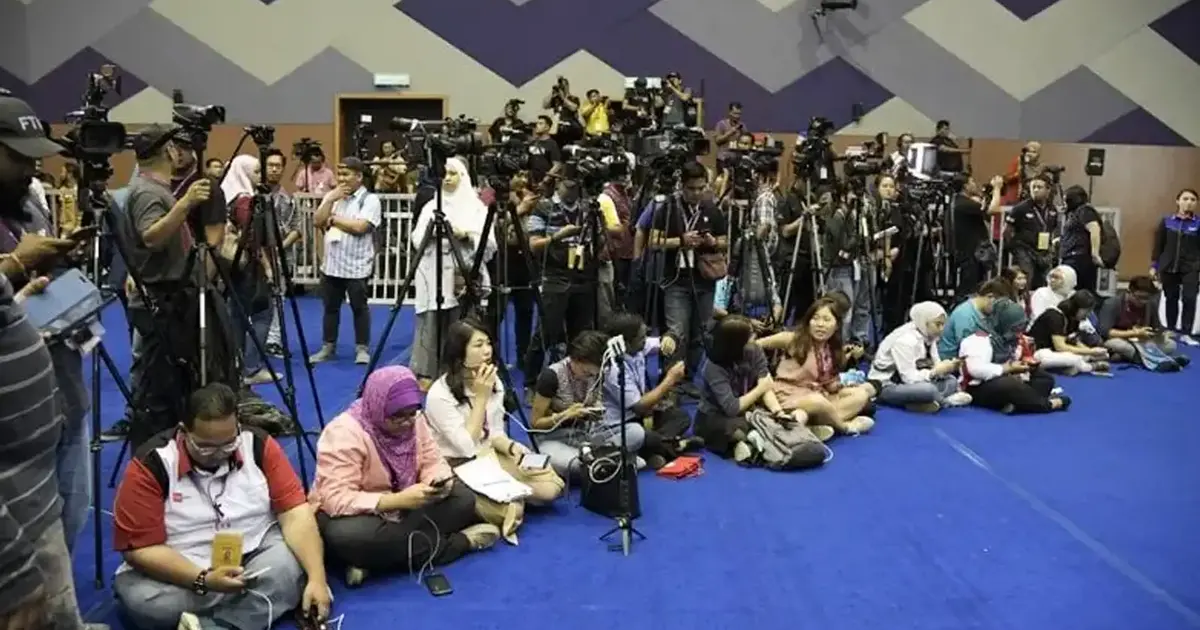
Prime Minister Anwar Ibrahim has established a complaints procedure that channels concerns about journalistic conduct through the Malaysian Media Council as an initial review stage, according to the council's recent clarification of the system's framework. The mechanism functions as a preliminary filter, requiring all grievances to be examined by the council before any formal investigation or enforcement procedures may proceed against media organizations or individual journalists.
The Malaysian Media Council's explanation of this procedural pathway addresses mounting scrutiny over the government's approach to press regulation. By positioning the council as the first institutional checkpoint for complaints, the administration signals its intent to create a buffer between political figures and direct enforcement action against media outlets. This structural arrangement aims to reduce perceptions of arbitrary or politically motivated investigations, a concern that regularly surfaces in discussions about media freedom across Southeast Asia.
The council's role in this framework reflects longstanding debates within Malaysia about balancing the government's legitimate interest in correcting false or misleading reporting against the broader principle of editorial independence. Rather than permitting ministers or government agencies to initiate investigations directly, the system funnels complaints through what is theoretically a neutral institutional body with established professional standards and adjudication protocols. The council operates with representation from media organizations, government bodies, and civil society, theoretically providing multiple perspectives during the review process.
For Malaysia's media landscape, this mechanism represents an attempt to professionalize complaints handling in an environment where trust between government and press has historically been fragile. The country's press freedom rankings have fluctuated depending on the political party in power and the particular government's relationship with major media conglomerates. By institutionalizing the complaint process, the administration seeks to demonstrate a commitment to structured oversight rather than ad-hoc political pressure on newsrooms.
The implications of this system extend beyond procedural formality. By requiring council review before formal action, the government effectively creates deliberation space and documentation of the rationale behind any enforcement decision. This transparency in process, if consistently applied, could provide journalists and media organizations with clearer expectations about what constitutes actionable violations of professional standards. Conversely, critics argue that even a well-intentioned screening process may still result in chilled speech if journalists fear that complaints will accumulate or that the council may eventually recommend formal action.
The Malaysian Media Council's articulation of this framework occurs within a broader regional context where governments increasingly seek to regulate media through institutional mechanisms rather than crude censorship. Singapore's Press Council, Indonesia's Press Council, and Thailand's media licensing systems all employ similar structures, each claiming to balance press freedom with regulatory necessity. Malaysia's adoption of this approach positions it within this regional trend, though with varying levels of effectiveness depending on how consistently and fairly the system operates in practice.
Anwar Ibrahim's government inherited existing media regulatory structures but has recalibrated them under the current administration. The prime minister's emphasis on ensuring that complaints receive fair treatment through the council rather than arbitrary action represents a rhetorical pivot from previous governance approaches. However, the effectiveness of this mechanism ultimately depends on the council's independence and the political pressure it faces when reviewing complaints from senior government figures or ruling coalition members.
For Malaysian newsrooms, the clarification offers some procedural certainty but raises questions about enforcement timelines and the council's decision-making transparency. Journalists and editors need to understand not only what complaints may be filed but also how long reviews will take, what evidentiary standards apply, and whether council decisions are appealable. The absence of these operational details in current public statements suggests that the system's practical implementation remains under development.
The complaint mechanism also reflects calculations about international perception. Malaysia's media environment attracts scrutiny from international press freedom organizations, foreign diplomatic missions, and international media associations. By routing complaints through an established professional body rather than executive action, the government signals compliance with international norms about media regulation, even if the practical outcomes remain subject to debate.
Stakeholders across Malaysia's media industry will now scrutinize how the council handles complaints in practice. Whether the mechanism functions as described—as a genuine fairness checkpoint—or becomes an additional layer in a process designed to pressure unfavorable coverage will determine its legitimacy. The test cases will involve politically sensitive issues where the government's interest in correcting reporting coincides with journalists' insistence on factual accuracy or investigative importance.
For regional observers, Malaysia's approach offers a case study in institutional media regulation. The structure suggests an attempt at sophisticated governance that acknowledges both legitimate regulatory concerns and press freedom principles, though implementation will reveal whether this balance actually materializes. As Malaysia continues developing its media policy framework, the Council's handling of complaints will establish precedents affecting how subsequent governments approach press oversight and the relationship between journalistic independence and state institutions.

