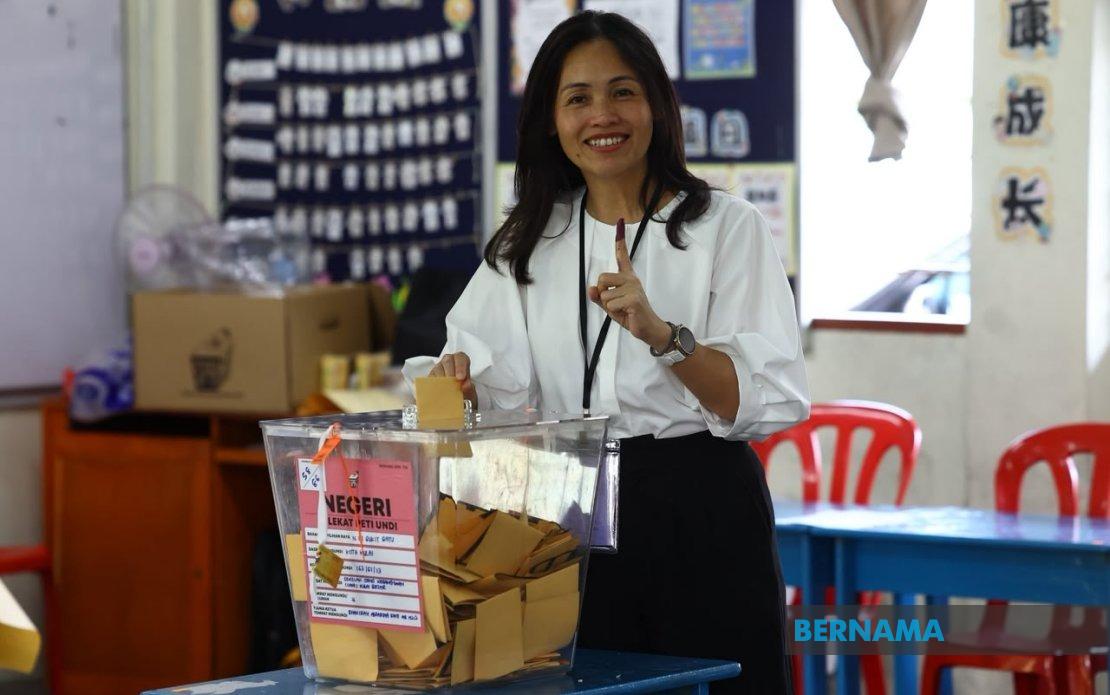
Election monitoring authorities identified a steady stream of online misconduct during the 16th Johor state election campaign, with the Malaysian Communications and Multimedia Commission logging 29 complaints spanning fake news, hate speech and coordinated deception. Deputy Communications Minister Teo Nie Ching revealed the scope of violations on polling day, underscoring the persistent challenge of containing digital falsehoods in high-stakes electoral contests across Malaysia.
The complaint breakdown illustrates the varied nature of online electoral interference. Seventeen complaints centred on the distribution of fabricated news stories, eleven involved hateful rhetoric, and a single case targeted identity fraud through a counterfeit account designed to impersonate a legitimate user or public figure. The relatively modest overall figure masks the intensity of individual violations, particularly those touching on sensitive national narratives that hold considerable sway over voter sentiment.
Racial tensions dominated the hate speech category, with nine of the eleven cases invoking racial divisions and stereotypes. The remaining two cases targeted protected categories under Malaysia's constitutional framework: one utilised religious imagery or messaging to inflame communal tensions, while another attacked the monarchy, both classifications falling under the country's strict 3R (race, religion and royalty) prohibitions. These categories represent areas where Malaysian law imposes particularly stringent restrictions to preserve social cohesion in a multi-ethnic, multi-religious nation where historical grievances around such issues remain sensitive.
Teo's public acknowledgement of the figures carried a dual message. While highlighting the MCMC's monitoring capacity and willingness to enforce content standards, her intervention simultaneously signalled official concern about the sophistication and reach of digital disinformation networks operating during electoral periods. The disclosure came as voting commenced across 56 State Legislative Assembly seats, with over 2.6 million registered voters participating in determining Johor's political direction for the coming term.
The deputy minister's appeal to voters reflected growing recognition within Malaysian policymaking circles that election integrity increasingly depends on citizen awareness rather than enforcement alone. Teo encouraged the electorate to develop what she termed digital literacy, framing responsible voting as inseparable from the ability to distinguish credible information from manufactured narratives designed to manipulate. Her exhortation to "be digitally literate netizens and voters" suggests official anxiety that significant portions of the electorate remain vulnerable to online deception.
The emphasis on voter vigilance carries particular weight in Malaysia, where WhatsApp, Facebook and other messaging platforms serve as primary information channels for many citizens, especially in rural constituencies where traditional media penetration remains lower. The spread of unverified claims through private messaging groups and community-based networks has historically outpaced official fact-checking mechanisms, creating time delays during which false narratives establish themselves as accepted truth within specific demographic or geographic cohorts.
Johor's election unfolded amid broader regional patterns of electoral manipulation through digital channels. Neighbouring Singapore, Thailand and Indonesia have all documented coordinated online campaigns designed to influence voting behaviour, suggesting that Malaysian vulnerabilities reflect continent-wide structural challenges rather than isolated local failures. The MCMC's complaint volume, while manageable in absolute terms, likely represents only a fraction of actual problematic content, as many voters may lack awareness of reporting mechanisms or confidence that complaints will yield meaningful outcomes.
The distinction between fake news and hate speech violations carries practical significance. Fabricated news stories exploit credulity and informational gaps to distort voter perceptions of candidates, policies or campaign developments. Hate speech, by contrast, mobilises existing prejudices and historical grievances to polarise constituencies along ethnic or religious lines, often seeking to depress turnout among targeted communities or consolidate support through appeals to group identity rather than substantive platform differences.
Teo's role as Kulai Member of Parliament alongside her communications portfolio positioned her comments as authoritative insider assessment rather than external commentary. Her simultaneous expression of gratitude toward election personnel underscored the operational complexity of conducting elections across a vast and diverse electorate whilst simultaneously monitoring digital spaces for content violations. The two responsibilities—managing physical polling and policing online speech—demand distinct institutional expertise and coordination.
The 16th Johor election represented Malaysia's second major state-level electoral exercise following the Penang contest, offering lessons regarding the effectiveness of enforcement approaches and the adequacy of existing regulatory frameworks for managing online electoral interference. Comparing complaint volumes and enforcement outcomes across successive elections provides policymakers with empirical data for assessing whether current MCMC capacity and legal authorities sufficiently address digital-era challenges to electoral integrity.
Moving forward, the relatively low complaint count may either suggest effective deterrence or inadequate public awareness and reporting infrastructure. Malaysian authorities face persistent tension between enabling rapid information circulation essential for democratic discourse and preventing demonstrably harmful false content from overwhelming voter decision-making. The continued appeal to citizen responsibility reflects pragmatic acknowledgement that no enforcement mechanism can match the velocity and scale at which digital content spreads through social networks, particularly content engineered for emotional impact and easy sharing.

