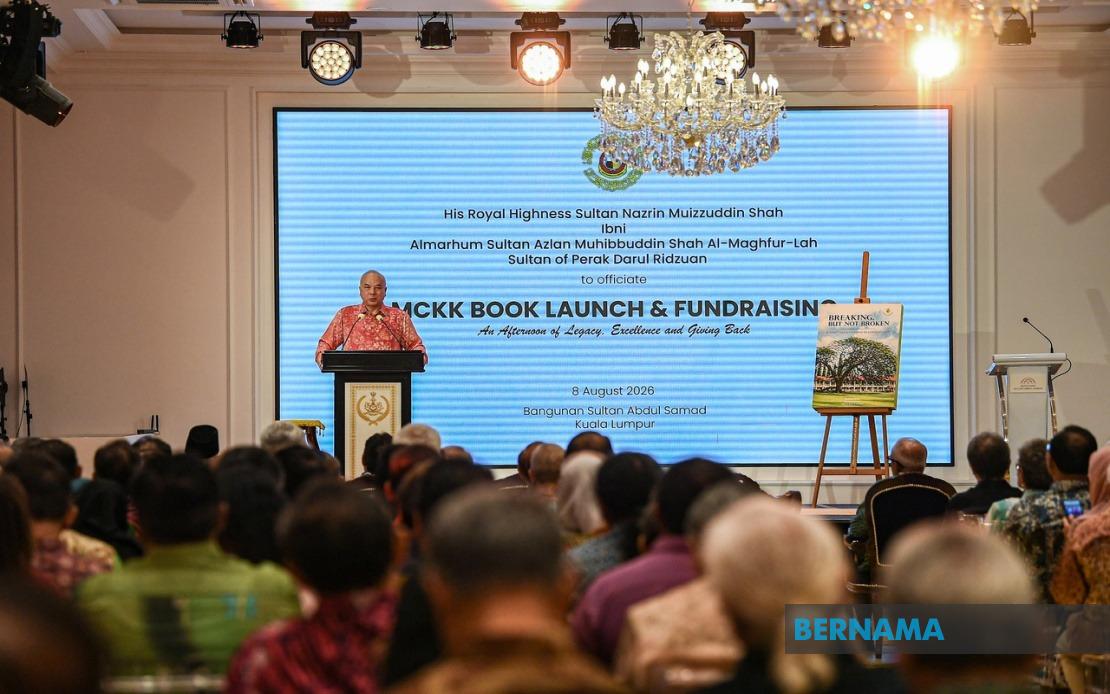
The Sultan of Perak, Sultan Nazrin Shah, has outlined an ambitious vision for how Malaysia's venerated heritage schools can remain relevant and influential in an era increasingly shaped by artificial intelligence and technological disruption. Speaking as Royal Patron of the MCKK Board of Governors, His Royal Highness argued that institutions like Malay College Kuala Kangsar need not fade into irrelevance if they embrace strategic adaptation whilst anchoring themselves to the moral and intellectual traditions that have long underpinned their character.
The central challenge facing heritage institutions, Sultan Nazrin suggested, lies not in preserving the past unchanged but in reframing their purpose for radically different circumstances. The education landscape has shifted fundamentally over recent decades, with technological advancement accelerating at unprecedented speed. Rather than cling to historical models of academic excellence, these schools must reimagine what excellence itself means in a world where artificial intelligence will reshape employment, knowledge creation, and social organisation. This reorientation demands intellectual courage and willingness to question assumptions that have gone largely unchallenged for generations.
At the heart of Sultan Nazrin's message lies a nuanced understanding that future-ready education must serve two distinct but complementary purposes. Schools must equip students with practical, adaptive capabilities that position them to thrive within AI-driven economies and workplaces. Simultaneously, institutions must nurture what His Royal Highness termed the "intangible" dimensions of human development—the cultivation of character, critical judgment, ethical sensibility, and commitment to meaningful contribution beyond narrow career success. In an age when artificial intelligence will increasingly handle routine cognitive tasks, these human qualities become proportionally more valuable and distinctive.
The urgency of this transformation becomes apparent when examining the trajectory of Malaysia's most celebrated residential schools. Historically, institutions designated as "power schools" produced graduates renowned for intellectual rigour, linguistic sophistication, analytical thinking, and public service orientation. Yet contemporary assessments suggest this pipeline of exceptional talent has faltered. Sultan Nazrin acknowledged that current graduates from these storied institutions often lack the command of language, critical thinking depth, and service commitment that characterised their predecessors. This decline represents not merely an institutional concern but a national one, affecting the quality of leadership and expertise available to government, commerce, and civil society.
The gap between historical aspiration and present reality demands unflinching analysis. Sultan Nazrin commended the authors of a recently launched book—Ghazally Ismail, Ahmad Ibrahim, and Hisham Badrul Hashim—for providing precisely such candid assessment. Rather than retreating into nostalgia or defensive mythology, the authors confronted difficult truths about MCKK's challenges and those facing comparable institutions across the region. This intellectual honesty represents a prerequisite for meaningful renewal; without acknowledging specific shortcomings, reform efforts remain superficial and ineffective.
The practical dimension of educational renewal requires substantial investment in infrastructure and resource development. The MCKK Foundation has mobilised over RM36 million in donations and contributions since its 2008 establishment, demonstrating significant stakeholder commitment to the institution's future. More than RM19 million has been directed toward new facilities, including the International Baccalaureate Complex and Auditorium Tun Abdul Razak, while RM3.5 million has addressed refurbishment and maintenance across dormitories, teaching spaces, and recreational facilities. These physical improvements signal institutional vitality and provide tangible platforms for delivering enhanced educational experiences.
Beyond bricks and mortar, the Foundation has constructed a sustainable financial architecture through endowment building. Current endowment funds exceed RM16 million, with contributions from major corporate benefactors including PETRONAS and support from His Majesty Sultan Hassanal Bolkiah of Brunei Darussalam. This diversified funding base insulates the institution from year-to-year budgetary volatility and enables long-term planning. Investment income from endowment funds now exceeds RM7 million, channelled toward scholarships supporting deserving students regardless of family resources, leadership development programmes, international engagement opportunities, and professional development for teaching staff. This financial model recognises that educational excellence requires investment across multiple dimensions—student support, faculty capacity, and institutional preservation.
The implications of MCKK's potential reinvention extend beyond a single prestigious institution. Malaysia's heritage schools serve as cultural repositories and leadership incubators for the nation. If such institutions successfully navigate the transition to an AI-enabled future whilst retaining their ethical moorings, they establish templates that other regional schools might emulate. Conversely, if they decline further, Malaysia risks losing institutional mechanisms for cultivating the well-rounded, intellectually sophisticated, and ethically grounded leaders that rapid social and technological change demands. The stakes are fundamentally about what kinds of citizens and leaders Malaysia develops during a period of profound transformation.
Sultan Nazrin's intervention carries particular weight given his role as Royal Patron and his consistent emphasis on education as foundational to national progress. The Ruler's articulation of the challenge—balancing practical skills acquisition with human character development—reflects sophisticated understanding that technological capability divorced from ethical grounding produces incomplete and potentially dangerous human beings. Educational systems must therefore integrate, not separate, these dimensions, ensuring that mastery of technological tools develops alongside cultivation of wisdom, compassion, and commitment to others.
The pathway forward requires sustained institutional commitment, continued financial investment, curricular innovation that privileges critical thinking and human values alongside technical competence, and recruitment and development of teaching faculty capable of inspiring students toward intellectual and ethical excellence. MCKK and comparable heritage institutions possess accumulated reputation, established networks, and historical mandates that provide significant advantages. Yet these assets alone cannot guarantee future relevance. Only through deliberate, thoughtful transformation that respects foundational values whilst embracing necessary change can such schools emerge as vital forces in shaping Malaysia's next generation of thought leaders, problem-solvers, and principled citizens prepared to navigate an uncertain and technologically saturated future.

