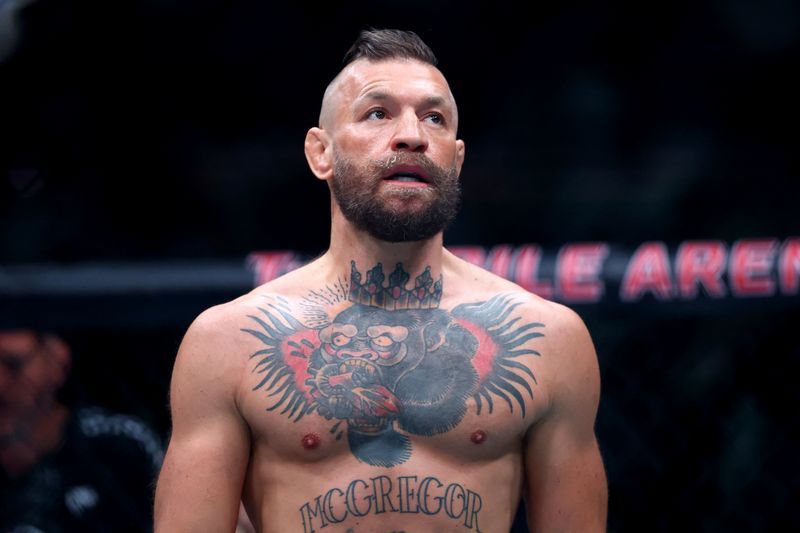
Conor McGregor's long-awaited return to competitive mixed martial arts ended almost as soon as it began on Saturday evening at UFC 329 in Las Vegas, with the former champion forced to withdraw after sustaining a severe knee injury during the opening round against Max Holloway. The highly publicized bout, which had generated considerable anticipation among fight fans worldwide, collapsed within just over 63 seconds when McGregor attempted an aggressive flying kick early in the first round. The awkward landing proved immediately problematic, and McGregor's attempts to continue fighting lasted only seconds before he signalled to the referee that he could no longer compete.
The nature of McGregor's injury underscores a pattern of physical setbacks that has significantly undermined his career trajectory over the past four years. The 37-year-old Irish fighter had not stepped into the octagon since July 2021, when he suffered a leg fracture during his bout with Dustin Poirier—a devastating blow from which his comeback attempts have struggled to recover. This prolonged absence from competition, combined with the physical toll of repeated injuries during training, raises serious questions about whether the Dublin native can realistically return to the elite level that once made him one of combat sports' biggest draws.
Prior to Saturday's scheduled clash with Holloway, McGregor had been forced to withdraw from another high-profile matchup against Michael Chandler that was set for June 2024. A broken toe sustained during training camp forced the cancellation of that encounter, demonstrating how injuries incurred even in preparation have disrupted his attempted resurgence. This pattern of setbacks occurring both inside and outside the competitive arena suggests that McGregor's body may be unable to withstand the rigours of professional mixed martial arts at the highest level.
Beyond physical injuries, McGregor has encountered multiple obstacles that have complicated his return to fighting. In 2024, a jury in an Irish civil court determined that he bore legal liability for an alleged sexual assault involving Nikita Hand that purportedly occurred in 2018. This legal judgment added another significant layer of controversy to his public profile. Additionally, the athlete received an 18-month suspension from combat sports authorities in October 2025 for repeated whereabouts failures, a disciplinary measure imposed after he missed three separate testing attempts by Combat Sports Anti-Doping officials during 2024. Although this ban was backdated and technically expired in March, allowing his return to competition, it reflected ongoing compliance issues that had further delayed his active fighting schedule.
Maximilian Holloway, McGregor's opponent and the former featherweight champion, responded with pragmatism to the abrupt conclusion of their encounter. Holloway expressed his willingness to meet McGregor again once the Irishman has recovered from his knee injury, suggesting that the UFC and both fighters might look to reschedule their bout at a future date. The pair had previously fought in 2013, when McGregor secured victory via unanimous decision in their featherweight division clash. Holloway's measured approach indicates that despite the disappointing brevity of Saturday's contest, there remains commercial and competitive interest in staging a rematch between the two fighters.
The incident at the T-Mobile Arena was not limited to McGregor's misfortune. In the card's co-main event, British lightweight Paddy Pimblett delivered an equally striking display of dominance, though his came to a more conclusive competitive result. Pimblett defeated France's Benoit Saint-Denis by submission in a chokehold, requiring less than one minute to secure the victory. Whereas McGregor's brief appearance ended in injury-induced withdrawal, Pimblett's performance, though equally swift, at least demonstrated the devastating technical application that fans expect from elite-level fighters.
For Malaysian and Southeast Asian fight enthusiasts, McGregor's repeated injury setbacks and legal entanglements illustrate a cautionary tale about the unpredictability of comeback narratives in professional sports. The region has developed a growing passion for mixed martial arts, with local fighters increasingly competing on international stages and organizations like ONE Championship based in Singapore gaining prominence. McGregor's struggles highlight how even the most decorated athletes, possessing substantial financial resources and access to world-class training facilities, cannot guarantee successful career resurrections once significant physical damage has accumulated.
The broader implications for the sport extend beyond McGregor's personal circumstances. His inability to sustain an active fighting schedule raises questions about athlete welfare in mixed martial arts, where the combination of intense training, repeated injury recovery, and the legal pressures of other life issues creates formidable obstacles. These challenges have become increasingly visible as prominent fighters attempt comebacks following years away from competition, suggesting that the window for successful returns may be narrower than previously assumed.
Looking ahead, McGregor faces a critical decision regarding his future in professional fighting. At 37 years of age, with a significant injury history and nearly a year of inactivity behind him, the path toward regaining championship contention appears increasingly improbable. Whether he attempts to rehabilitate the knee injury and pursue another comeback, or whether this latest setback convinces him to retire from competition permanently, remains uncertain. What seems evident, however, is that the Conor McGregor who dominated mixed martial arts during his peak years may never again step into the octagon at full capacity.

