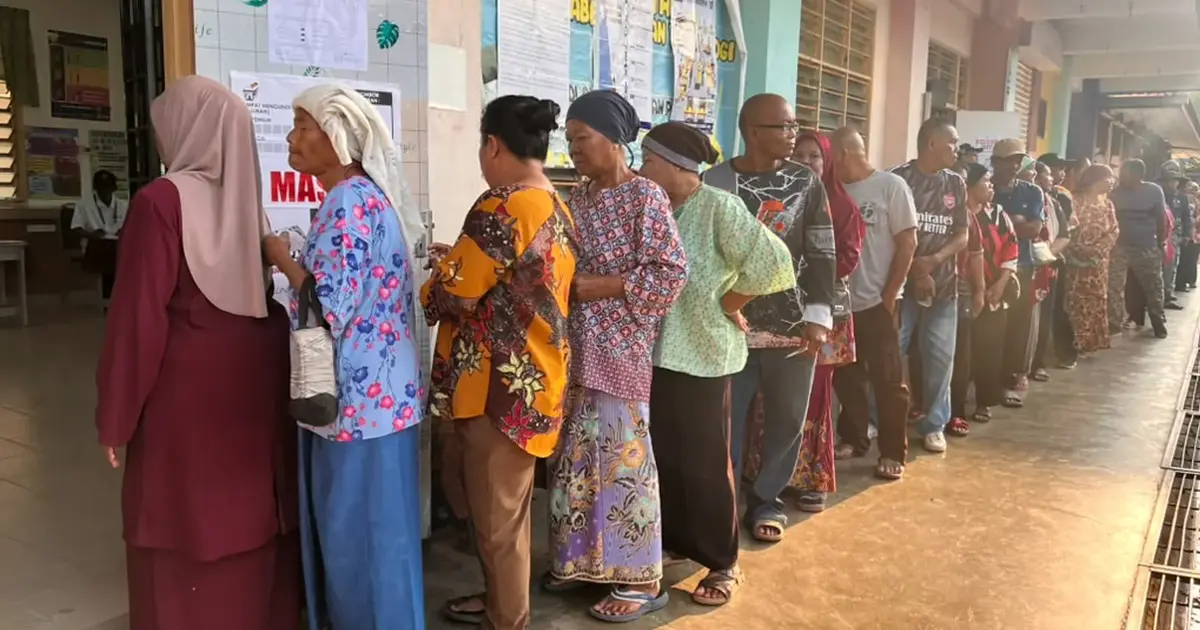
MCA's recent victory in Chennah, where the party successfully unseated incumbent DAP assemblyman Loke Siew Fook, underscores a fundamental reality of Malaysian coalition politics: the party's electoral prospects are inextricably linked to Umno's organisational strength and capacity to galvanise voter turnout. Political observers tracking the result have attributed the Chinese-majority MCA's win primarily to substantial Malay voter participation channelled in support of the Barisan Nasional ticket, a pattern that reveals how the coalition mechanism operates across ethnic and party lines.
The significance of this result extends beyond a single seat change. In Malaysia's complex electoral architecture, where constituencies often reflect overlapping demographic patterns and where party performance is closely watched for signals about broader coalition health, MCA and MIC—the Indian-focused partner in Barisan—occupy a peculiar structural position. Both parties depend heavily on the organisational machinery and voter mobilisation capacity of Umno, the Malay-dominant anchor of the three-party alliance. When Umno functions effectively as a voter-mobilisation force, it generates spillover benefits for its coalition partners, creating synergies that neither party could replicate independently.
This dynamic has roots in how Barisan Nasional operates at the grassroots level. Umno maintains the deepest party structures, the most extensive network of divisional and branch offices, and historically the strongest connections to government administrative apparatus. When party leaders signal that coalition unity matters for a particular election or contest, these resources can be deployed to encourage voters—particularly Malay voters who form Umno's core base—to support non-Umno Barisan candidates in constituencies where those parties have stronger positioning. In Chennah, this appears to have been precisely what occurred, with Malay voters responding to calls for coalition solidarity.
For MCA specifically, the party faces chronic challenges in maintaining relevance among Chinese voters. Long-term shifts in Chinese electoral preferences, particularly toward DAP since the watershed 2008 general election, have compressed MCA's traditional support base. The party no longer wins enough seats on its own organisational merits in many mixed constituencies. Instead, MCA victories now frequently depend on receiving votes from non-Chinese communities—especially Malays—who support the broader Barisan project. Without Umno's capacity to direct such cross-community voting, MCA would struggle even more dramatically in electoral contests.
MIC faces analogous constraints, albeit with different demographic patterns. The Indian-origin voters who once formed the party's reliable constituency have fragmented considerably. Many have either shifted to opposition parties, disengaged from electoral participation, or become swing voters. For MIC to maintain parliamentary and state assembly representation, it similarly requires the coalition machinery to function smoothly and for Umno to validate the BN ticket through organised voter mobilisation.
The Chennah result therefore demonstrates that Barisan's multi-party structure, often criticised as unwieldy or anachronistic, still delivers operational advantages under the right circumstances. When Umno is organisationally robust and party leadership emphasises coalition discipline, the arrangement allows geographically dispersed parties to win seats where they otherwise lack sufficient community support. This distinguishes Barisan from looser opposition alliances, which lack comparable party machinery and voter-coordination mechanisms.
However, this structural dependency creates vulnerabilities. It means that weakening of Umno's organisational capacity, internal conflicts within the coalition, or dampening of Malay voter enthusiasm for BN automatically constrains MCA and MIC's electoral prospects. If Umno faces internal divisions, purges, leadership transitions, or declining morale among party activists—all challenges the party has experienced in recent years—then the coalition's ability to deliver wins for smaller partners diminishes correspondingly. The two-way causality is important: just as Umno strength benefits MCA and MIC, weakness in the dominant partner creates a cascading vulnerability across the entire alliance.
Regional implications are worth noting for Southeast Asian observers monitoring Malaysian political developments. The Barisan Nasional model of coalition governance, though imperfect and contested, has proven more durable than many predicted following the 2018 election. Understanding that component parties like MCA and MIC remain electorally viable when the coalition functions as designed provides insight into why the alliance, despite numerous predictions of its demise, continues to contest elections and win representation. It also explains why post-2020 Malaysian politics has featured negotiations between opposition blocs and Barisan components rather than wholesale realignment.
The Chennah outcome will be carefully parsed by party strategists within both Umno and the opposition coalitions. For Umno leadership and supporters, it validates continued emphasis on coalition messaging and the benefits of unified organisation. For opposition parties, it reinforces the difficulty of making gains in constituencies where Barisan partners retain geographic positioning and Umno possesses organisational reach. For MCA, it suggests that competitive seat retention remains possible through coalition reliance, though this perpetuates the party's deeper strategic challenge: finding independent grounds for relevance and voter support.
Looking forward, the Chennah dynamic will likely repeat in future elections unless significant shifts occur either in voter preferences or in coalition structures themselves. MCA and MIC victories will continue clustering in periods when Umno demonstrates organisational vigour and commitment to the broader Barisan cause. Conversely, any further deterioration in Umno's capacity to mobilise voters or coordinate coalition efforts will almost certainly result in additional seat losses for the smaller parties. This mutual dependency—MCA and MIC needing Umno strength, yet contributing minimally to that strength themselves—may ultimately define their futures within Malaysian electoral politics.

