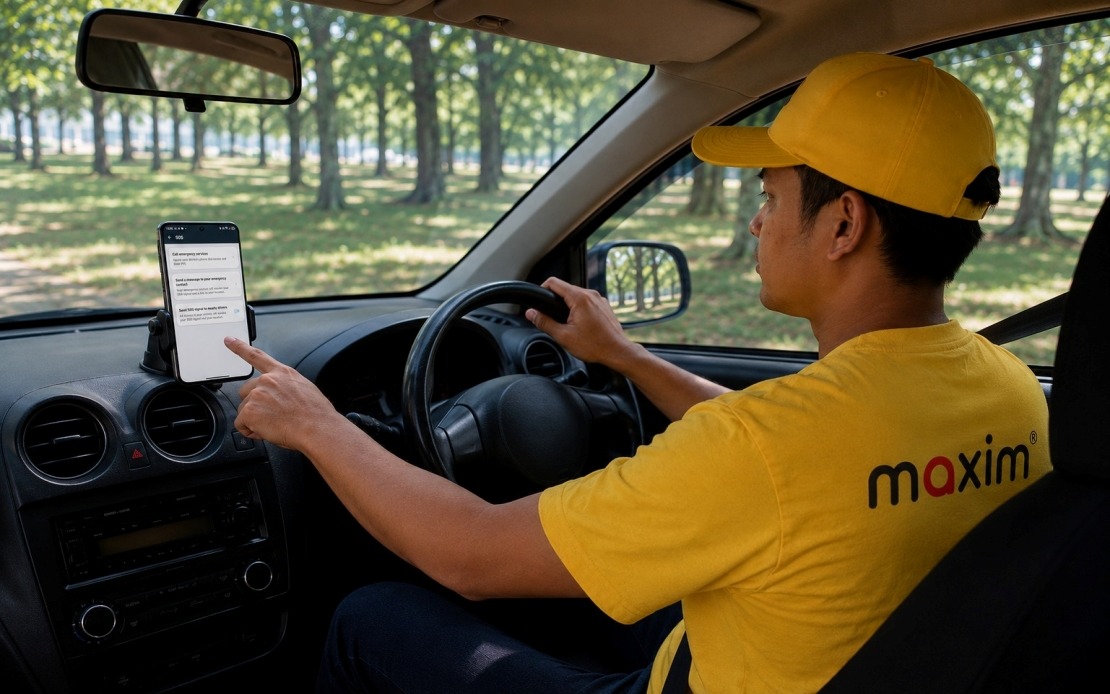
Ride-hailing platform Maxim Malaysia has substantially upgraded its emergency response capabilities through a redesigned SOS system that promises faster assistance for both drivers and passengers facing urgent situations on the road. The enhanced features, announced on July 13, represent a deliberate push to address safety concerns within the ride-sharing sector across Malaysia, where increased usage has coincided with growing awareness of personal security challenges during transit.
The centrepiece of the upgrade is a standardised SOS button accessible within the app that operates differently depending on user needs and circumstances. Rather than forcing all users into a single rigid response protocol, the system now permits individuals to choose their preferred assistance pathway in real time. A passenger experiencing harassment or mechanical trouble can simultaneously notify emergency responders through the 999 hotline while also alerting up to three pre-registered personal contacts such as family members or trusted friends. This dual-track approach acknowledges that not all emergencies require the same response, and valuable minutes can be saved when users maintain agency over whom they contact first.
Cruially, the system functions even when internet connectivity falters, a practical consideration for Malaysian users traversing areas with inconsistent data coverage. Emergency recipients receive a text message containing the user's precise GPS coordinates along with a live tracking link enabling real-time monitoring of the vehicle's movement. For a passenger separated from communication channels, this automatic location-sharing capability provides families with concrete data about where their loved one remains, eliminating the ambiguity that often accompanies emergency calls in unfamiliar areas.
Maxim Malaysia has designed a particularly innovative feature specifically benefiting driver-partners: the Driver Alert System creates a peer-assistance network by broadcasting emergency notifications to other Maxim drivers operating within a three-kilometre radius. When a driver encounters roadside danger, mechanical failure, or health crisis, nearby platform colleagues receive immediate notification of both the incident type and precise location. This crowdsourced safety approach transforms the isolated experience of driving alone into a distributed support structure where professional drivers can render initial assistance before formal emergency responders arrive—a meaningful intervention when response times prove critical.
The company's director Mohd Hazwan Musli framed the enhancements as recognition that safety constitutes an integral component of every journey rather than an afterthought or regulatory checkbox. The philosophy underlying these upgrades reflects shifting consumer expectations in Southeast Asian ride-hailing markets, where passengers increasingly demand visible commitment to protection and transparent safety architecture from platforms controlling their movements. By making safety decisions deliberately flexible rather than automated, Maxim signals trust in user judgment while simultaneously ensuring professional help remains instantly accessible.
The technical infrastructure supporting these features incorporates military-grade encryption protocols protecting all data transmitted through the SOS function, Driver Alert System, and trip-sharing mechanisms. Information remains inaccessible to unauthorised personnel, with decryption limited to formally designated security staff and government authorities operating under established legal procedures. This layered protection addresses growing Malaysian consumer concerns about data privacy and misuse, particularly following numerous incidents where ride-hailing platform data has been compromised or improperly accessed.
Passengers gain additional protection through a Trip Sharing feature enabling them to transmit real-time journey links to designated recipients immediately upon vehicle entry. Unlike post-hoc trip history sharing, this immediate notification ensures that family members know exactly when a passenger boards and can follow movements throughout the journey. Combined with the secure in-app chat protecting against fraud and the comprehensive internal trip monitoring tracking all journey elements via continuous GPS recording, these layered security measures address multiple threat vectors simultaneously.
The upgrade reflects broader industry-wide recognition that ride-hailing safety extends beyond vehicle maintenance and driver vetting into the technological infrastructure governing real-time emergency response. Malaysian regulators and consumer advocates have increasingly scrutinised platform safety protocols following several high-profile incidents, and Maxim's systematic approach to SOS enhancement suggests the sector is responding to both regulatory pressure and genuine consumer demand for transparent, accessible emergency systems.
For Malaysian and Southeast Asian riders accustomed to ride-hailing services, the standardisation and speed improvements address consistent pain points: the earlier difficulty in reaching emergency services mid-journey, delays in notifying family of problems, and the isolation experienced by drivers facing roadside crises. By reducing response friction and expanding assistance options, Maxim demonstrates how technological refinement can tangibly improve personal security without creating burdensome user experience complexity. The system's emphasis on user choice—allowing individuals to prioritise personal contacts, emergency responders, or peer drivers depending on specific circumstances—represents sophisticated acknowledgment that one-size-fits-all safety protocols often fail when most needed.

