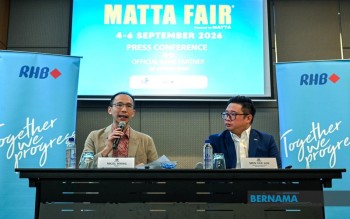
The Malaysian Association of Tour and Travel Agents has outlined an ambitious agenda for the 2027 budget, placing enhanced tax relief and sustained government investment in tourism infrastructure at the centre of their advocacy. With Parliament scheduled to table the Supply Bill on October 9, MATTA has moved to present its priorities ahead of the Finance Minister's announcement, signalling the industry's determination to secure measures that could reshape competitive dynamics within the travel sector and bolster Malaysia's international tourism positioning.
At the heart of MATTA's submission lies a straightforward economic argument: stronger tax deductions for tour operators will incentivise them to intensify marketing campaigns abroad and accelerate visitor arrivals to Malaysian destinations. MATTA president Nigel Wong articulated this connection clearly, linking fiscal incentives directly to the success of the Visit Malaysia 2026-2027 initiative, a signature government tourism campaign aimed at positioning Malaysia as a premier regional travel destination. The logic reflects a broader principle in Southeast Asian tourism policy whereby governments use tax mechanisms to encourage private sector participation in destination marketing, reducing the burden on public budgets while leveraging commercial networks.
For Malaysian readers, this request carries particular significance given the country's historical dependence on international tourism revenue and the sector's outsized role in regional employment. Tour operators represent a crucial intermediary layer between Malaysia's attractions and overseas markets, functioning as de facto ambassadors who curate experiences and influence travel decisions among their clientele. By lowering their tax obligations, the government would theoretically free capital for overseas promotional campaigns, trade shows, and digital marketing initiatives that compete for tourist attention in crowded Southeast Asian markets where Thailand, Vietnam, and Indonesia have mounted increasingly sophisticated campaigns.
Beyond taxation, Wong highlighted the urgency of infrastructure modernisation and heritage restoration as complementary drivers of tourism appeal. His reference to the Sultan Abdul Samad Building upgrade exemplified the transformation possible when government commits to refurbishing iconic urban landmarks. The implication carries weight across Malaysia's tourism geography: from Kuala Lumpur's colonial precinct to Penang's Georgetown, Malacca's UNESCO-listed district, and emerging urban heritage zones nationwide, countless historical structures languish without systematic maintenance programmes. Wong's call for broader investment in natural and built heritage acknowledges a competitive reality: regional rivals increasingly market cultural authenticity alongside natural beauty, and Malaysia's historical assets represent underutilised competitive advantages in an experience-driven tourism market.
The association's advocacy for municipal-level participation in tourism management represents a potentially transformative institutional shift. By embedding municipal councils in tourism planning and urban improvement, MATTA effectively argues for tourism considerations to permeate broader urban governance. Safety, walkability, cleanliness, and public space quality directly influence visitor satisfaction and repeat visitation patterns, yet these dimensions often remain tangential to tourism ministry operations. Councils control street maintenance, public transport, security deployment, and urban design—functions that shape the practical experience of any city visitor. This integrated approach aligns with international best practice in destination management, where cities like Bangkok, Singapore, and Ho Chi Minh City have achieved measurable improvements in tourism metrics through coordinated municipal action.
The timing of these recommendations warrants examination within Malaysia's broader economic and political context. With the Visit Malaysia 2026-2027 campaign operating under explicit governmental authority, industry requests for supporting fiscal measures gain legitimacy as enabling mechanisms rather than sectional pleading. The government has already signalled priority status for this initiative, and MATTA's positioning exploits that commitment strategically. Policymakers reviewing the budget must weigh industry arguments against competing national priorities—healthcare, education, infrastructure outside tourism, and debt management all compete for finite resources.
International tourism's contribution to Malaysia's economy justifies serious budget consideration, particularly as regional competition intensifies. Thailand's tourism ministry operates with substantially higher budgets than Malaysia's equivalent, reflecting Bangkok's strategic focus on capturing international arrivals. Vietnam and Indonesia have similarly elevated tourism to prominence within their development frameworks. For Malaysia to maintain or expand market share against competitors offering comparable attractions at varying price points and marketing intensity levels, the fiscal environment must support rather than constrain industry participation.
The promotional budget expansion MATTA seeks addresses another dimension of competitive disadvantage. Many regional destinations allocate marketing budgets proportional to their competitive position and development ambitions, not merely their current tourism volume. This creates a self-reinforcing dynamic whereby well-resourced campaigns attract larger visitor flows, generating revenues that support further marketing investment. Malaysia risks falling into a stagnation trap if promotional spending stagnates while competitors escalate their efforts.
Conversely, policymakers must ensure that tax incentives and increased spending translate into measurable tourism growth rather than becoming routine transfers to industry participants. Accountability mechanisms, performance metrics, and sunset provisions could protect public interest while enabling temporary sectoral support. The effectiveness of tax deductions in driving promotional activity, rather than merely reducing operator costs, requires monitoring to justify continued fiscal commitment.
The Budget 2027 discussion represents more than routine advocacy from a sectional interest group. It reflects genuine structural challenges facing Malaysia's tourism competitiveness: aging infrastructure in some established destinations, underdeveloped promotional infrastructure relative to regional rivals, and governance fragmentation that leaves municipal authorities outside tourism planning. MATTA's requests, if adopted thoughtfully alongside complementary non-fiscal reforms, could catalyse more competitive tourism performance. Conversely, dismissing these concerns risks allowing Malaysian tourism to drift into relative decline despite the nation's substantial attractions and strategic geographic positioning.

