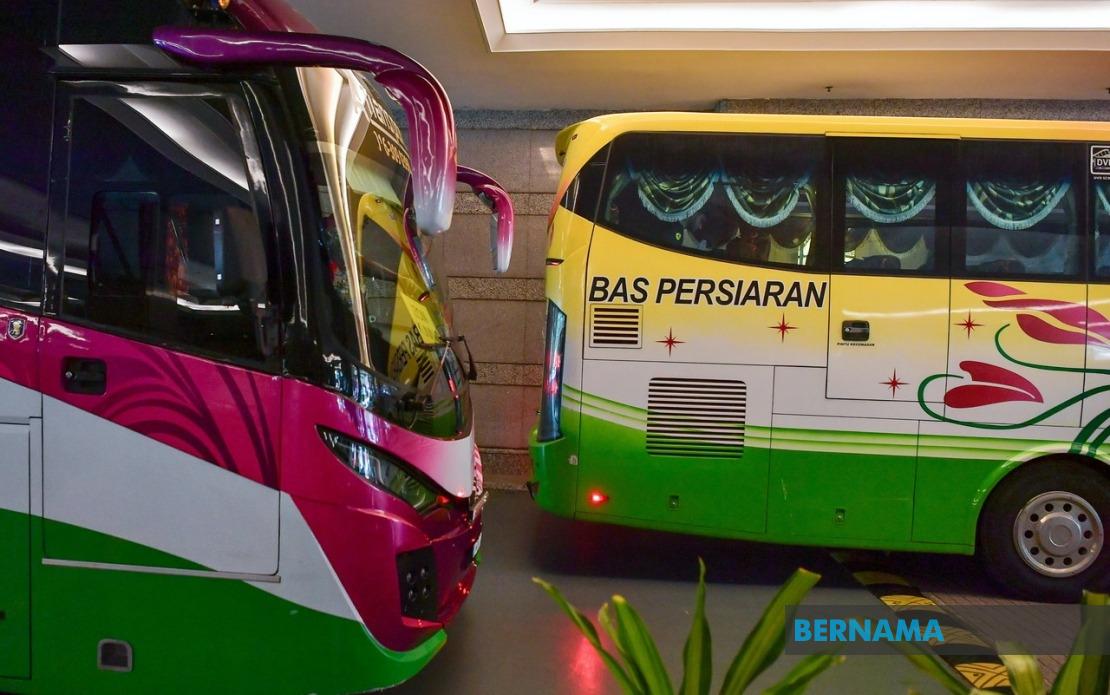
The Malaysian Association of Tour and Travel Agents (MATTA) has formally called on the government to reverse its recent decision excluding licensed tourism transport operators from the diesel subsidy programme, contending that the exclusion misrepresents the actual composition of the industry's clientele. In a statement released on July 8, MATTA president Nigel Wong challenged the Finance Ministry's characterisation that such subsidies would primarily benefit foreign visitors, emphasising instead that licensed tourism vehicles serve a diverse passenger base spanning both international and domestic markets.
Wong's intervention directly rebuts assertions made by Finance Minister II Datuk Seri Amir Hamzah Azizan regarding the subsidy's purported beneficiaries. The MATTA president highlighted the breadth of services delivered by licensed tourism transport operators, pointing to their role in facilitating school group excursions, corporate team-building events, incentive travel programmes, religious pilgrimages, educational tours and community activities. This extensive portfolio of domestic-oriented services substantially undermines the government's stated rationale for the subsidy exclusion, according to Wong, who stressed that portraying the subsidy as exclusively serving foreign tourists overlooks fundamental operational realities within Malaysia's tourism transport sector.
The economic implications of the subsidy removal extend significantly beyond the immediate tourism industry. Removing the diesel subsidy would mechanically increase operational expenses for licensed tourism transport providers, forcing them to absorb or redistribute these additional costs through higher fares and more expensive travel packages. For Malaysian holidaymakers and domestic travel groups, this translates into reduced affordability and potentially diminished willingness to undertake domestic tourism. Perhaps more troublingly, Wong warned that elevated fares could push price-sensitive Malaysian travellers toward unlicensed service providers, creating both safety concerns and revenue leakage from the regulated economy.
The timing of this exclusion carries particular strategic significance given Malaysia's ambitious Visit Malaysia 2026 (VM2026) campaign, a flagship initiative designed to accelerate both inbound and domestic tourism arrivals. By making tourism transport services more expensive, the exclusion directly undermines the affordability proposition that encourages Malaysians to explore domestic destinations—a critical pillar of the VM2026 strategy. For international visitors, meanwhile, increased transport costs elevate the overall expense of Malaysian tourism packages, potentially rendering the country less competitive relative to regional alternatives offering more transparent and economical transport arrangements.
Wong articulated a broader economic vision positioning tourism transport not merely as a service industry but as a strategic economic multiplier. More affordable and accessible tourism transport generates cascading benefits throughout the tourism ecosystem: hotels benefit from higher occupancy rates, restaurants and food establishments serve additional diners, attractions capture more visitors, retailers enjoy increased consumer spending, and local communities experience employment growth and income expansion. From this multiplier perspective, the cost of providing targeted diesel subsidies to licensed tourism transport operators appears modest relative to the downstream economic activity and tax revenue generated by incremental tourism activity.
The MATTA statement advanced a sophisticated reframing of subsidy policy, characterising support for licensed tourism transport operators as investment rather than expenditure. This framing distinguishes between short-term fiscal cost and long-term economic return, arguing that the government should evaluate the diesel subsidy through a dynamic rather than static lens. Stronger tourism activity—both domestic and international—generates employment opportunities, skills development, tax revenues and foreign exchange earnings that potentially exceed the direct subsidy cost over a multiyear horizon.
MATTA's formal recommendations target multiple stakeholder groups within government. The association urged the Finance Ministry to reconsider its exclusion decision, requested that the Ministry of Tourism, Arts and Culture (MOTAC) engage actively in subsidy mechanism design, and called for structured dialogue with industry participants to develop governance frameworks ensuring subsidy efficiency. This multi-ministry approach reflects recognition that tourism policy transcends traditional Finance Ministry purview and requires coordinated input from tourism and transport authorities capable of articulating sector-specific constraints and opportunities.
The exclusion decision itself appears to have proceeded without detailed consultation with MOTAC or tourism industry representatives, a procedural gap that MATTA implicitly highlighted through its emphasis on stakeholder engagement. The Finance Ministry's apparent assumption that tourism transport subsidies primarily serve foreign visitors suggests insufficient dialogue with industry practitioners who manage daily operations and understand passenger composition across diverse market segments. This implementation gap underscores broader coordination challenges within Malaysian government tourism policy, where fiscal authorities may prioritise subsidy containment while tourism authorities prioritise international competitiveness and domestic market development.
For Malaysia's competitive positioning in Southeast Asian tourism, the subsidy exclusion carries regional implications. Thailand, Indonesia, Vietnam and the Philippines employ various mechanisms to support tourism infrastructure and services as core components of their tourism development strategies. By removing transport cost advantages, Malaysia risks appearing less affordable to international price-conscious travellers while simultaneously reducing the domestic tourism intensity that would strengthen the sector's commercial viability and international reputation. The exclusion therefore positions Malaysia at a potential disadvantage relative to competitor destinations offering more comprehensive domestic support for tourism-related transport services.
Wong's critique also highlights potential unintended consequences regarding regulatory compliance and safety standards. Licensed tourism transport operators maintain insurance, safety certifications, and regulatory compliance that unlicensed operators avoid. Higher costs from subsidy removal might incentivise passengers to utilise unlicensed services, undermining both tourism safety standards and government revenue collection objectives. This dynamic suggests that subsidy removal, while reducing direct government expenditure, might increase indirect social and safety costs through modal shift toward unregulated transport provision.
The broader policy debate illuminated by MATTA's intervention reflects tension between fiscal restraint and sectoral development objectives. The Finance Ministry's exclusion decision prioritises immediate subsidy cost reduction, while MATTA advocates a longer-term perspective emphasising tourism development's contribution to economic growth, employment and international competitiveness. This tension remains unresolved, though MATTA's framing of tourism transport as strategic investment rather than consumption subsidy offers a conceptual framework potentially bridging these positions through explicit analysis of tourism's multiplier effects.
Looking forward, resolution of this policy impasse will likely depend on whether MOTAC can quantify tourism's economic multiplier effects and demonstrate that subsidy costs are justified by incremental economic activity. MATTA's call for cross-ministry engagement and targeted mechanism design suggests a potential pathway toward compromise solutions—perhaps means-tested subsidies for domestic tourism transport or subsidies linked to documented domestic passenger volumes. Such mechanisms would address Finance Ministry cost concerns while enabling MATTA's broader policy objectives supporting both domestic and international tourism development within the VM2026 framework.

